Life After: A new leash on life for former prison officer-turned-dog agility trainer
SINGAPORE – It is not just the dog that has to be fast in canine agility competitions. The handler has to sprint along, too, to guide the animal through the timed obstacle course.
But for Elsa Soo, a longstanding knee injury meant that when it came to navigating a course, other competitors left her in the dust. So rather than outrun them, she chose to outwit them.
She came up with her own version of verbal cues to guide her 9½-year-old border collie Venus through the course.
Soo trained Venus to listen to verbal commands and independently search, recognise and commit to an obstacle, such as tight weave poles or sharp tunnel entries, without the 60-year-old having to physically nudge Venus into it.
She would also stand back or remain in a centralised area of the ring while her dog tackled complex sequences some distance ahead of her.
“Venus learnt to listen calmly to my voice and worked things out systematically. Then I would pray that I do not fail her as she tried her best on the world stage,” Soo said, laughing.
According to Agility Divertidog’s results, the senior duo secured a very respectable fifth place at the prestigious FCI Agility World Championship (AWC) 2026 held in Turku, Finland, in September.
“I am 60. I have bad knees. Of course, I could not run as fast as a 25-year-old handler. So, I had to find another way. I did not want to fail my dog,” the former prison officer told The Straits Times.
Now a dog agility trainer, she has a job quite different from the one she held during her 28 years with the Singapore Prison Service. But her passion for dogs has been a constant. Soo had worked with other dogs throughout her adult life.
She joined the prison service in 1991 after helping her mother wind up her second-hand hardware business, as Soo had no intention of taking it over.
“Since (I was in) school, I always wanted to be part of a uniform group because I believed in discipline and structure. Besides that, the Singapore Prison Service also helped offenders turn over a new leaf and gave them a chance to rebuild their lives. That was something I have always believed in – giving people a second chance,” she said.
Soo was given the opportunity to work in the Singapore Prisons Emergency Action Response Force, but went on to break new ground when she became the first woman to undergo narcotics detection dog training with the Singapore Prison Service Dog Unit.
Canine partners that never went off the clock
She expanded her tactical expertise in protection work when she was seconded to the Police Dog Unit for a year, where she was deployed to the airport and customs checkpoints at the borders.
“My canine partner and I were part of the relocation of the patients from Woodbridge Hospital to the current Institute of Mental Health (in 1993). The prisoners, who were ordered by the courts to stay at Woodbridge Hospital then, had to be handled differently during the move,” she said.
“We were also part of the team that made sure the refugees from Vietnam were properly repatriated out of Singapore when the Hawkins Road Refugee Camp officially closed in 1996. We had guard dogs with us to maintain order as the refugees were quite emotional then.
“It was after that that the dog unit was transferred to the police, and I went back to working with inmates in the Women’s Prison, the Drug Rehabilitation Centres and the work release camps,” Soo added.
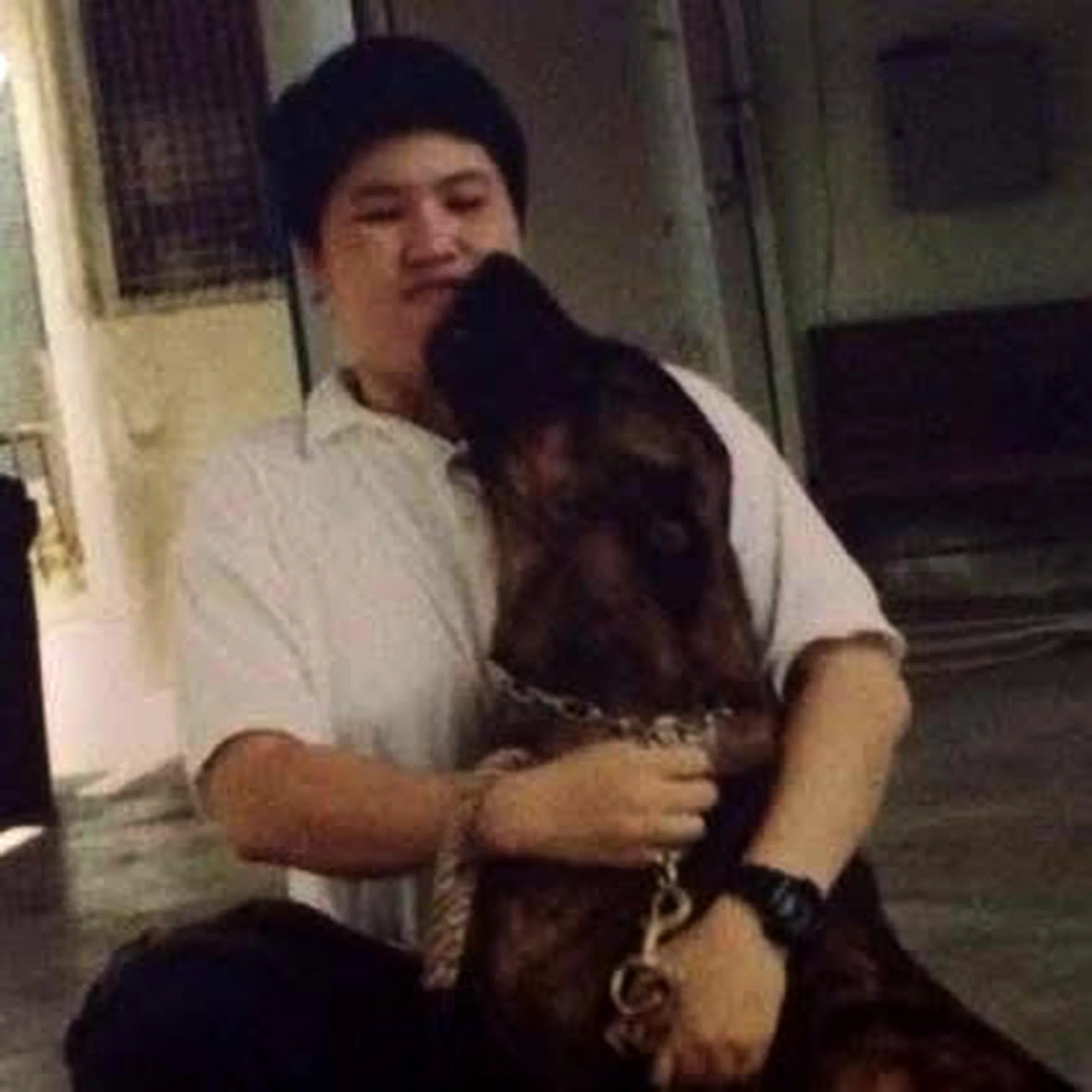
Soo with a four-legged colleague during her days as a prison officer.
PHOTO: COURTESY OF ELSA SOO
The camps are structured Community-Based Programmes designed to prepare inmates for work and reintegration into society.
“It was by living and working with dogs that I realised that they are not just animals. The bond between a dog and a human is real. They know what we are thinking, and we learn to know what they are thinking too. So when I returned to the prison without a dog, I felt a certain loss,” Soo said.
That was when she developed an interest in dog agility, a competitive sport where a handler guides a dog off-leash through a timed, numbered obstacle course.
In 2006, she started training with her pet schnauzer Whiskey “because he was too active”, and that was when she fell in love with the sport. But it was only in 2010 that she entered their first event.
Soo said that initially, when dog agility was still a hobby, she participated only in competitions held in Singapore and at weekends.
However, after getting bitten by the competition bug, Soo decided to opt for early retirement from the Singapore Prison Service to pursue her interest in dog training and agility.
She cited the limitations of applying for leave and travelling overseas for competitions as reasons.
“There were times when my leave was cancelled due to work commitments, and I had to forego the competition, which Cyrus – my border collie then – was trained for. It was a shame,” she said.
Cyrus came from a pet shop and was not specially bred for agility, but Soo began preparing him for the sport in 2015.
“I was a novice at that time and had never trained a border collie, so I ran Cyrus like I would a schnauzer, which was the wrong method. So I attended courses and seminars to learn the ropes, and became a qualified agility handler,” Soo said.
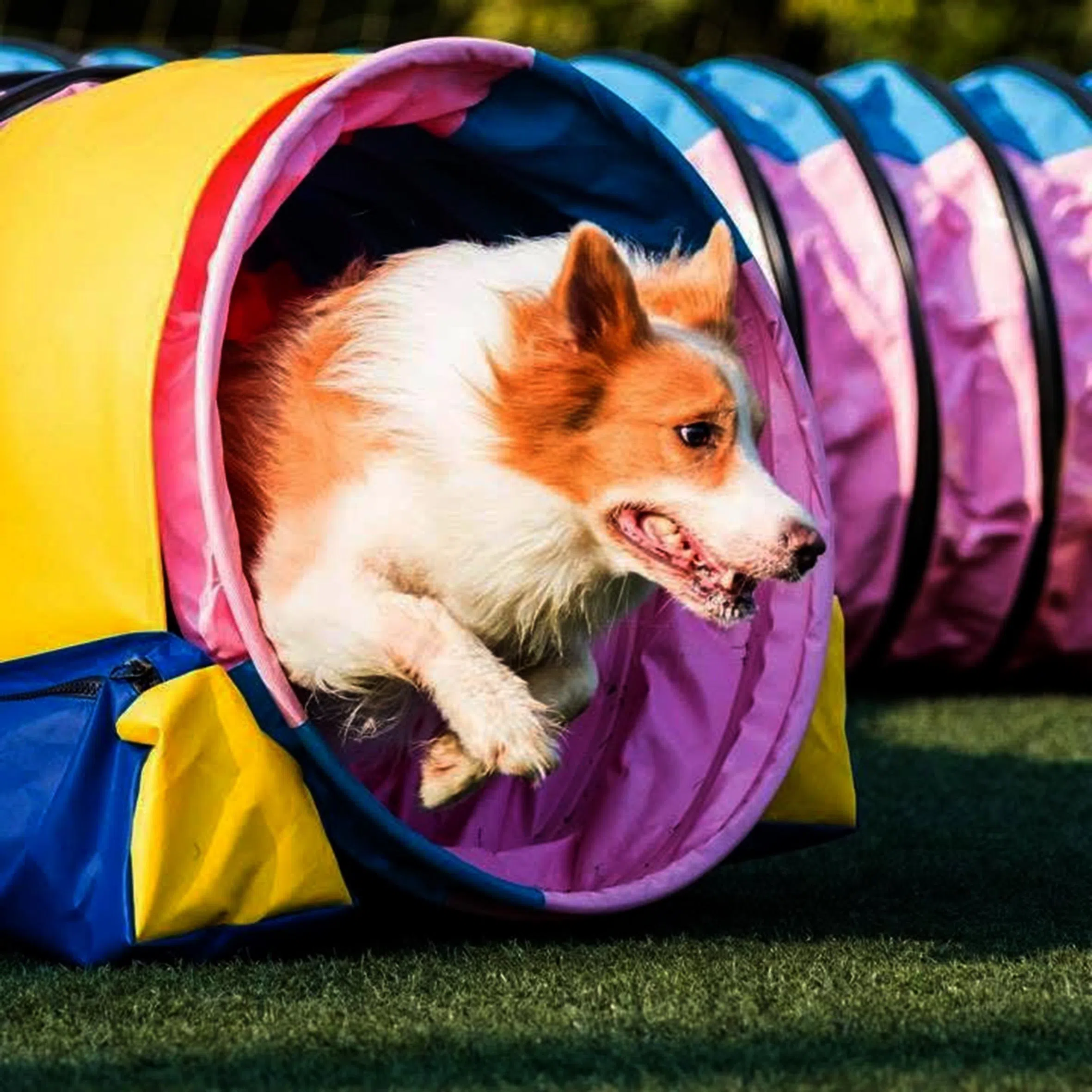
Cyrus the border collie was Soo’s first dog to compete in an agility competition in 2016.
PHOTO: COURTESY OF ELSA SOO
Cyrus became Soo’s first dog to compete in 2016 “because he took instructions well and did exceptionally at competitions”.
Venus, the underdog
Having watched other teams compete at international events, Soo decided to get a border collie that was specially bred for agility and brought in Venus from Britain.
“It takes two years to train a dog to be good at agility because it needs (time) to develop the skill, and we needed to wait for the dog to grow up. We do not want to train it too early because we do not want to harm its joints,” she said.
“But when Venus arrived, she was timid and struggled to adjust to unfamiliar surroundings. She wasn’t particularly playful, and honestly, she wasn’t a fast learner either. My cousin even asked if I got the right dog because Venus refused to obey simple commands like ‘sit’ and ‘fetch’,” Soo recalled.
In 2019, when Venus was ready, Soo decided to go into a new venture. She started Starrelito K9 Training, a dog training academy, in March that year.
Venus was two years and two months old when she competed in the World Agility Open Championships, her first international competition, held in the Netherlands in May 2019.
“We were the first Singapore team to have participated at that level. However, the weather was not on our side because it was one of the hottest summers in the Netherlands at 39 deg C. The competition was postponed till the evening because animal welfare groups there were protesting,” Soo said.
The course was also set up on sand, which Singapore dogs were not familiar with, and which was taxing for the human handlers.
Soo said that although Venus was not perfect, she managed to place 15th among 96 dogs in her category at her first outing, which was impressive for “a young dog my cousin deemed stupid”.
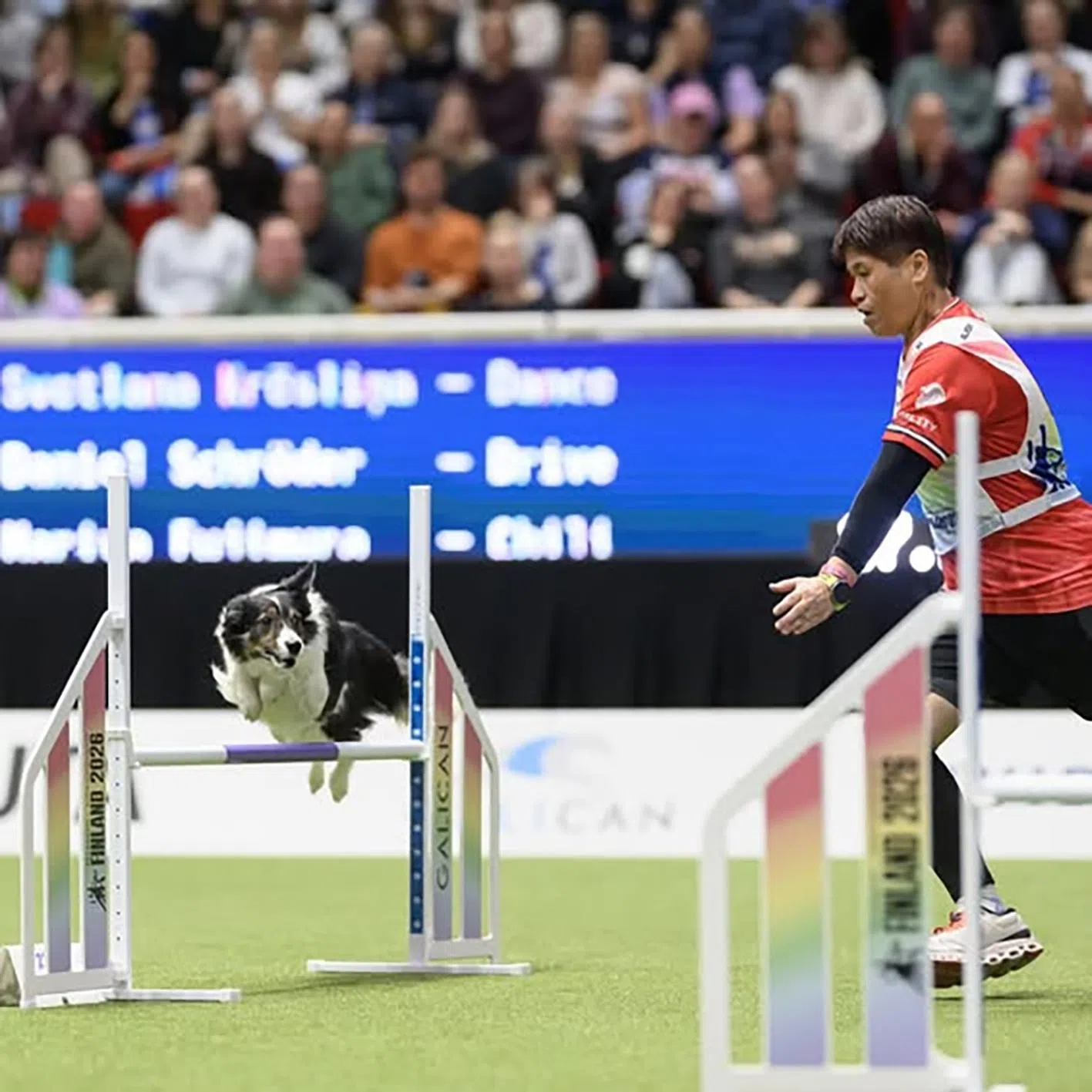
Soo and Venus in action at the 2026 FCI Agility World Championship in Turku, Finland.
PHOTO: COURTESY OF ELSA SOO
Soo was herself in awe. “I was up against all these world champions, some of whom were my trainers and others I idolised.”
There were usually two competitions held in Europe a year, but she decided not to go for the second one because it was expensive and Venus had already taken part in her first competition.
“That decision was my biggest regret because the next year, 2020, was the Covid-19 pandemic, and there was a complete dearth of competitions both in Singapore and overseas until 2022. Venus and my other dog Walker, a cocker spaniel, missed out during their ‘golden years’, when they could have excelled,” she said.
When they returned to competing, progress was slow.
“Then slowly came some clean runs, then more clean runs, and eventually, we started getting results,” Soo said.
The duo finished ninth at the European Open in 2025.
Now aged 9½, Venus showed that being a senior dog would not stop her from beating her younger competitors, not even when handler Soo was unable to run as fast beside her.
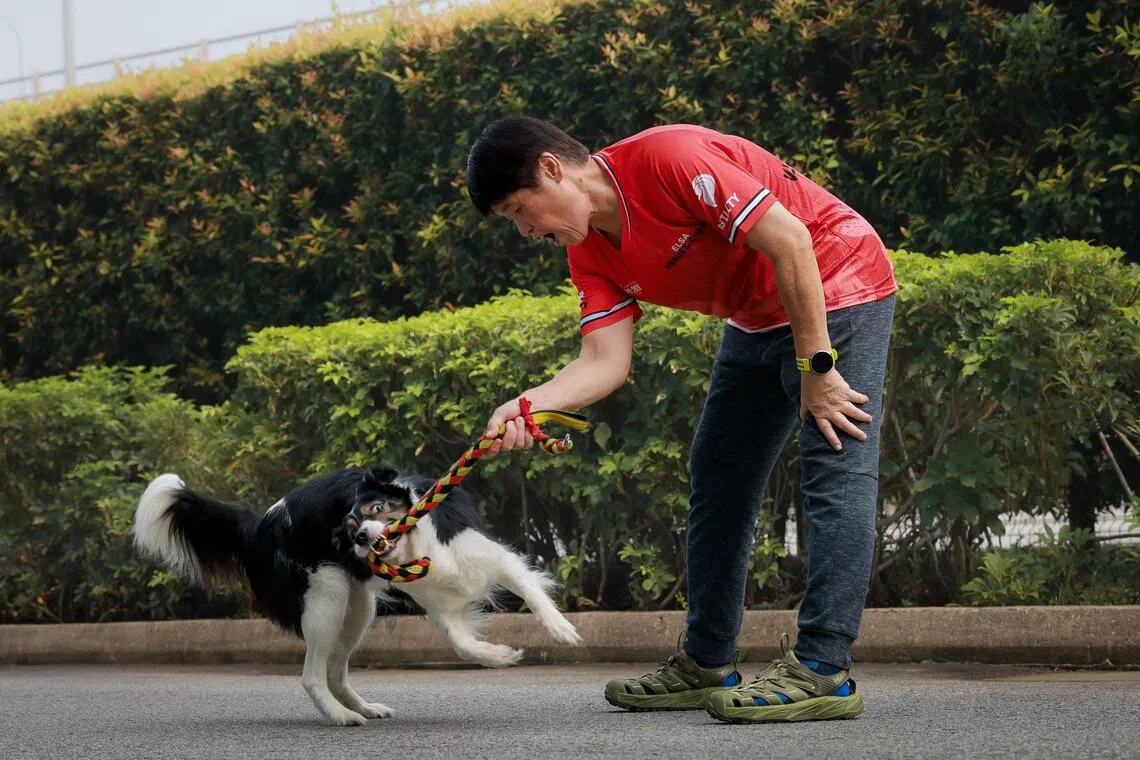
Soo jokes that her relationship with Venus is built on the dog’s sweat and her blood after she tore a knee ligament and suffered hairline fractures in her ribs.
ST PHOTO: GAVIN FOO
They placed fifth at the FCI AWC 2026, beating nearly 100 competitors from other countries.
“There is no shortcut to that kind of relationship formed between a handler and her agility dog. In fact, I joked that it is built on sweat and blood – Venus’ sweat and my blood – after having torn my knee ligament and suffering hairline fractures in my ribs,” Soo said, laughing.
Soo said that, like other dogs of her breed, Venus possesses an uncanny ability to read and interpret her handler’s subtle movements, eye contact and tone of voice.
“She became very sensitive to my moods and was able to know what I wanted. It made it easy for me to adapt and come up with my own version of verbal cues during competition,” she said.
Soo was able to understand Venus’ needs through her whines and eye movements, such as when she wanted to go for walks or when she was bored.
Depending on Venus’ health, her next international competition, if she is fit to compete in 2027, would be her last.
“The grand dame will have to pass the baton to her younger ‘siblings’ in the Soo household, who have been eagerly waiting in the wings,” Soo said.
KioskNews shows a cleaned-up reading view extracted from the publisher’s page — the original always lives on their site, not ours.