Social media users are eating huge amounts of carrots and shrimp for a natural tan

Some social media users are "carrotmaxxing," "tomatomaxxing" and "shrimpmaxxing," in the hopes of getting a sun-kissed glow that lasts them all winter long.
The trend, which calls for eating large quantities of carrots, tomatoes and shrimp, or taking supplements packed with their compounds, relies on carotenoids, natural pigments found in certain foods, the New York Post recently reported.
The outlet highlighted wellness creators promoting raw carrots as a way to get a "carrot tan," including one who said she no longer gets fake tans, and followed two Atlanta moms who said they take a daily carotenoid supplement for a "healthy glow."
COULD 'HUMANMAXXING' ACTUALLY HELP YOU LIVE LONGER? HERE'S WHAT EXPERTS SAY
The supplement they take is a blend of three carotenoid pigments: beta-carotene, lycopene and astaxanthin, the compounds that give carrots, tomatoes, shrimp and salmon their color.

Carrots contain beta-carotene, a pigment that can affect skin tone. (iStock)
Wellness influencer Lee Tilghman Pollis, meanwhile, recently said on Instagram that raw carrots have given her "the best skin of my life and I will die on this hill."
Another influencer went viral on TikTok for her carrot tan, telling followers that she no longer gets fake tans or stays out in the sun and instead eats three to four large carrots a day for several months to build up her tan.
DOCTOR REVEALS 4 HIDDEN HEALTH RISKS OF SPENDING TOO MUCH TIME INDOORS
Experts say the skin-color change is real and generally harmless, but it's no substitute for basic sun-safety measures.
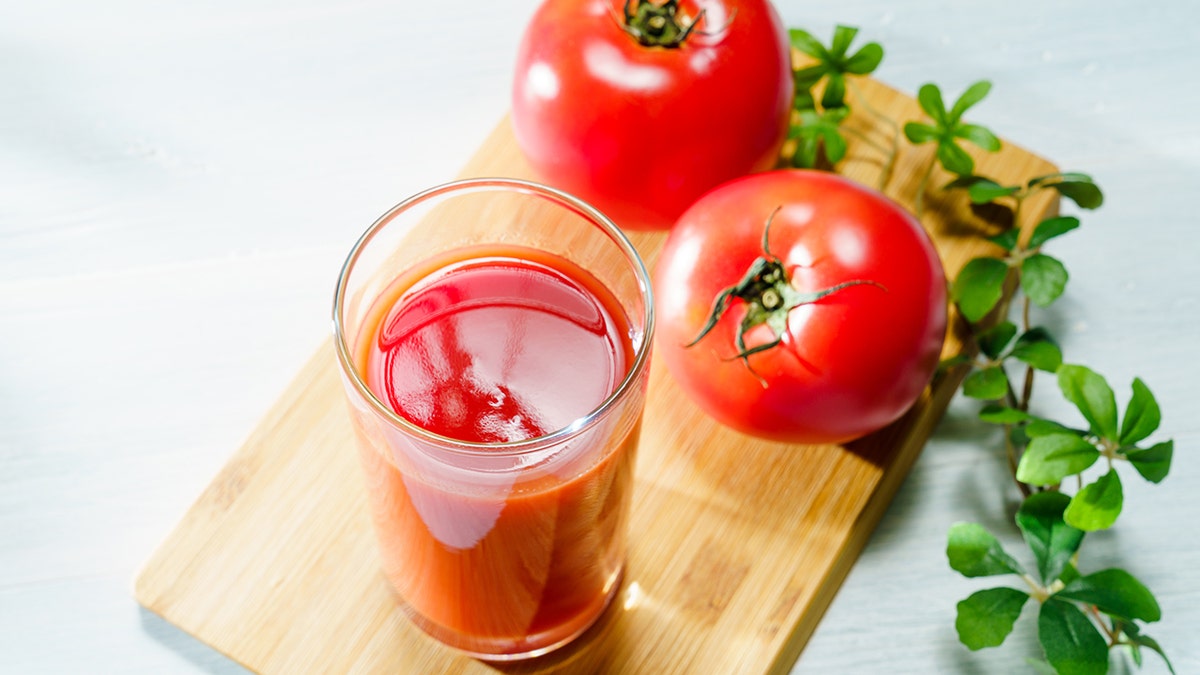
Carotenoids in tomatoes, shrimp and salmon can also give foods their yellow, orange or red hues. (iStock)
"Beta-carotene, lycopene and astaxanthin are fat-soluble pigments, and when you eat a lot of them they build up in the outermost layer of the skin," Dr. Navin Arora, a board-certified dermatologist and medical director of Borealis Dermatology in New York, told Fox News Digital.
NEW CALIFORNIA LAW WILL RESTRICT SALES OF SOME MUSCLE-BUILDING SUPPLEMENTS TO MINORS
The buildup can create a yellow or orange tint, often first visible on the palms, soles and around the nose.
There is no reliable dose for achieving a cosmetic change, Arora said. Small studies have found visible changes after about six weeks of eating extra servings of fruits and vegetables, though results can vary. The color also fades gradually after a person cuts back, he noted.

Dermatologists warn that a carotenoid glow does not protect skin from UV exposure. (iStock)
That pigment buildup, known as carotenemia, is generally harmless, Arora said, but skin that turns yellow-orange without a dietary change should be evaluated by a health care professional.
CLICK HERE FOR MORE HEALTH STORIES
The food trick does avoid skin damage caused by UV exposure, which also raises the risk of skin cancer and premature aging.
"The carotenoid glow involves no UV damage at all, but it also gives you no meaningful sun protection," Arora warned. "'Carrot color' is not a substitute for sunscreen."
CLICK HERE TO SIGN UP FOR OUR HEALTH NEWSLETTER
Dermatologists also caution that carotenoid supplements taken for a tan may carry risks for certain people. (iStock)
Arora cautioned against taking high-dose carotenoid supplements for appearance, though. High-dose beta-carotene supplements have been linked to increased lung cancer risk in people who smoke or used to smoke, according to the National Institutes of Health’s Office of Dietary Supplements.
TEST YOURSELF WITH OUR LATEST LIFESTYLE QUIZ
For people seeking a bronzed look, Arora recommends self-tanners, professional spray tans, bronzers or tinted sunscreen. He advises pairing them with broad-spectrum SPF 30 or higher every day.
CLICK HERE TO DOWNLOAD THE FOX NEWS APP
"Eating a colorful, carotenoid-rich diet is great for your overall health," he said. "I’d treat the glow as a bonus, not the goal."
Deirdre Bardolf is a lifestyle writer with Fox News Digital.
KioskNews shows a cleaned-up reading view extracted from the publisher’s page — the original always lives on their site, not ours.