Land planned for housing in Tengah converted to park after consulting nature groups: HDB
SINGAPORE – A plot of land in Tengah town that was once slated for housing has been re-designated for park use following consultation with nature groups, the Housing Board said in a Sept 18 report.
The 5.4ha plot, which is about the size of eight football fields, was retained to provide more homes for wildlife, HDB said.
The site was part of a larger area in the Tengah neighbourhood that had been re-zoned to make more room for a future park there.
Environmental studies for sites in Tengah have found wildlife considered critically endangered here. They include the Sunda pangolin, leopard cat and harlequin butterfly.
The HDB had highlighted the rezoning of the area near the existing Tengah Service Reservoir in a report published on its website on Sept 18.
The six-page document outlined the Board’s response to public feedback on an environmental impact assessment commissioned for the future Tengah Town Centre, which will be built on about 16.7ha of land.
The Straits Times’ checks on the government gazette showed that the re-zoning was approved in May 2025.
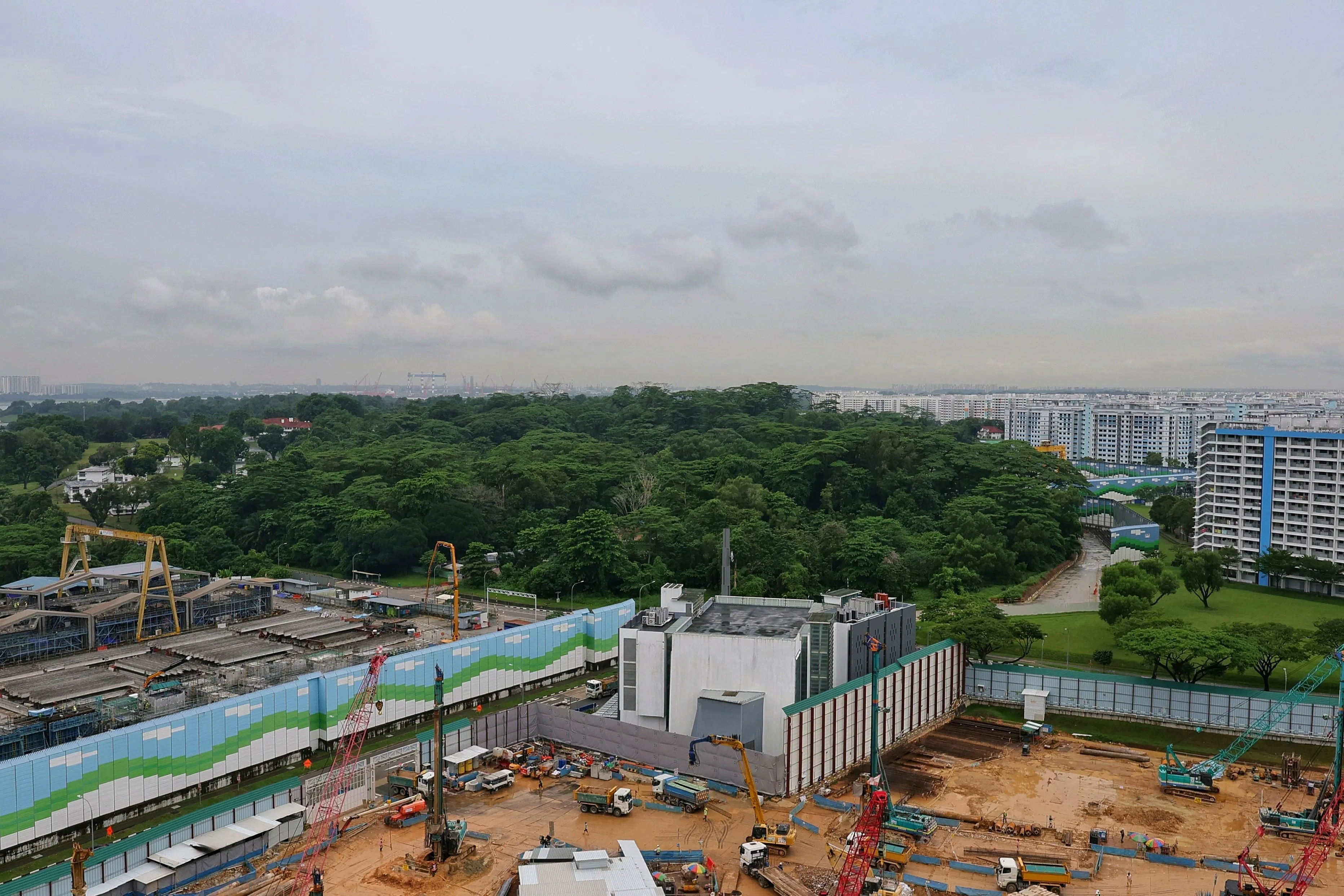
The 700ha Tengah town is being built on secondary forest. It has been billed as Singapore’s eco-friendly and car-lite “forest” town.
Due to Tengah’s location between the western and central catchment forests, vegetation there is considered to be an important green corridor that allows animals to travel safely between the island’s vegetated patches.
The HDB is developing the town in phases, and environmental impact assessments (EIA) are being carried out parcel by parcel. Such studies aim to blunt the effects for developments near sensitive areas. The EIA for the town centre had been published on June 19.
The HDB then called for public feedback to the EIA report, which had found that habitats there supported species considered significant for conservation. The area was also an important connection between ecosystems elsewhere, the report added.
The EIA report recommended that about 0.8ha of the area be retained as part of a larger corridor for wildlife across Tengah’s green spaces.
The window for public feedback closed on July 16.
On Sept 18, the HDB said it had received 142 responses from members of the public, who raised concerns about the loss of greenery in the area, among other things.
It said amenities like transport nodes, groceries and community facilities had to be set up for residents in Tengah town, noting that more than 12,000 households there had collected their keys as at December 2025.
HDB also said the upcoming town centre was planned around a future MRT Station on the Jurong Region Line. The site was also chosen for its close proximity to the majority of the town’s residential areas that are completed or under construction at Park, Plantation and Garden Districts.
The statutory board said that as a responsible steward of limited land resources, it will take a “calibrated and considered approach” towards managing the trade-offs between different land uses, guided by science and shaped by the valuable feedback received from nature groups and the public.
Overall, HDB said that about 140ha of natural green and park areas in Tengah has been safeguarded to provide more green spaces and relief for residents.
“We will continue to review the plans for Tengah going forward, taking into consideration ways in which biodiversity can be supported or enhanced, and engage relevant stakeholders when ready,” it said.
HDB responds to feedback on Sembawang development
The Sembawang North forest (N5 plot) as seen from 491 Admiralty Link on June 22.
ST PHOTO: KEVIN LIM
Separately, the HDB also shared its response to feedback received on another EIA done for 21ha of forested land in Sembawang.
The land is slated to be used for new housing and community developments, with clearance expected to start from 2028.
The EIA, which was also published on June 19, had found that the vegetation provides safe passage for wildlife detected on the site. The pangolin was among 148 animals detected on-site.
That report also showed that HDB decided to scale back the new housing site to protect wildlife and preserve remnants of freshwater swamp forest, one of Singapore’s most endangered ecosystems.
This set aside roughly 6ha of the area’s forest, grassland and scrubland – equivalent to about eight football fields – owing to its ecological value.
HDB said it received 160 responses from members of the public, who raised concerns about the impact of forest loss on biodiversity, climate change and urban heat. Some members of the public had sought clarification about Singapore’s long-term housing needs in the light of evolving population trends, while others asked about the public consultation process given its technical complexity, according to the HDB.
The statutory board said it will proceed to develop the neighbourhood sensitively, while adopting the study’s measures to blunt its impact.
Such measures include planting native species to feed birds and butterflies as well as installing hoarding to prevent animals from venturing onto the road.
Explaining why the site had to be developed for housing in northern Singapore, HDB said it has already introduced housing at sites such as Chencharu and part of the former Amoy Quee Camp.
Other sites, including Orchid Country Club and Khatib Camp, have also been earmarked for future residential use following the cessation or re-location of existing uses.
“Even with these sites, there are no other suitable sites to meet the housing needs in the same area, and within the required timeframe,” HDB said. “The development of (the Sembawang site) is therefore needed as part of the overall housing plans for the North.”
KioskNews shows a cleaned-up reading view extracted from the publisher’s page — the original always lives on their site, not ours.