Should I keep waiting for Mr Darcy? Jane Austen answers your most pressing questions

It is a truth universally acknowledged that every new generation must be in want of their own set of Jane Austen adaptions. This year sees the release on Netflix of Dolly Alderton’s take on Pride and Prejudice (starring Emma Corrin and Jack Lowden) and a new film version of Sense and Sensibility (with Daisy Edgar-Jones), written by Australia’s Diana Reid.
Alderton and Reid are two voices of our generation whose novels have tackled some of the great questions of our time: Why do men ghost? How do you recover from a toxic friendship? Why is there never any food at hen’s parties?
Dating apps might be our ballroom and we join run clubs instead of practising the harpsichord, but at the end of the day, put a group of young women together in 1811 or 2026 and the agenda will still be: who we love, economic security, sibling and parent drama and irritating in-laws.
These topics remain so current that we can still turn to the mother of the romance novel through the lens of an agony aunt, and ask the same question that women have asked for centuries… what would Jane Austen suggest?
1. I haven’t found my Mr Darcy. Should I settle for less?
We all want Wentworth or Darcy (or Colin Firth or Paul Rudd) to declare they love us just the way we are – despite our lack of self-awareness or ridiculous family or muddy skirts or whatever our red flag is. Who doesn’t aspire to a love so great it transforms them? The best advice here is to channel Elizabeth Bennet, from Pride and Prejudice. Lizzie knows her value and is (with self-awareness and a sense of humour) uncompromising about demanding her worth and not accepting less, even when everyone around her is urging her to settle.
You deserve the guy who sees everything wrong with you and loves you desperately anyway. And the giant house.
2. I’ve been ghosted. How should I respond?
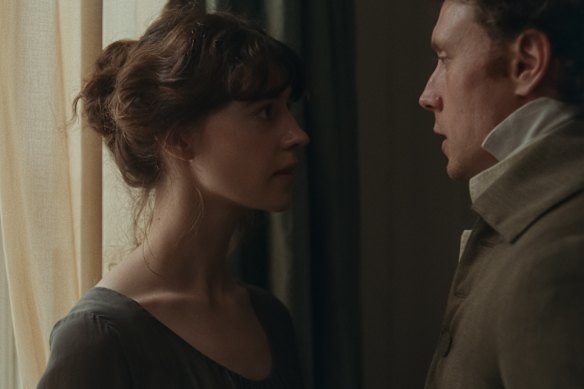
In Sense and Sensibility, Marianne Dashwood is ghosted by Willoughby. She’s devastated when she writes him letter after letter with no reply. The first thing you should do is to stop texting him. Then you’re allowed to cry, refuse to get out of bed and look terrible. Soon you, like Marianne, will lose your whole heart again to someone better – your own Colonel Brandon/ young Alan Rickman. Happiness will be the ultimate revenge. In the end Willoughby regrets ghosting Marianne and spends the rest of his life thinking of her as the perfect woman, holding her up on a pedestal. Let’s assume that the same thing will happen to the guy who ghosted you.
3. My friend is getting serious about a boring, egotistical know-all. What should I do?
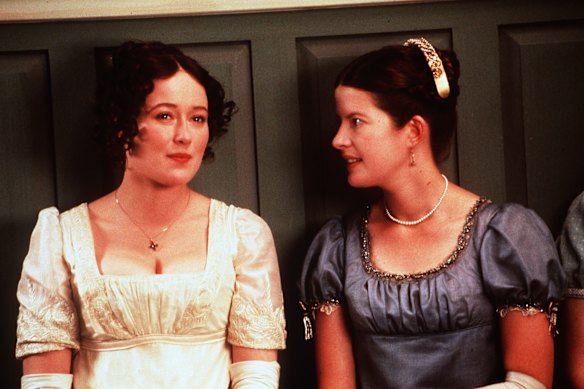
Again, be a Lizzie. When Elizabeth Bennet’s best friend Charlotte announces she’s marrying Mr Collins, who is all ick, Lizzie calls her out on it. Once. Then, when she realises Charlotte has made up her mind, she pivots to silently judging her decision and outwardly supporting her friend. There’s an unspoken agreement to ignore Mr Collins (where possible). Pride and Prejudice gives us the perfect playbook for when your friends get serious with someone who’s mid. You get one chance to attempt an intervention. Then, you must fall back to a position of quiet disdain and open solidarity. After a while (usually after the wedding), you’ll both mostly pretend he doesn’t exist.
4. I’m single and can’t afford to buy a house. What are my options?
This is a very Jane Austen coded dilemma – her plots are often real estate-centred. Many of her novels begin with a cost-of-living crisis. In Sense and Sensibility, the Dashwoods solve their housing crisis by moving into a distant relative’s cottage. A modern-day equivalent might be to move back in with your parents. In Persuasion, the Elliotts rent out their estate and move to Bath. Maybe you could move to a regional town where prices aren’t so insane?
Either way, Austen promises that your new locale will be swarming with handsome eligible men (and a few rogues). Some of them might even have enormous (mortgage-free) homes of their own, which will solve your housing dilemma entirely.
5. Working mum life is destroying my soul. Should I become a trad wife?
Jane Austen was clear-eyed about women’s economic realities, so she’d be sympathetic to the plight of the modern woman who’s trying to juggle the mental load of paid work, childcare and strength training, all in the same day. You could argue that she’d endorse trad wives’ performative femininity and celebration of marriage and family values. But Austen was critical of anyone who pretends to be something they aren’t (think Harriet in Emma or Brittany Murphy’s Tai in Clueless).
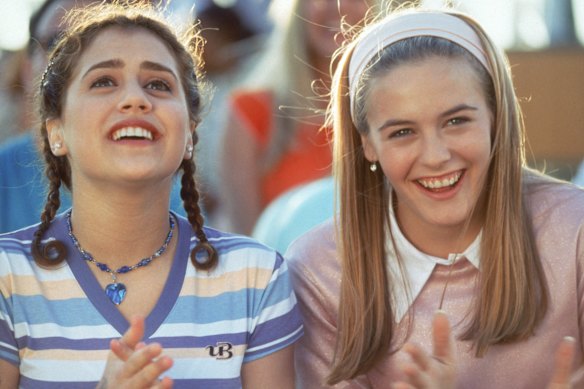
If she were writing today, she’d surely enjoy taking her literary scalpel to women who act (on camera) like they’re living the simple life while cooking their homemade sourdough in gazillion-dollar ovens and flogging expensive homewares to their followers. That said, Austen would be wholly supportive of the running away part. Her heroines are constantly forming parties, jumping into carriages and heading off to London or Bath or the Lake District.
The takeaway for those of us on the edge of burnout (and who isn’t?) is not to milk a cow but rather to book a one-way ticket to Bali and return only once cortisol levels have been lowered.
6. Should I be nice to my irritating in-laws?
Austen’s novels are full of survival strategies for navigating a spectrum of tricky in-laws. For the super toxic, controlling in-laws (think Mrs Ferrars) you might need to go low-contact. For a more moderately irritating mother-in-law like Mrs Bennet you might want to consider moving to the other side of the country (like Jane and Mr Bingley). If they’re just low-key annoying but ultimately good people, a solid option is to pretend to be deaf or asleep during family gatherings (as demonstrated by Mr Palmer in Sense and Sensibility).
7. I wasn’t picked to be a bridesmaid for a close friend. Should I confront her?
Imagine your close friend is Jane Bennet. When you were kids you swapped ribbons, learned to dance the quadrille together and dreamed about your (double) wedding.
And now, finally, she’s engaged to Mr Bingley. Everyone is thrilled. You’re waiting for the call-up to be bridesmaid. Maid of honour even. Except Jane is very close to her sister Elizabeth. And Elizabeth’s husband is the groom’s best friend. So obviously she’s the maid of honour.
There are three other sisters too. Lydia is in disgrace (and can’t be trusted to plan a hen’s). And Mary won’t enjoy the dressing up. But Jane’s far too kind to only ask half of her sisters – so they’ll all be in the bridal party too. And there’s the sister-in-law – Miss Caroline Bingley. Obviously, she shouldn’t be a bridesmaid – she doesn’t even like Jane. If she could break up the couple, she absolutely would. But her brother loves her, so she’s in.
Your friend might desperately want you by her side on her big day, but for some (logical or irrational) reason (he wants an equal number of groomsmen, she’s been a serial bridesmaid who feels she should return the favour, she can’t afford to pay for six sets of hair and make-up and bonnets) she hasn’t asked you. Give her another chance.
8. Influencers are making my life feel ordinary. Should I delete all my accounts and get a dumb phone?
No! Don’t feel bad about enjoying social media. Austen would have loved social media – though as a lurker, not a poster. And she basically wrote the job description for an influencer at the opening of Emma - someone “handsome, clever and rich, with a comfortable home and happy disposition”. Emma Woodhouse, a modern hot, rich woman who doesn’t need or want to work, would have an enormous following on Instagram. Her aesthetic would be pastel-hued country chic. Her TikTok would feature themed seasonal dinner parties, unboxing swathes of cashmere and being temporarily enthusiastic about new hobbies. On her podcast (there would be a podcast) she’d give endless advice about dating in the modern world.
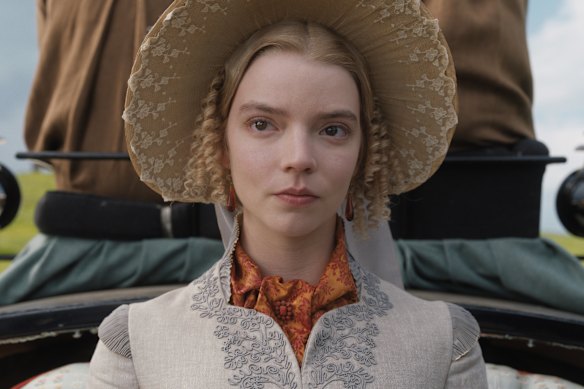
You could look at Emma’s grid and think it’s perfect and that she has all the answers. But (as Mr Knightley, regularly tells her, swoon!) she doesn’t. Emma thinks she’s excellent at life. But she (like all the best influencers) has an inflated ego and a big dose of self-delusion. Her lifestyle should not be compared with your own. Her advice is not to be taken. That way misery lies. Just ask Emma’s matchmaking project, Harriet Smith.
Treat a glimpse into Emma’s life, into influencers’ lives, as a treat. Then revel in the extraordinary ordinariness of your own.
9. I’m lonely. How do I feel more connected?
Jane Austen’s novels are all about community. Characters will stomp across muddy fields and take carriages through the snow to be together. We might not want to take every piece of wisdom from the Regency era. These days it’s nice to be able to get caught in the rain and not fear imminent death from a chill. But many of Austen’s characters are expert in connection.
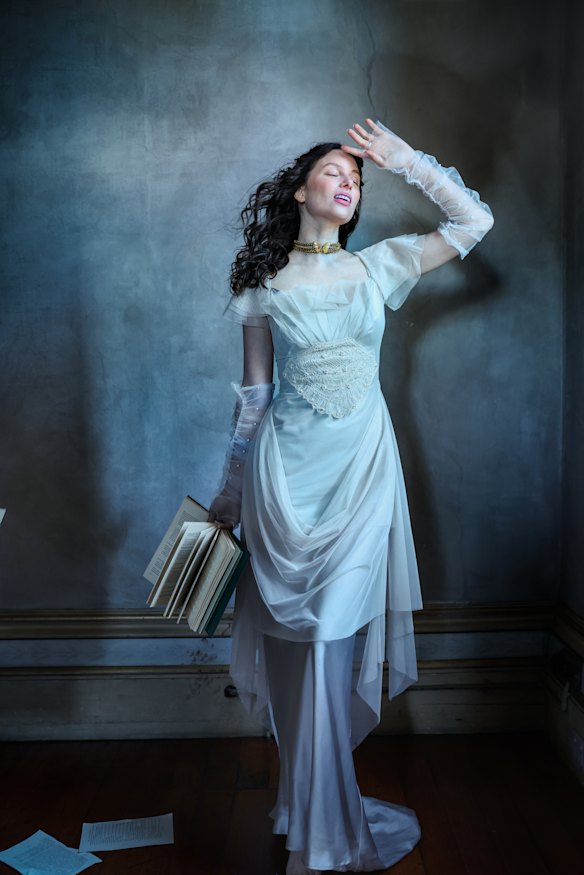
Sir John Middleton, from Sense and Sensibility, has the most fun - constantly instigating and hosting dances, dinner parties and outings, and inviting all the young, fun people (and anyone new in town) to join. Mr Bingley arrives at Netherfield Park determined to be delighted by it, throws himself into the local social scene – dragging his snobby friends along to the village dance and then inviting them all back to his house for a ball. Everyone in Emma is constantly (if reluctantly) checking on poor Miss Bates. Put down your phone and start to create a real-life village in your big city – host an event, join an activity and then check in on someone else.
10. The world is heating up, there’s a cost-of-living crisis and none of the wars are ending. How do I stay hopeful?
Did you ever wonder why there are so many hot sailors floating around these stories? Jane Austen wrote her books when England was in the thick of the Napoleonic Wars. France’s revolution was in full swing across the English Channel. And yet she wrote about sisters and balls and falling in love. That’s the takeaway. In a world that feels out of control, focus on the controllable. In a world that feels scary and uncertain, search for joy and hope.
The sale of romance novels tends to spike during times of political or economic uncertainty. When the world feels like chaos and gloom, there is comfort in a story where the happily-ever-after is guaranteed.
Don’t bury your head in the sand. But when reality feels like it’s pulling you down, get dressed up and go to a party, exchange witty banter with the hot, brooding new guy in town, host a dinner party. Or at the very least open your preferred streaming platform, where there is almost guaranteed to be an Austen (or Austen-inspired) adaptation.
Sense and Sensibility opens in cinemas on October 15. Pride and Prejudice streams on Netflix from December 3. Steph Vizard is the author of A Smart Girl’s Guide to Second Chances, HarperCollins, $25.
Want more movies?
- Nicole Kidman and Sandra Bullock return to make more magic
- His movie was a disaster. His movie about making it is a delight
- Never mind Mick Jagger, here’s the real story of Marianne Faithfull
KioskNews shows a cleaned-up reading view extracted from the publisher’s page — the original always lives on their site, not ours.