NOT A DROP: ‘This thing is killing us’ — residents bear the cost of Tshwane’s water failures
Each morning, 37-year-old Susan Mashilo pushes a wheelbarrow filled with containers and water drums all the way from her home to a burst pipe on the outskirts of the township to secure water.
In Bronkhorstspruit, clean water has ceased to be a basic right after the town’s treatment works pumped unchlorinated, sewage-polluted water into communal taps for weeks.
Following more than 400 cases of severe gastrointestinal illness and diarrhoea (the vast majority affecting children under four) residents were officially warned against drinking, cooking or bathing with municipal tap water until reservoirs could be drained and flushed.
While the City promised a lifeline of emergency water tankers, residents on the ground report that these vital interventions are virtually nonexistent.
“You cannot bring three trucks to Rethabiseng! Only three!” Mashilo exclaims. “It's not enough! We must cook, we must drink, we must do washing.”
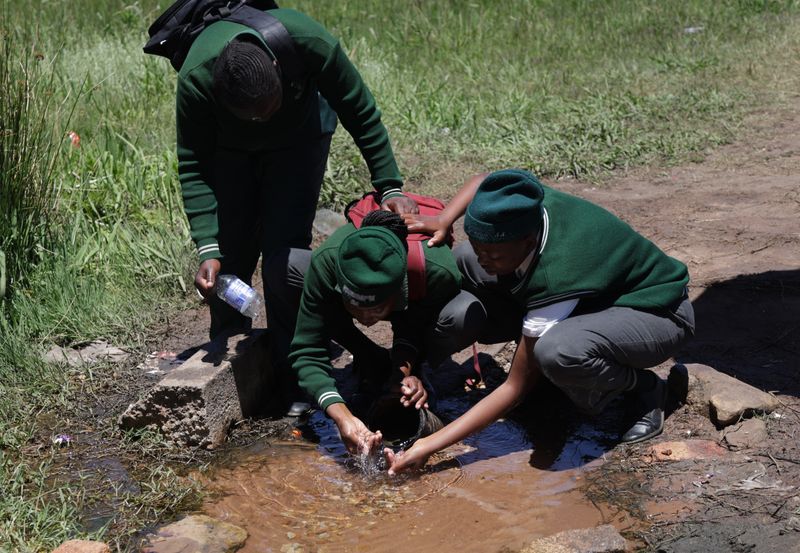
Unemployed and surviving on child support grants, Mashilo cannot afford the R1-per-litre local spaza shops and internet cafés are charging for clean drinking water. “We end up drinking this water sometimes, because we cannot afford to buy water,” she explains, gesturing to the ruptured pipe. “We’re struggling, we don’t have money, we’re not working. How will we afford to buy water every day?”
While the current crisis is undeniably catastrophic, the Bronkhorstspruit Water Treatment Plant was a disaster waiting to happen, with repeated warnings of systemic failures constantly ignored by the City of Tshwane.
Years of ignored alarms
Three reports flagging poor water quality were issued to Tshwane mayor Nasiphi Moya and officials in the months preceding the crisis, as reported by the Sunday Times.
Additionally, in February this year, the national Department of Water and Sanitation (DWS) issued a formal noncompliance letter to the City of Tshwane regarding critical deficiencies at the plant.
In March, the municipality submitted a corrective action plan to the DWS, but the department confirmed that “none of these commitments were implemented in the timeframes that were provided”.
Even as far back as 2023, the DWS Blue Drop Report revealed that the Bronkhorstspruit plant achieved an abysmal score of only 42.3%, remaining flagged on the DWS Integrated Regulatory Information System as a persistent hazard.
However, despite of all the warnings, the municipality failed to take action, paving the way for a public health disaster.

When the plant ran out of chlorine in late September, operators failed to escalate the emergency and issue health warnings, leaving residents to drink contaminated water for three weeks until hundreds fell ill.
Ekangala resident and community activist Themba Masuku has been raising the water issue to the municipality for years. “They must take us seriously,” he says. “The water has been contaminated for years. It either has a certain smell or it’s brown. At Cosatu, we’ve been engaging with the City to fix the issue, but they never fix anything,” he says bleakly. “We cannot live like this forever.”
Following public outrage, Moya has placed the Bronkhorstspruit plant manager on precautionary suspension, stating that the City’s performance was “indefensible”. The City also initiated an independent forensic investigation into chemical supply contracts and communication breakdowns.
The reality on the ground
In Rethabiseng, 59-year-old Nelly Mogale feels entirely forgotten by the City. “I’ve seen in the news they were talking, ‘Water tanks will come, the people mustn’t use this water, the water tanker will come’,” she says. “But they didn’t even come once. Hey, even once!”

Mogale lives with her three children, where water contamination remains a daily health hazard. “My 13-year-old child has diarrhoea,” she says. “I went to the chemist to buy the prescription for him because he was vomiting.”
Other residents say the water crisis has completely disrupted the livelihoods of their children as well. Joseph Mthimunye (29) has two children who have had to stop attending school because of the lack of safe drinking water.
“Their clothes, their blankets, they can’t wash it. We can’t even wash ourselves,” he adds. “So they are no longer attending the school. One truck, it’s not enough water. Ah, we can’t survive. This thing is killing us in Rethabiseng.”
While the City of Tshwane insists it has deployed 36 water tankers sourcing potable water from Cullinan and recently launched a campaign to disinfect its trucks to “rebuild public trust”, Rethabiseng residents say the service is virtually invisible, leaving entire blocks without a single delivery for days.
The water stoppage has also triggered a severe sanitation crisis. “The toilet needs water to flush,” Mthimunye says. “Things get stuck because people cannot flush, blocking the pipes.”
The backing-up of waste has forced raw sewage out of domestic drains and directly onto residential streets.
Mogale lives down the road from a leaking sewage drain. “It’s flowing down the street on this side,” she says, gesturing to the steady flow of human faeces spilling down the road.

“It’s stinking too much, there are flies in the house. And when we pass here, we must put some bricks so that we can cross,” she explains. “Last week it was terrible, very terrible. We couldn’t pass here, and because the school is on this side, the children take this side to go to school.”
Although municipal teams visited the site with a suction machine last week, following repeated complaints, residents say no permanent action has been taken to resolve the underlying issue, with raw sewage continuing to accumulate on the streets.
Political battleground
With local elections under two weeks away, some political parties are using the water crisis in Bronkhorstspruit as an opportunity for political campaigning.
Seizing on the crisis, the DA plans to lay criminal charges against mayor Moya and the ruling coalition over months of ignored warnings about failing water systems. The party said: “Mayor Nasiphi Moya and the ANC-ActionSA coalition cannot say they were never warned.”

“This is not optional. The law requires residents to be warned when their drinking water may pose a danger to their health,” the party said, demanding the immediate release of independent chlorine logs and records of water quality tests.
The EFF too has taken aim at the coalition leadership, calling for Moya’s immediate resignation, alleging that her executive ignored internal warnings about the unchlorinated water and failed in its duty to warn the public timeously.
The party has also lodged complaints with the Public Protector and the South African Human Rights Commission. Furthermore, EFF treasurer-general Omphile Maotwe has laid criminal charges against the mayor and the city manager for concealing the three-week chlorine shortage.
In response, Moya publicly accused former DA mayor Cilliers Brink and opposition parties of “exploiting the water crisis” for political point-scoring in the lead-up to the elections.
‘Voting won’t help’
Yet, for residents on the ground in Bronkhorstspruit, such political theatre remains disconnected from their immediate reality. In fact, their persistent battles with water and sanitation have left residents deeply cynical and entirely distrustful of political parties in general.
“Voting won’t help us,” Mashilo states plainly. For her, the needs of the community are simply being exploited for the elections without being properly addressed. “One thing for sure, they’ll bring water before the 4th,” she says. “After the 4th, back to square one again.”
Johannes Twala (32) echoes this fatigue. “Even if you vote, what’s going to change?” he asks. “They don’t help us now. When we vote, what’s going to change after that? Nothing’s gonna change.” DM
KioskNews shows a cleaned-up reading view extracted from the publisher’s page — the original always lives on their site, not ours.