BIG BET: Botswana is gambling with its future by doubling its stake in De Beers
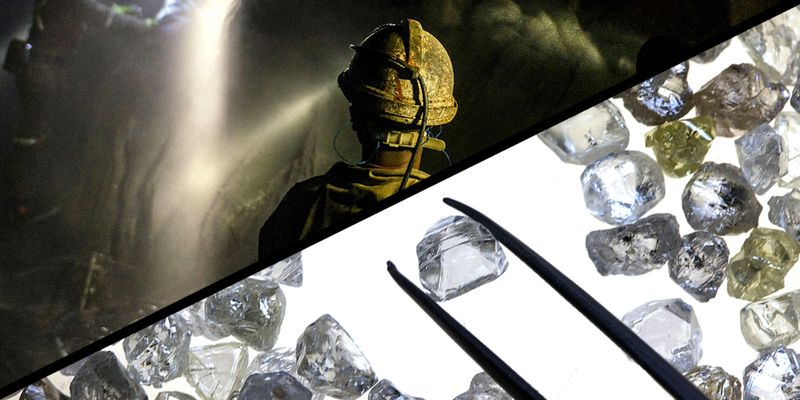
Botswana is risking its coveted investment grade ratings and its financial future by raising its stake in De Beers at a time when the future of natural diamond demand is as bleak as the Kalahari landscape during a drought.
Botswana will double its stake in De Beers from 15% to 30%, President Duma Boko told Parliament on Monday.
The announcement comes as Anglo American is in the throes of disposing of its 85% stake in De Beers against the backdrop of a structural downturn in global diamond markets that looks set to become entrenched.
Boko also endorsed the Global Diamond Consortium’s bid to acquire De Beers. Welcoming the endorsement, consortium chair and former De Beers CEO Gareth Penny noted that the parties were working together “towards becoming co-owners of De Beers”.
With the deal likely to be inked in the coming weeks, Botswana is set to become the biggest shareholder in the post-Anglo version of De Beers. It’s a gamble with the odds heavily stacked against Botswana’s bet.
Fixated on the sparkle of a past built on diamonds, Botswana is viewing its history through rose-tinted glasses – oblivious to the ominous dust clouds gathering on the horizon.
Botswana’s relative prosperity and its investment grade credit ratings were for decades largely a product of its diamond industry. Indeed, Botswana was a rare example of an African country defying the “resource curse”, which speaks to the consequences of relying heavily on a single commodity and the failure to channel the wealth that flows from it into broader prosperity.
In the past few years, the glitter from natural diamonds has dulled as sales have tanked in the face of surging demand for much cheaper lab-grown, synthetic gems and collapsing demand in key markets such as China.
And more widely, a younger generation worldwide is no longer buying into the slogan, “A diamond is forever”.
The slump has been relentless, with average uncut gem prices dropping a further 32% in the first six months of 2026. Red lights galore have been flashing, including Anglo’s suspension in July of production at De Beers’ Venetia diamond mine in Limpopo – just after it had invested $2.2-billion to convert it from an open-pit to an underground operation.
Diamond dependence
Botswana’s economic fortunes, unsurprisingly, have been sinking with diamonds. Boko’s Umbrella for Democratic Change party’s election victory in 2024 – ending almost six decades of rule by the Botswana Democratic Party – was linked to an economy that was souring because of the diamond market’s woes.
Viewed through this prism, Boko’s rise to power was propelled by the diamond decline and his promises to diversify its economy away from what had become a dangerous dependence.
But he has now hitched his political future and that of Botswana’s economy to diamonds.
The country’s economy contracted 2.8% in 2024 and 0.7% in 2025. A rebound has been building this year with robust growth of 8.7% in the second quarter – compared with a 5.2% contraction in the same period in 2025 – and that expansion was underpinned by an increase in diamond production.
But given where the diamond market is going, that could be a blip built on sand rather than stone.
The outlook for Botswana’s investment grade credit rating has been downgraded precisely because of diamonds’ dismal outlook.
S&P downgraded Botswana’s rating in March and assigned it a negative outlook, a view that remained in place when it published its latest assessment in September.
“The negative outlook reflects our view that the structural weakness in global diamond demand will continue to constrain Botswana’s economic growth prospects, as well as its export and fiscal receipts, putting pressure on the country’s external and fiscal buffers,” said S&P.
The International Monetary Fund (IMF) has voiced similar concerns.
“Declining global demand for diamonds has heightened the urgency of economic diversification. Botswana’s economic model has remained highly concentrated in the capital-intensive diamond sector, with limited diversification into other productive industries,” the global lender said at the end of last year.
“This reliance on a single commodity has increased the economy’s vulnerability to external shocks and contributed to volatility in growth and employment.”
The IMF noted that in 2023 diamonds accounted for 80% of Botswana’s exports and that “diversification into more complex, high-value products has stalled. The continued dominance of a single commodity sector risks entrenching economic vulnerability, limiting future growth potential and resilience.”
Finding diversity
In fairness to Botswana, it has been attempting to diversify its economy – but the pace, for whatever reason, appears to be glacial.
It has been seeking investment in other minerals, metals and hydrocarbons, and for years this has been transparently displayed on its functioning mining cadastre – something regular readers of this publication are well aware that South Africa still lacks.
Boasting the world’s largest population of elephants – it is the only country where elephants outweigh the human population – it also has a thriving ecotourism sector and a significant cattle and beef-exporting industry.
But it needs to accelerate its diversification drive, and increasing its stake in De Beers sends the wrong signal on this front. Given the outlook for the diamond market, it’s a head-scratcher of note.
Then again, upping its stake may not prove too costly to Botswana’s Treasury. Anglo’s slow-motion – some would say ham-fisted – approach to its De Beers sale as the diamond market continued to crater portends a fire sale.
KioskNews shows a cleaned-up reading view extracted from the publisher’s page — the original always lives on their site, not ours.