Star Wars: Galactic Racer Review - Fuse Games' Run-Based Racer Is An Instant Genre Classic
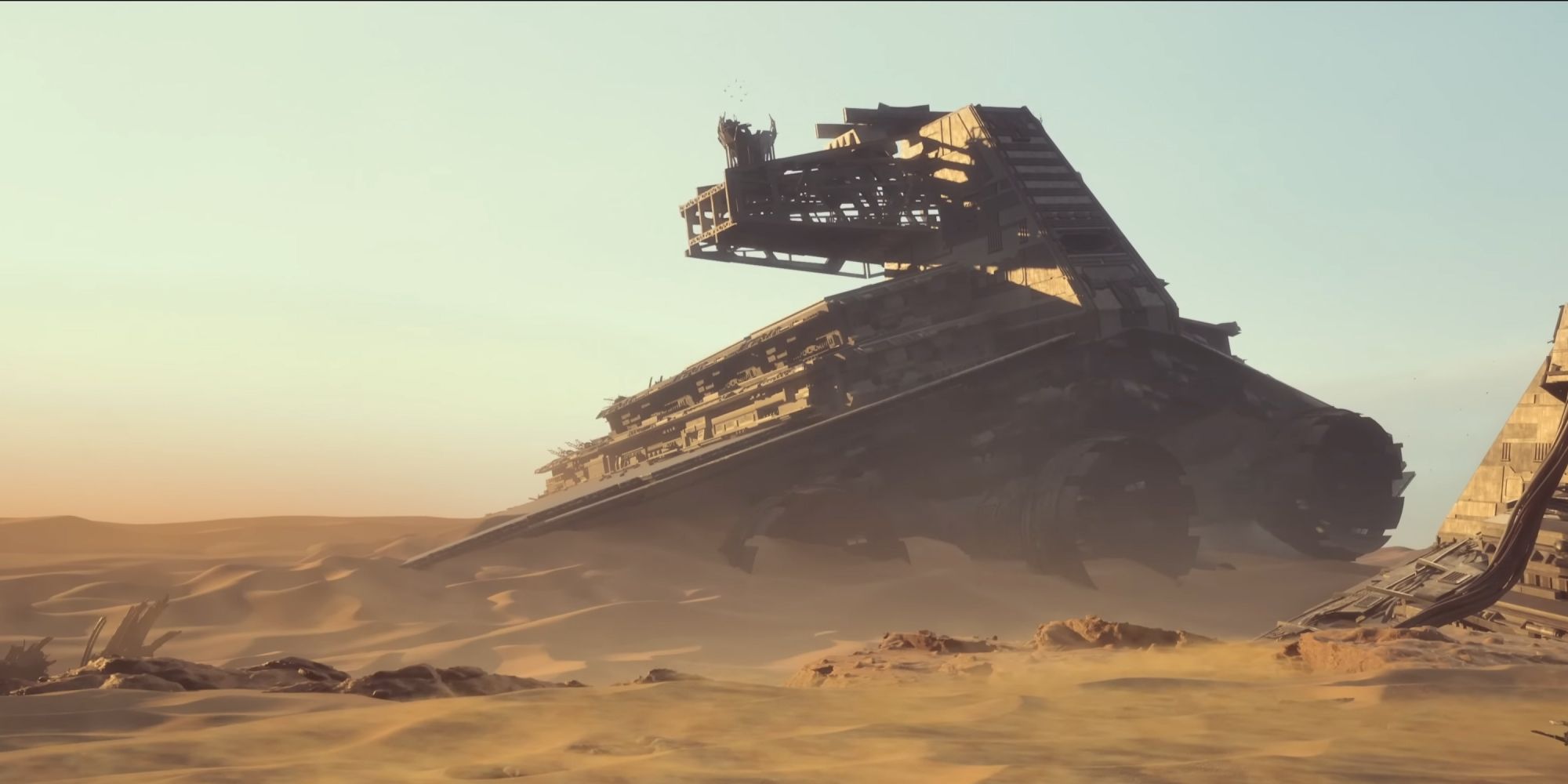
Though The Phantom Menace understandably remains one of the franchise's most divisive entries to date, it did a lot right. One of the most important of those was introducing a 6-year-old me to the ridiculous action of podracing, and it remains one of the coolest things about the prequel trilogy as a whole. Anakin Skywalker might have been uniquely gifted at the impossibly dangerous sport, but that doesn't mean we shouldn't be able to give it a try for ourselves, and that's where Star Wars: Galactic Racer comes into play.
Before we get into the weeds with the review, it's important to note that plenty of what you'll actually be doing in the game is technically speeder racing. These are ever so slightly slower and safer, but if you're in it for podracing specifically, there's plenty of opportunity for that as well.
A Surprisingly Immersive Story Campaign

When you jump into Galactic Racer for the first time, the activity that most players will likely go for initially is the single-player campaign. The player steps into the shoes of Shade, a lone, mysterious racer who has dreams of conquering the Galactic League, a high-stakes racing competition born out of the collapse of the Empire.
You're essentially invited to compete by the affable Darius Pax (who runs the league), and from there, you'll be thrust into your first race. Essentially, the campaign is presented as a branching tree of events which you have to progress through to get to the end. In the first instance, this will allow you to qualify for the Galactic League proper, but it's the format that is followed throughout.
That's where the run-based nature comes into play. You can only keep competing if you have a League Token. This can be lost anytime you crash too much in an individual race, or if you lose specific elimination matches. Chances are, you'll flunk out of at least one run, but you'll be able to return to the fray at the start with some meta-progression for your racer, giving you a better chance of progressing next time out.
This includes Credits, Tuning Points, and Kit Points, and while it could be a frustrating feature for some who prefer not to have to go back in their games, it's well-balanced, and you shouldn't find yourself stuck anywhere for too long.
The campaign also features a genuine, tangible narrative and a memorable cast of characters that bring it to life, all of whom feel safely at home in the existing Star Wars canon. You'll meet a recognizable face or two along the way as well, and while it doesn't have quite the same stakes as a lot of the stories told in the same universe, it really doesn't need them. What's happening is important to your character in that moment, and that's more than enough to carry the campaign through to its conclusion.
Deep Customization At Its Core

During your runs through the Galactic League, you'll be given a chance to upgrade and improve your chosen ride, whether that be a classic Landspeeder, a Speeder Bike, or a Skim Speeder. Your speeder comes with one of six core stats in either Cornering, Afterburner, Resilience, Ramjet, Battery and either Drift (landspeeder), Kinetic Burst (speeder bike) or Knife Edge (skim speeder).
Improving these base stats is one of the key ways you gain an edge, and you'll be able to upgrade more if you win races, as you'll have access to more credits. At the same time, you can install parts that provide passive benefits to the player's vehicle, like increased Afterburner duration or benefits to your battery.
The fun doesn't stop there, though, as you also have access to active abilities that you can use in the race to knock out opponents, improve your position, or protect yourself. The final element of that tapestry is Racer Styles, which give you benefits based on how you usually/plan to drive your speeder.
All of that allows you to approach the game in any way you see fit, either highly specializing your vehicle to race in a specific way, or improving it across the board to give you as much chance as possible. The customization options provide enormous depth, and they're also a big part of the game's replayability. Playing two differently built speeders is such a stark change that it can feel like learning the ropes all over again, and that's addicting in its own right.
Battle With Friends And Foes

With the campaign behind you, you'll be happy to hear that the game comes alive again when you jump into the multiplayer. The Multiplayer Tours are the biggest recommendation, replicating the runs of the campaign to allow twelve players to improve their vehicles as they race across several tracks. Coming out on top in one of those is a genuine achievement, and you'll need more than a little luck to see it through to the end.
If you're looking for an in-and-out experience, you can jump into simple quick races, either against twelve players in speeders or eight players in Podraces. The latter is best enjoyed with other players as well, because you can guarantee that the speed everyone is traveling at will lead to more than a few hilarious situations cropping up in each race.
It's also here that one of the game's very few points of difficulty rears its head the most. Galactic Racer prides itself on giving players the experience of traveling at immense speed, and it does a brilliant job. This has the knock-on effect of making it quite difficult to see, ahead of time, where you're supposed to go. This doesn't happen all the time, but as someone who currently has no vision issues, the chaos of a multiplayer lobby can make some of the scenery used in turns a little difficult to discern.
It's a minor gripe, though, as you'll be racing across planets with such variety that you shouldn't have much of an issue other than on sporadic, individual occasions. Multiplayer isn't always fair, as you can easily run into a tiny bit of bad luck that knocks you off the top spot. Happily, that just leans you in further to the immersion of being a racer, and it's near-impossible to not come back for more when you've just missed out.
Variety Is The Spice of Life

The game adds even more variety through the sheer range of tracks you'll race throughout your journey, whether in single-player or multiplayer. There are seven unique planets, including Derven Acos, the home of the Galactic League and the site of the most spectacular track designs on the part of the developers.
Each of these comes with a bunch of status effects that you'll need to account for while racing. Very cold planets allow you to use your Ramjet for longer than normal, but they can also freeze your vehicle and cause you to use control. To counter this, you need to drive through quite tight heaters regularly enough to keep everything working properly.
Other planets have lava that can cause critical errors in your speeder that you'll need time to recover from, and you won't be able to take advantage of your boosters for anywhere near as long. Corrosion is horrendous to deal with, but you can push enemies into it to ruin their races if you're clever about your movements.
Those considerations add yet another lair to the player's thinking heading into each race, and they are systems that feel important, without adding unnecessary bloat that doesn't feel at home in Galactic Racer's wider systems. Overtaking opponents and barely scraping tight corners is genuinely thrilling, while a silly crash that sends you back to the start of a run is heartbreaking.
Star Wars: Galactic Racer succeeds because, on a moment-to-moment basis, it can elicit a huge range of emotions from the player. It also feels exceptionally fast, and it's just about as close as you'll ever feel to actually having some control over the Force, or sharing the gifts of a character like Anakin. If that isn't what we're looking for from any Star Wars game, then I don't know what is.
KioskNews shows a cleaned-up reading view extracted from the publisher’s page — the original always lives on their site, not ours.