An Arab political earthquake reshapes Israeli elections
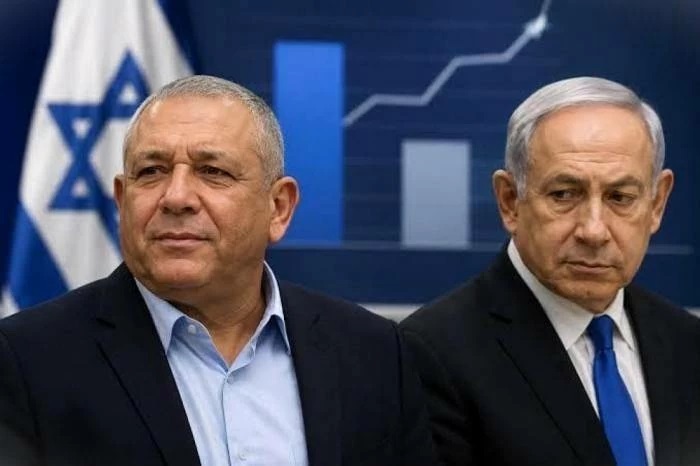
While both Benjamin Netanyahu and his political opposition claim victory following Israel’s latest elections, the immediate reality remains unresolved. Neither faction secured the 61-seat parliamentary majority needed to form a government, leaving Israeli politics at a complete standstill—unless the opposition and far-right enter a broad national unity coalition, a prospect rendered unlikely by deep ideological divides.
Instead, the true political shockwave came from inside the Arab electorate. Securing nearly 19 seats across two main blocs—the Joint List and Mansour Abbas’s United Arab List (Ra’am)—Arab parliamentarians now hold decisive leverage in Israel’s complex coalition math.
Historic turnout and political leverage
This historic parliamentary gain was driven by an unprecedented voter turnout among Arab citizens of Israel, which neared 80%. Galvanized by ongoing military operations in Gaza, escalating West Bank tensions, and systemic domestic discrimination, Arab voters turned out with a clear mandate: removing Netanyahu from power.
Mathematically, Netanyahu’s right-wing bloc falls well short of the governing threshold. If the Arab parliamentary factions maintain a unified stance without making early concessions, they hold the power to effectively end Netanyahu’s political tenure—possessing structural leverage that regional diplomatic efforts have struggled to achieve.
Coalition barriers and demands
Fearing this political reality, Netanyahu previously campaigned on the divisive slogan “The Right or Palestine,” warning that Arab voters would dictate Israel’s political future. Opposition figures, including Gadi Eisenkot, initially laid out rigid conditions for Arab support—demanding explicit recognition of Israel’s Jewish character, acceptance of mandatory military conscription for Palestinian citizens, and formal condemnation of resistance groups.
However, political realities have shifted the balance of power. To form a viable administration, opposition leaders cannot bypass Arab representatives:
The Joint list (holding 10+ seats): Maintains a principled position centered on Arab national identity, combating institutional discrimination, and advocating an immediate end to military operations in Gaza and the West Bank.
The United Arab list (Ra’am): Focuses primarily on pragmatic, civic-minded concessions—targeting socioeconomic improvements, infrastructure funding, and policing in Arab municipalities.
Strategic opportunity vs. political compromise
The surge in parliamentary representation offers Arab citizens of Israel a powerful platform to challenge discriminatory policies and assert political agency. However, maximizing this moment requires strategic discipline.
Settling for marginal budget increases for Arab towns while ignoring broader Palestinian political rights risks squandering an unprecedented opportunity. If Arab lawmakers leverage their position effectively—securing tangible policy shifts on domestic equality and regional peace—this election could mark a structural turning point in Arab political engagement within Israel.
Author’s bio
Abdel Allah Abdel Salam is the managing editor at Al-Ahram newspaper where he writes a daily column titled “New Horizon.”
He holds a Bachelor’s degree in Journalism from the Faculty of Mass Communication, Cairo University (1987).
He began his journalistic career at Al-Wafd newspaper, then moved to the Middle East News Agency before settling at Al-Ahram newspaper in June 1991. He founded the Al-Ahram electronic portal and served as its editor-in-chief from 2010 to 2013.
In 2013, he was the executive editor-in-chief of the Al-Masry Al-Youm website.
Salam also worked as managing editor of the Al Ain (UAE) portal in 2016, and managing editor of the “Al-Watan” (Egyptian) newspaper’s website in 2017.
KioskNews shows a cleaned-up reading view extracted from the publisher’s page — the original always lives on their site, not ours.