Women behind the lens: ‘I felt suspended between hope and giving up’
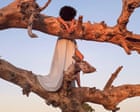
This self-portrait is part of my project So I See Me, which I began in 2020 during the Covid-19 pandemic and continue to this day. The title reflects the central idea: using the camera to look at myself. But it also carries a subtle echo of my name, Sosina.
When the pandemic started, I was in my final year of an engineering degree at the University of Gondar in Ethiopia. I was excited to graduate and begin the next chapter of my life, then everything suddenly came to a halt. Thinking the travel restrictions would only last for a short time, I decided to stay with my uncle in Bahir Dar in the north rather than travel back to my home town, Asosa, more than 450 miles to the west. I ended up stuck there for eight months.
As the months passed, I began wondering whether I would ever graduate, when the pandemic would end and what would happen to my future. While I was at university I had become passionate about photography. I started with my phone, mostly shooting everyday life around Gondar. But with travel restricted and very little around me to photograph, I turned the camera towards myself. Making self-portraits became a way to process feelings of anxiety and frustration about the future.
Around the seventh month of the pandemic, I took this photograph leaning against a dry branch. It was the rainy season and most of the trees were full of leaves, so I was drawn to the dry, bare branches and the way they looked against the sky. I wasn’t consciously thinking of the tree as symbolic at the time.
The sunset that evening made the whole scene feel right to me, and I liked how I could place myself within it. But looking back, I can see why it felt right for that moment. Somehow, the branches reflected how I felt at the time: uncertain and stuck while everything around me seemed to be moving. The photograph captured the feeling of being suspended between hope for the future and being almost ready to give up.
When lockdown eased, I returned to university, graduated and moved to the capital, Addis Ababa, but finding work was difficult. I spent another six months without a job, and continued taking self-portraits while trying to figure out what direction to take. Eventually, I decided to leave engineering behind and pursue photography full time.
I took thousands of photographs during that period, but in the end I selected and published about 153 self-portraits. Most of them reflected what I was feeling at the time, although some were inspired by books, music, nature or simply an idea I wanted to explore.
Although these photographs come from my own experiences, the uncertainty of not knowing what comes next is something many young people are living through as they try to find their place in the world and build a future.
I was not planning to make a long-term project when I started during lockdown; I was simply using photography, with whatever tools I had, to make sense of where I was. Somehow, I am still doing the same thing today.
KioskNews shows a cleaned-up reading view extracted from the publisher’s page — the original always lives on their site, not ours.