Amid battle for AI edge, Hong Kong presses HSBC over Singapore hub decision: sources
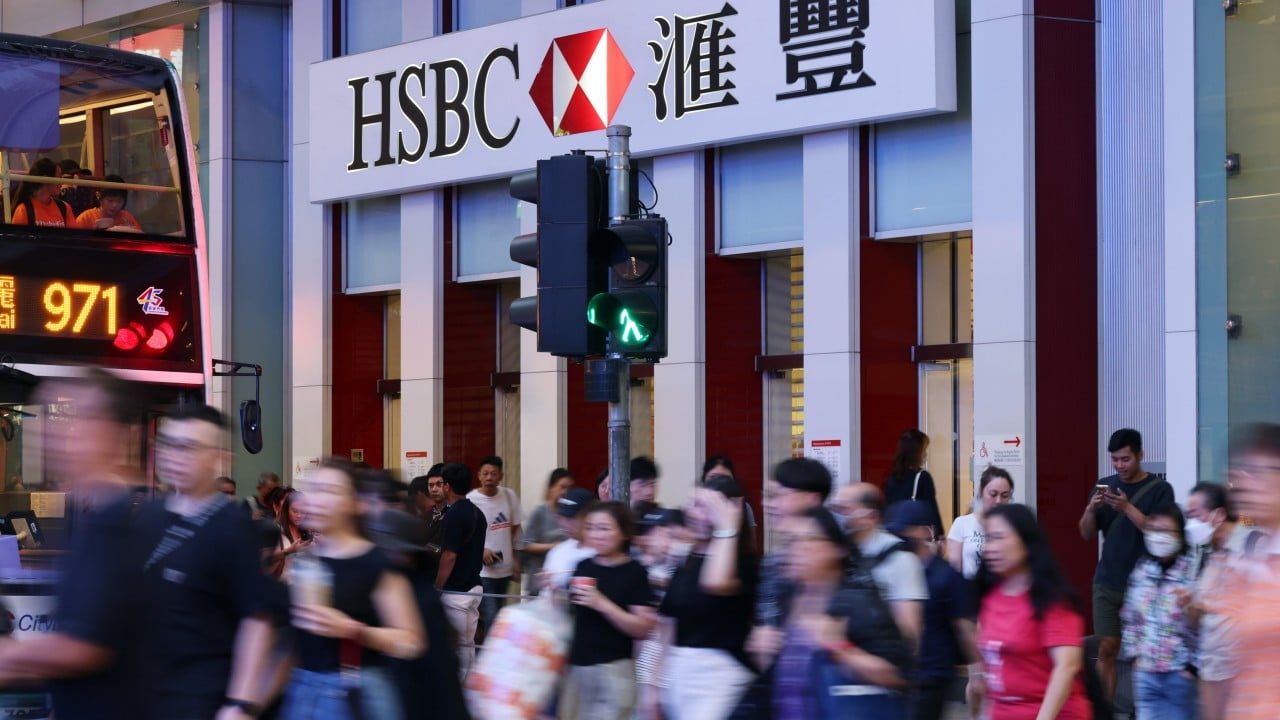
As Hong Kong and Singapore compete for leadership in businesses ranging from foreign exchange trading to wealth management, the battleground has extended to artificial intelligence, with both cities vying to attract investment from HSBC Holdings and other major corporations, according to industry players.
The issue came into focus after the Hong Kong Monetary Authority (HKMA) questioned HSBC about its decision to set up an AI centre in Singapore, despite Hong Kong being its single largest market, a source familiar with the matter told the South China Morning Post.
HSBC announced in late July that it would establish an AI centre in Singapore by the end of the year and hire 100 AI specialists there. The announcement came just a few days after the bank agreed to sell its Singapore life and health insurance business to Germany’s Allianz for S$2.7 billion (US$2.1 billion).
The source said the HKMA had been in discussions with HSBC since the announcement. An HSBC spokesman declined to comment.
The issue gained additional relevance after Hong Kong unveiled its five-year development plan last month, identifying AI investment and development as a priority.
“This appears to be classic competitive regulatory signalling in the Hong Kong-Singapore rivalry,” said Tom Chan Pak-lam, honorary president of the Institute of Securities Dealers.
By raising the issue with HSBC, the HKMA was sending a signal to major banks and corporations that Hong Kong should be given priority when decisions were made on AI investments, Chan said.
“Banks with significant Hong Kong operations should give serious consideration to developing or placing high-value functions, including AI development, in the city rather than defaulting to Singapore or other centres,” Chan said.
Kenny Ng Lai-yin, a strategist at Everbright Securities International, said Hong Kong could not solely rely on government initiatives if it wanted to become an AI hub, and instead would need substantial investment from large corporations.
It was natural for the HKMA to check on HSBC’s decision to base an AI centre in Singapore because it would affect where AI talent, computing resources and investment capacity were ultimately concentrated, Ng said.
To compete with Singapore, Hong Kong should actively seek to attract banks’ AI investments, research teams and high-value technology functions, said Stephen Law Cheuk-kin, president of the Hong Kong Institute of Certified Public Accountants (HKICPA) and a private-equity investor.
“The policy objective should be to make Hong Kong a place where banks choose to develop and deploy AI because the ecosystem is strong and commercially attractive. Hong Kong is already doing all this,” Law said.
HSBC’s decision did not mean the bank was reducing its commitment to Hong Kong, Law added.
HSBC group CEO Georges Elhedery said in a post-results briefing in August that Hong Kong remained an important centre for the bank’s AI investment.
“In Hong Kong, we already have a strong team of 150 AI specialists, and we continue to grow the team,” Elhedery said.
“We are progressing at pace and building an AI research institute in Hong Kong focused on research, capability building, ecosystem development and the commercialisation of innovative technologies. We will share more in the coming months.”
Tommy Ong, managing director of financial advisory firm T.O. & Associates Consultancy, said it was reasonable for Hong Kong to seek an appropriate level of AI investment from institutions that generated most of their revenue in the city.
KioskNews shows a cleaned-up reading view extracted from the publisher’s page — the original always lives on their site, not ours.