Career focus and a community campus: how the University of Birmingham got its mojo back
The Covid pandemic upended almost every corner of British life, and universities were no exception. But for the University of Birmingham, the turmoil became a turning point.
The pandemic made the university think long and hard about the type of education it was delivering for its students, says Deborah Longworth, Birmingham’s pro-vice-chancellor for education. This sparked an overhaul of its teaching and curriculum – which has been rewarded with impressive results.
This year the University of Birmingham has been ranked in the Guardian University Guide’s top 20 for the first time in nearly a decade, reaching its highest ever position of 14th overall. The improvement is mainly thanks to a strong recovery in Birmingham students’ views of the university, after it dipped to alarmingly low levels during the pandemic and its aftermath.
Before 2020, Birmingham prided itself on providing a good experience on campus. “Covid really hit that, of course,” Longworth says. “But I don’t think we’d caught up with the things that really concerned and worried students, and what it was that they were most interested in … I think that got more exposed when we didn’t have students on campus.”
That began a university-wide programme of change, starting with the teaching timetable and including new elements woven into the undergraduate curriculum to enhance academic skills and help students secure a career of their choosing.
For first-year undergraduates that includes courses on how to develop a LinkedIn profile – something that can come as a shock to parents who graduated from university at a time when many courses were unconcerned with career prospects.
Adam Tickell, who took over as Birmingham’s vice-chancellor in 2022 as it was emerging from the pandemic, said the emphasis on developing employable skills within academic courses reflects the social change in the numbers going into higher education.
“It’s partly a recognition that so many more young people go to university than when I did. I graduated in the 1980s and one in 10 people went to university then, and now it’s around one in four, one in three. So things are different,” Tickell says.
“But it’s partly because even if your career aspiration is to get a job in creative arts or [if you’re] doing an English degree and want to work in publishing – how can we equip those students for the jobs they want?
“That’s not the same as saying we’re equipping them for jobs they don’t want to do and they just have to be motivated. We know that motivations can vary. Ultimately graduates do want control over their careers, so we’re trying to equip them for the job they really want rather than anything else.”
So far the results have been impressive: nearly nine out of 10 recent graduates would choose to study at Birmingham again, according to data from the Higher Education Statistics Agency.
The university is also adding an innovative programme named Ad Alta – taken from its Latin motto meaning striving for excellence – to explicitly develop students’ skills as part of the curriculum, as well a novel option that allows undergraduates to take an extra year to study an unrelated subject, such as AI and data science or environmental sustainability, outside their existing courses.
Matt Hiely-Rayner, who compiles the Guardian’s University Guide, says Birmingham’s performance had been handicapped in recent years by below-average levels of student satisfaction, as measured by the Office for Students’ annual national student survey (NSS), especially in core disciplines such as medicine.
But the negative effects it recorded after the pandemic, which saw it drop to 37th overall four years ago, have now fallen away.
“Generally the results from the NSS are the biggest change for Birmingham. In the past it may have been doing less well but its results have improved a great deal, and very rapidly,” says Hiely-Rayner, who noted that Birmingham’s highlights include top five places in a broad range of subjects including computer science, physics, music and drama and dance.
Meanwhile Birmingham’s international reputation has also improved. In this year’s prestigious QS world university rankings, which are largely based on quality of research output, Birmingham has climbed to 68th in the world alongside the University of Warwick
The improvements in student satisfaction have come after the university’s leadership invested in encouraging students to provide feedback, and then responding to it.
“We set a very clear and persistent message that student experience in the round is the whole institution’s job. Every professional service unit, every academic unit, whether you’re the head of college or the head of a school, it’s everyone’s job. We gave ourselves really clear targets. We said this is not good enough. We need to do better for our students,” Longworth says.
“Students probably felt we were over-asking them for feedback. But then if they gave us some, we answered it.”
Other major changes were aimed at overhauling teaching quality and assessment, starting with reorganising the university’s calendar.
“We moved away from the semester system, which I think had been a challenge for us. The curriculum couldn’t breathe in the semester system. We had piled on assessment, lots of smaller assessments, and I think that had put a lot of pressure on students. So we gave them some more time by going back to the three-term system.”
The changes created space for Ad Alta, which Longworth calls “the core of all our undergraduate degrees”. It was developed with employer and graduate input and is designed to foster the qualities that students will need for their future careers.
The first 2,000 undergraduates started the Ad Alta programmes last year (2025-26), developing academic study skills, to be followed in their second year by working on challenges for external employers or community organisations, finishing with a research essay or design project and culminating in an additional “Birmingham Award” to go alongside graduates’ degree certificate.
The aim, according to Longworth is to “encourage students to think reflectively about their employability, their CV, their learning profile, that they are building through their degree right from day one through to the end”.
Those changes will also help assure parents who themselves studied humanities or similar subjects but are still worried about the implications.
“I’ve regularly spoken with families who say, we really support X’s ambition to do history or similar but what’s the reality of the career options? And then we can actually show them perhaps the reality rather than some of the perceptions,” she says.
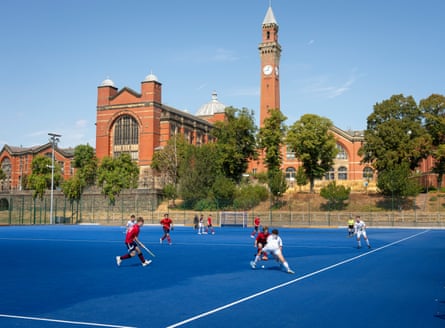
Physically the university has also changed, after completing a rebuilding programme lasting a decade. The campus has shed the architecture of the 1960s and 1970s and restored its original horseshoe shape around a wide swathe of grass, trees and walkways leading to the university’s landmark clocktower, nicknamed Old Joe.
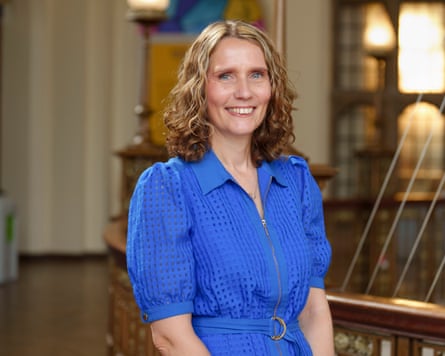
Jo Kite, the university’s director of external relations, says the redevelopment has created a new centre for the campus. “We call it the green heart, and it has absolutely animated the campus. That’s where we have our big community events, that’s where our graduation ball takes place.
“It really is a kind of beating heart, a lively space, and it’s moved a lot of people and events outdoors. At revision time, even well before exams, every bit of grass is covered with students when the sun shines.”
KioskNews shows a cleaned-up reading view extracted from the publisher’s page — the original always lives on their site, not ours.