Denuclearising North Korea would ‘defy history’ as US, allies missed the boat
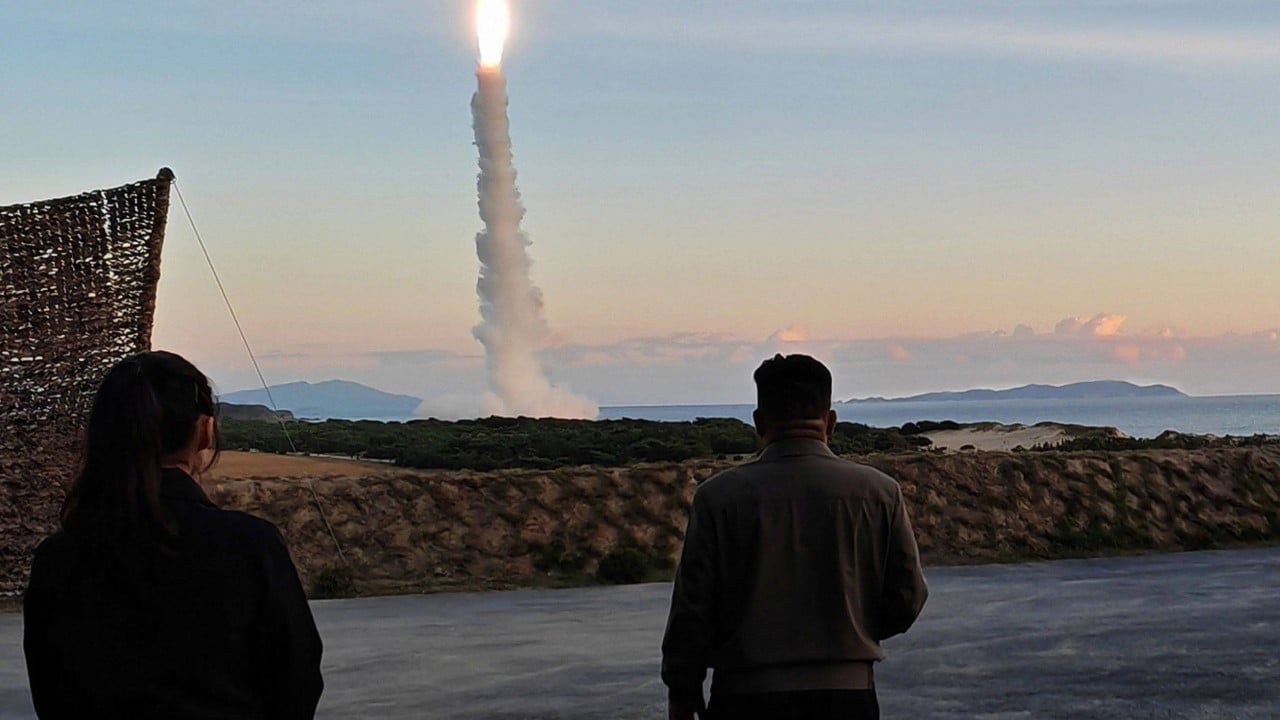
The denuclearisation of North Korea has become an “increasingly improbable” goal and the United States and its allies should move beyond it to devote their diplomatic efforts to talks on arms limitations and crisis communication, the director of the US-based North Korean analysis website 38 North said.
Recalling the 20 years since North Korea carried out its first nuclear test on October 9, 2006, Jenny Town said in a written interview that “a pivotal moment” in Pyongyang’s weapons development came in 2017 when the country’s first test-firing of an intercontinental ballistic missile took place.
Even without fully showcasing ICBM capabilities, the test changed “the nature of the threat and the way US allies viewed the credibility of US extended deterrence”, Town said, referring to the US commitment to using its military capabilities, including nuclear weapons, for protection of its allies and deterrence against attacks.
“While reassuring allies of security commitments is a persistent challenge, North Korea having both theatre and long-range capabilities – able to reach the US homeland as well – has exacerbated decoupling fears in South Korea,” she added, noting that such fears will “only grow” as Pyongyang works to improve the credibility of its strategic weaponry.
North Korea carried out nuclear tests six times through September 2017, claiming the most recent one was that of a hydrogen bomb to be loaded on an ICBM. Later that year, North Korea declared its nuclear force complete.
According to Town, senior fellow at the Stimson Centre, which houses the 38 North programme, Pyongyang had shown willingness on several occasions in the past to make concessions to improve the security environment on the Korean peninsula as a whole, which could have led to containing its nuclear development programme.
“But during many of those moments, the US simply wasn’t interested,” she said, partly due to scepticism about whether the intentions were sincere. “In many ways, North Korea learned that the only time the US would take it seriously and be willing to talk was when it did provocative things.”
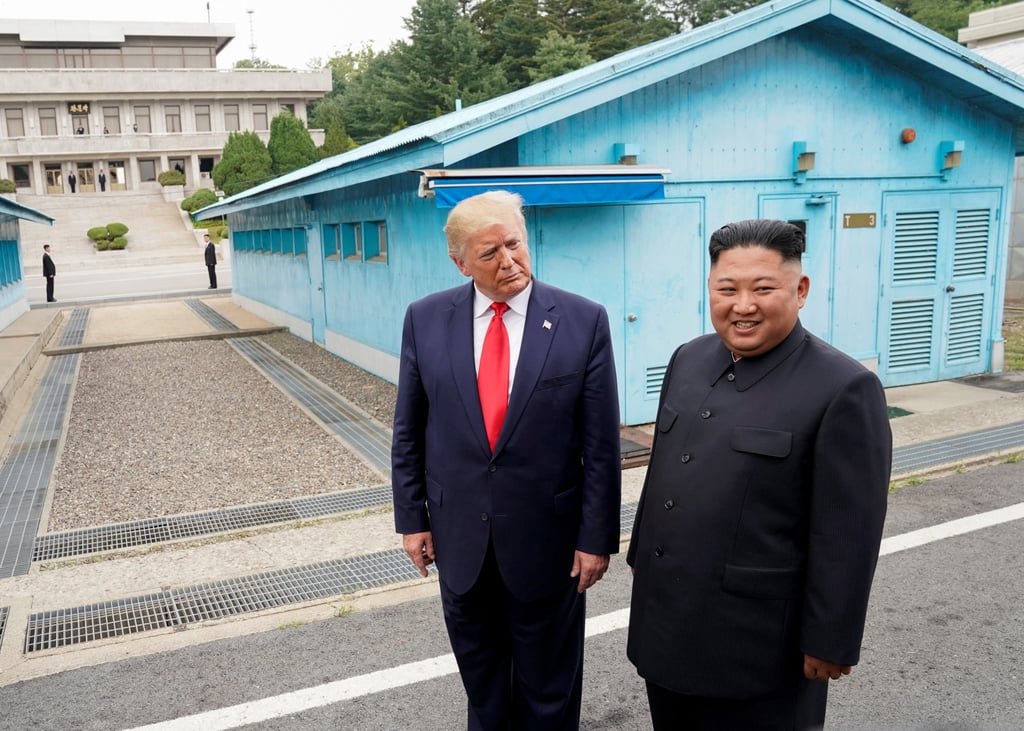
Town said “one of the biggest missed opportunities” was the working-level talks between the two countries on denuclearisation in Stockholm in October 2019, which followed three meetings between US President Donald Trump and North Korean leader Kim Jong-un.
At the first-ever US-North Korea summit in Singapore in 2018 during his first term, Trump agreed with Kim that Washington would provide security guarantees to Pyongyang in exchange for the “complete” denuclearisation of the Korean peninsula.
But in the February 2019 summit in Vietnam, the two fell short of bridging the gap between Washington’s denuclearisation demands and Pyongyang’s calls for sanctions relief. At the subsequent working-level talks, Pyongyang said the US side came to the negotiations “empty-handed”, indicating that the talks broke down.
“If the US gone into that meeting with a counter-offer, something perhaps smaller but workable to demonstrate a reason to keep negotiating, rather than starting all over, it might not have worked but would have at least tested what was still possible when North Korea was still willing to engage,” she said.
North Korea’s mission of its development of the destructive weapons has also evolved, with the 2022 nuclear use law making the country declare that its status as a nuclear weapons state has become “irreversible”.
“In the past, the North Korean nuclear programme was always discussed in conditional terms – ‘as long as the US maintained its hostile policy,’” Town said. “That is no longer the case. North Korea is no longer trying to justify why it needs nuclear weapons but already considers itself a ‘responsible nuclear weapons state.’”
01:47
North Korea launches second 5,000-tonne nuclear destroyer in 75 days
“To be fair, there is no precedent of a state building a sovereign nuclear weapons capability to this extent that has ever voluntarily reversed course,” she added.
The closest precedent was South Africa, but it had only six nuclear weapons and had greater stakes in reintegrating into the international community.
“The idea that North Korea would be willing at this stage to reverse course at any price is a pretty extraordinary belief and would defy history.”
As for the outlook, the expert on Northeast Asian security issues said Pyongyang’s preconditions for talks are a “tall order” from where the US and its allies stand today because they are “not just a matter of ‘not talking about denuclearisation up front’, but declaring a denuclearisation agenda is over”.
At the same time, she said, continuing to push for denuclearisation has prevented “dialogues about risk reduction, crisis communication and response, arms limitations, doctrine and other things”.
“Denuclearisation, when North Korea is so far advanced in its deterrent development, is an increasingly improbable task. Continuing to hold this as the heart of our diplomatic efforts limits our own agency in dealing with North Korea,” she added.
KioskNews shows a cleaned-up reading view extracted from the publisher’s page — the original always lives on their site, not ours.