Venus to shine at its brightest before dawn on 27 November
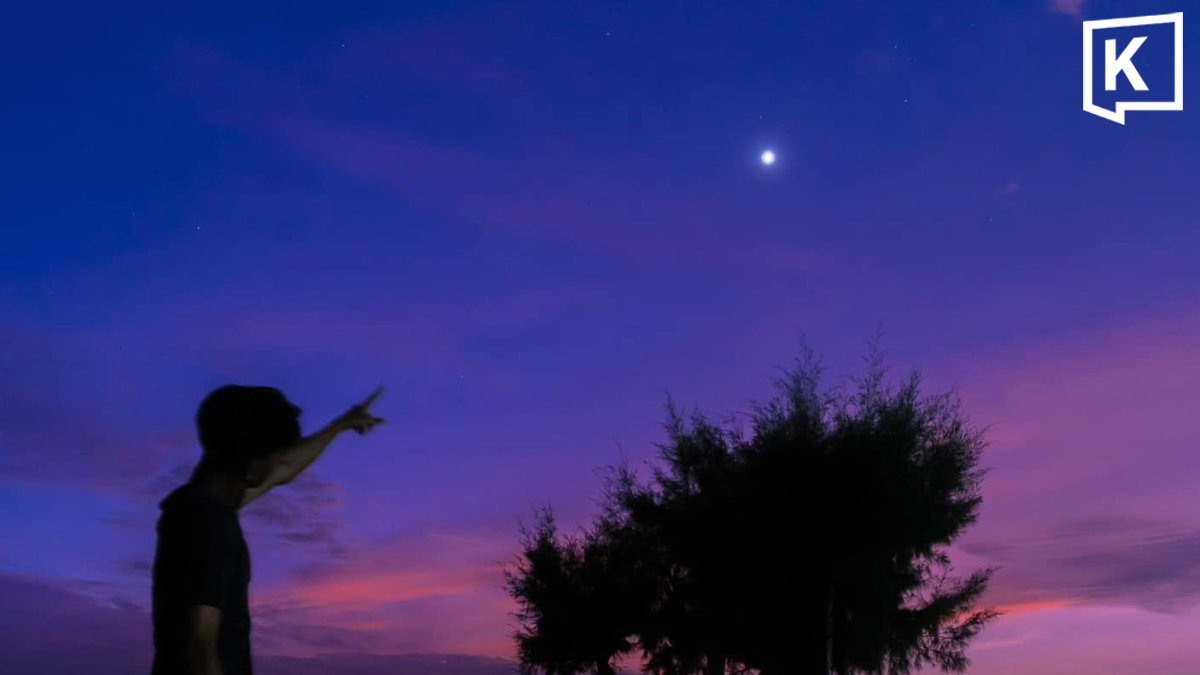
BANGKOK — 23 November 2026, Venus will reach its greatest brightness before dawn on 27 November, offering skywatchers across Thailand a chance to see the planet shining prominently in the eastern sky without a telescope, according to the National Astronomical Research Institute of Thailand (NARIT).
The institute, under the Ministry of Higher Education, Science, Research and Innovation, said Venus would reach its greatest brilliancy for the final time this year.
Supharerk Karuehanon, Assistant Director of NARIT, said the planet would become visible in the eastern sky from approximately 03:50 until sunrise.
Venus will be bright enough to observe with the naked eye from locations across Thailand, provided weather and sky conditions are favourable.
Venus will appear as a crescent through telescopes
Although Venus will appear as a bright point of light to the naked eye, observers using telescopes will be able to see its crescent shape, similar to that of the Moon.
Another celestial object visible during the same period will be Spica, known in Thai as Dao Ruang Khao, or the Rice Ear Star.
Spica, the brightest star in the constellation Virgo, will appear above and to the right of Venus.
NARIT said favourable sky conditions would allow observers to enjoy clear views of Venus and other celestial objects before sunrise.
Why Venus appears brightest
The astronomical phenomenon, known as Greatest Brilliancy, occurs when Venus reaches its maximum apparent brightness as viewed from Earth.
According to Supharerk, this happens when the planet is at a favourable distance from Earth while its illuminated crescent still appears relatively large.
At other points in its orbit, Venus may display a thicker illuminated phase, but its greater distance from Earth makes it appear less bright.
The combination of distance and illuminated area determines how bright the planet appears to observers on Earth.
Venus changes phases like the Moon
Supharerk explained that Venus reaches its greatest brilliancy approximately twice during its cycle of visibility in the sky.
One occurrence takes place when Venus appears in the western sky during the early evening, while the other occurs when it is visible in the eastern sky before dawn.
Venus is the second planet from the Sun, after Mercury, and orbits closer to the Sun than Earth does.
As its position changes relative to Earth and the Sun, the illuminated portion visible through a telescope also changes.
These phases resemble the waxing and waning phases of the Moon.
NARIT encouraged people interested in astronomy to observe the phenomenon on the morning of 27 November, when Venus will be particularly prominent in the eastern sky.
KioskNews shows a cleaned-up reading view extracted from the publisher’s page — the original always lives on their site, not ours.