PROJECT MAYIBUYE: SSA operation targeting EFF lacked national security basis, court told
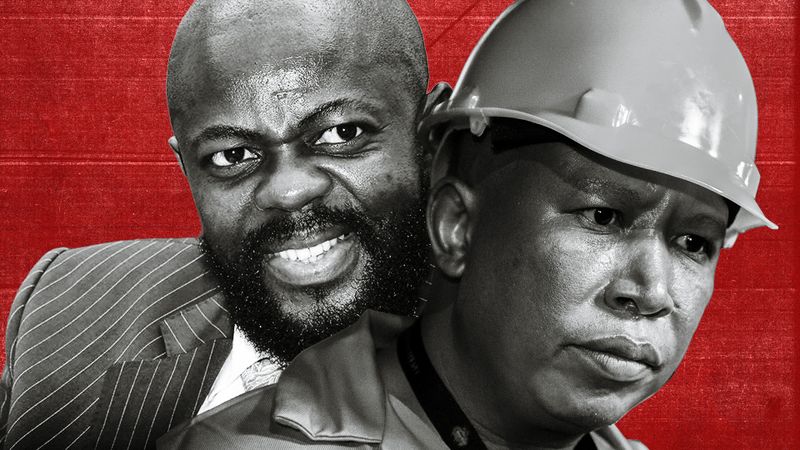
The EFF was targeted in a State Security Agency (SSA) operation despite there being nothing to suggest the party posed a threat to national security, the Gauteng High Court in Pretoria heard on Wednesday, 28 October.
That was the evidence of Mr D, a former SSA official whose identity is protected by a court order, as he testified about Project Mayibuye, a 2015 operation that has been linked to efforts to gather intelligence on the EFF and exploit divisions within the party.
The evidence emerged during the trial of former SSA officials Thulani “Silence” Dlomo and Patrick Mshothola, who are accused of fraud and theft involving R12-million allegedly channelled through Project Mayibuye.
“Is there anything that indicates that the EFF was a threat to national security?” asked advocate Terry Motau, who is assisting the Investigating Directorate Against Corruption (Idac) on the case.
“No,” replied Mr D.
The accused
Thulani “Silence” Dlomo, often referred to as Jacob Zuma’s former “superspy”, led the Chief Directorate of Special Operations at the SSA and later served as ambassador to Japan. He was recalled by President Cyril Ramaphosa after a 2018 review into South Africa’s intelligence services raised serious concerns about the SSA. At the SSA, Dlomo worked under the then director-general, Arthur Fraser, and the then state security minister, David Mahlobo.
Patrick Mshothola worked as an SSA investigator before becoming a project manager in the agency’s Special Operations unit. He managed various projects within the unit, which was responsible for some of the SSA’s most sensitive intelligence operations.
EFF not considered a national security threat
Mr D’s evidence comes days after the court heard more details about how Project Mayibuye allegedly targeted the EFF when the party was barely two years old but had already emerged as a significant political opponent of the ANC and the then President, Jacob Zuma.
On Monday, another former SSA official, identified as Mr B, testified about an operation that allegedly involved infiltrating the EFF and gathering intelligence from inside the party.
News24 reported that Mr B said the operation ran from shortly before the chaotic State of the Nation Address in February 2015 until January 2016, when the flow of money dried up.
Planning for the operation allegedly began in December 2014, with testimony referring to a meeting at Mahlobo’s home.
On Monday, the EFF said it would open a criminal case with the police against those involved in Project Mayibuye and lodge a complaint with the Inspector-General of Intelligence.
“The EFF refuses to allow state-sponsored lawlessness to go unpunished. To ensure absolute accountability, the EFF will formally lodge a criminal case with the South African Police Service (SAPS) against all named handlers, operatives, and facilitators of Project Mayibuye to ensure they face prosecution for malicious damage, corruption and the violation of the Intelligence Services Act,” said the party.
The boxes that led to Project Veza
Mr D also testified that he stumbled upon about 20 boxes containing documents from Special Operations, marked “SO” and organised according to financial years. Among the paperwork were documents relating to several special operations, including Project Mayibuye.
The documents were processed, scanned and uploaded onto the SSA’s system, where they were examined by a project team and eventually formed part of the evidence used in an investigation known as Project Veza.
The projects
Project Mayibuye was an SSA operation that gathered intelligence on the EFF and was linked to efforts to exploit divisions within the party. It also tried to infiltrate the #FeesMustFall movement, NGOs and the judiciary. It was later found to have been improperly authorised and linked to the political interests of Zuma.
Project Veza was the SSA investigation that looked into Project Mayibuye and other Special Operations projects, and uncovered alleged wrongdoing and irregularities within the agency.
The Zondo Commission heard that Project Veza found that various projects initiated by Dlomo and the Special Operations Unit “were established in breach of the SSA’s policy and regulatory prescripts”. These included illegal surveillance and the unaccounted squandering of about R1.5-billion of public funds.
Mr D also testified about the discovery of four metal boxes containing equipment, including jammers and surveillance devices.
He said that one of Project Veza’s preliminary findings was that Project Mayibuye was unlawful because it had not been properly authorised.
But lawyers for Dlomo and Mshothola challenged his interpretation of the documents and whether shortcomings in the paperwork necessarily meant the operation was unlawful.
Advocate Muthwa Sithole, representing Dlomo, referred Mr D to the National Strategic Intelligence Act 39 of 1994 and the SSA’s responsibility to gather and analyse intelligence relating to threats to national security.
Sithole questioned Mr D about references in the documents to political formations and social developments and whether the law allowed the agency to infiltrate organisations where there was a potential threat to national security.
But Mr D maintained that there was nothing indicating that the EFF itself posed such a threat.
Defence challenges Mayibuye finding
Advocate Dira Matlatle, representing Mshothola, also challenged Mr D on his conclusion that Project Mayibuye had not been properly authorised.
Matlatle pointed to officials who had signed off on and recommended the services proposed under Project Mayibuye, asking whether their approval necessarily became invalid because Mr D considered the operational plan inadequate.
“I would certainly say it’s inadequate. It is lacking the elements that I mentioned and the signatories, by signing the plan, should be signing the specifics that should be conducted,” said Mr D.
Matlatle pressed him on what that inadequacy meant in practice, saying it was unclear what the legal significance of an inadequate document would be. “It must either be that the project was not supposed to start because of this kind of basis or something else,” said Matlatle.
Mr D maintained that the shortcomings should at least have stopped the operation from proceeding until they were addressed.
“There should have been a hold, go back to the assessment if it’s there, make sure the analysts have done a proper gap analysis, re-assess what you need to achieve, and then review the document for consideration,” said Mr D.
The questioning then turned to Project Veza and why, almost a decade after the investigation began, it had apparently still not been finalised.
Asked whether there was any reason for the delay, Mr D said he had spoken to the project manager a few months ago and had been told that the disciplinary aspect of the investigation was being reactivated and that the relevant documentation had been handed over.
But when pressed on why the broader investigation had taken so long, Mr D could not provide a definitive explanation. “However, I am not sure,” he said.
The State closed its case following Mr D’s testimony. Daily Maverick asked Idac spokesperson Henry Mamothame whether the directorate was confident it had presented sufficient evidence and whether the case could be reviewed as part of its ongoing “reset”.
KioskNews shows a cleaned-up reading view extracted from the publisher’s page — the original always lives on their site, not ours.