‘The decision of the voters is binding on all of us’: Elections chief’s remarks, as he presents certified results to president
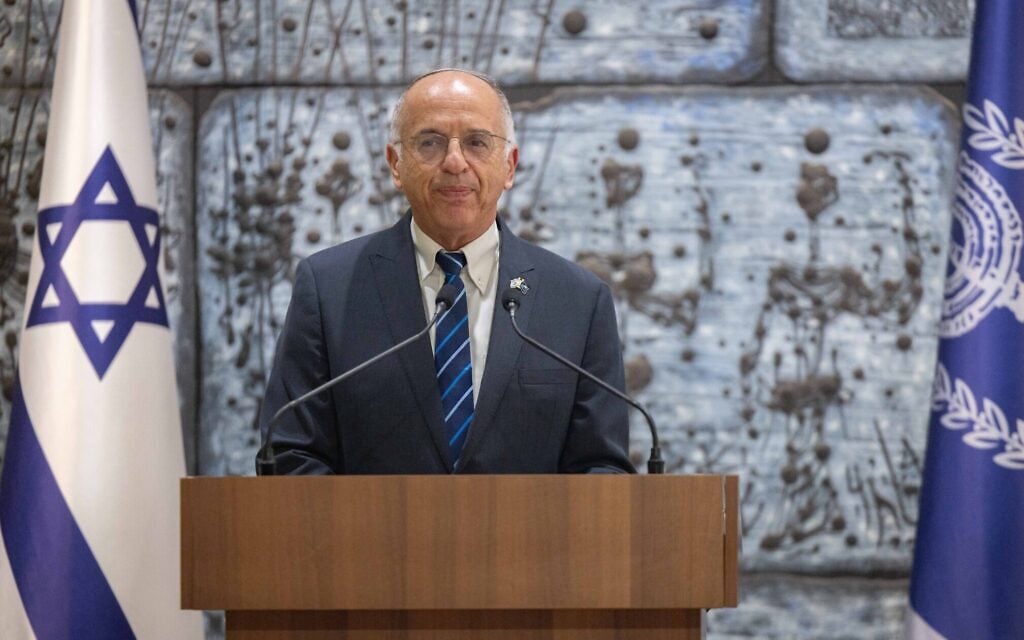
Below is the full translated text of a Hebrew speech delivered by Central Election Committee chairman Supreme Court Justice Noam Sohlberg on November 4, 2026, after he presented the October 27 election results to President Isaac Herzog at an official ceremony at the President’s Residence in Jerusalem.
Mr. President, I am honored to present to you the results of the Knesset elections.
Behind the numbers, the mandates, and the distribution of Knesset seats, stand people. Many people. Tens of thousands of citizens, from all segments of Israeli society, who worked in recent weeks, and especially on election day itself, to enable all of us to exercise the most basic democratic right — to elect our representatives.
0:00 / 0:00
Promoted: American Technion Society

There is something special about this human encounter. At polling stations across the country, representatives of different factions — sometimes factions with deep divisions between them — sat side by side. This order is not by coincidence. From the outset, it was intended to allow representatives of the factions to monitor one another, in order to ensure election integrity. But in practice, it also required them to talk to each other, to work together, to recognize each other’s virtues and not just their shortcomings — to overcome difficulties and cooperate. For what purpose? To fulfill a common mission, which stands at the very foundation of our common existence — holding elections.
We don’t need to go far to find additional examples of such a partnership. We know it from the ranks of the IDF, from the reservists and their families, from hospitals, and many other places in which Israelis from all over the mosaic of society meet and work together for a common goal. Also at the election, at the polling stations, we were invited to such a meeting of fraternity. There is something hopeful about this for the future.
Get The Times of Israel's Daily Edition by email and never miss our top stories
By signing up, you agree to the terms
At the same time, there is no denying it: This partnership does not blur the divisions. They exist, they are deep, and they touch on the fundamental questions of our existence here. We don’t need to agree with each other. On the contrary, elections are a way that we chose to manage these disputes: not by force, but through the ballot box. Each and every one of us makes their voice heard, every vote is counted, and every vote has equal weight.
From here, Mr. President, to a point that clouds the celebrations, and which we cannot ignore: In recent days, voices have been heard seeking to cast aspersions on the election results and to challenge their validity. This is a real danger. One of the foundations of democracy is the ability to change government peacefully. This stems from the understanding that the decision of the voters is binding on all of us. If it were not for the fear of royalty, as our sages taught us, people would swallow one another alive — we would find ourselves in a kind of “state of nature,” in which “the strongest prevail.” In order for us to maintain a common government, everyone is required to respect the democratic rules of the game.

This is how we have behaved as the State of Israel since its establishment. Difficult disputes, stormy political struggles, sometimes also results that surprised many — all of these did not prevent us from recognizing the voter’s decision and acting accordingly. Everyone knew that the results of the election reflect the decision of the people, which must be respected. We must not deviate from this path, which is the foundation of our resilience as a democratic country.
Indeed, suspicions have been raised. Some of them are serious. The suspicions require thorough clarification, and this is indeed taking place. We announced this to the public. All the parties are working to arrive at the truth. In order to not harm the efforts that are being made, and not to reveal confidential information, I cannot expand beyond that. This morning we presented to members of the elections committee the essence of the intelligence picture, as it was conveyed, at my request, on behalf of the head of the Shin Bet.
However, it is important to emphasize: At this stage, these are only suspicions, and even if they are verified, the scope of their potential influence is limited. In addition, it is not possible to refrain from publishing the results of the election that was held, thus extending the term of a Knesset that had completed its fixed term. Basic Law: The Knesset established a very strict time frame for the publication of the election results, and for good reason. Accordingly, the results are now being published on time. Naturally, if evidence is found in the future, it will be possible to act according to the path outlined in the law for this purpose — an appeal of the election. It is important to emphasize: The suspicions do not cast aspersions on the votes of the Arab community in any way; voting at high rates is a welcome thing for each and every community in Israeli society.
The Central Elections Committee is in charge of conducting the elections, the conduct of polling committees, and the proper conduct of the voting process. It is, of course, not an investigative or intelligence authority, and we do not have the tools to investigate suspicions of wrongdoing. To that end, we forward detailed complaints about various suspicions to the investigating authorities. In the last week, the Central Elections Committee held the election integrity monitoring operation, which dealt with allegations raised regarding the conduct of the polling stations. The requests of the factions were examined. Each request was filtered — whether it relates to the election process itself or whether it is criminal or administrative. All the polling materials have been examined. Wherever a suspicion of an offense is found — whether in the complaints of the parties or in the polling materials — the complaints and evidence will be forwarded to the investigative authority — the Shin Bet, the police, and the Privacy Protection Authority. We will monitor and make sure the complaints are examined and investigated, as appropriate. We place our trust in the Shin Bet head, the attorney general, the Israel Police commissioner, the head of the police investigations and intelligence division, and their people, who will do the important work together, to the best of their ability.
The public’s trust in the election process is a precious asset. We all have a responsibility to protect it — elected officials, office holders, and also each and every one of us. It’s easy to destroy, and very difficult to fix. The political dispute does not have to end with the counting of votes. It will continue, and that is a good thing. But we must agree on one thing: The election results, as they are determined by law, are binding on all of us.
Mr. President, perhaps a small lesson — from this week’s Torah portion, Hayei Sarah — for the next phase, which will begin right here in this very room. Two negotiations: about the purchase of the Tomb of the Patriarchs, and about Rebecca’s match with Isaac. Both of them, on the face of it, seemed hopeless, with massive gaps at the start. The Hittites refused to grant Abraham the field and the cave as a permanent burial estate for generations, trying instead to settle for a temporary solution for Sarah’s burial. Laban the Aramean sought to delay Rebecca’s marriage to Isaac for an entire year. In both cases, negotiations based on mutual understanding of needs led to agreements and good results for all of us.
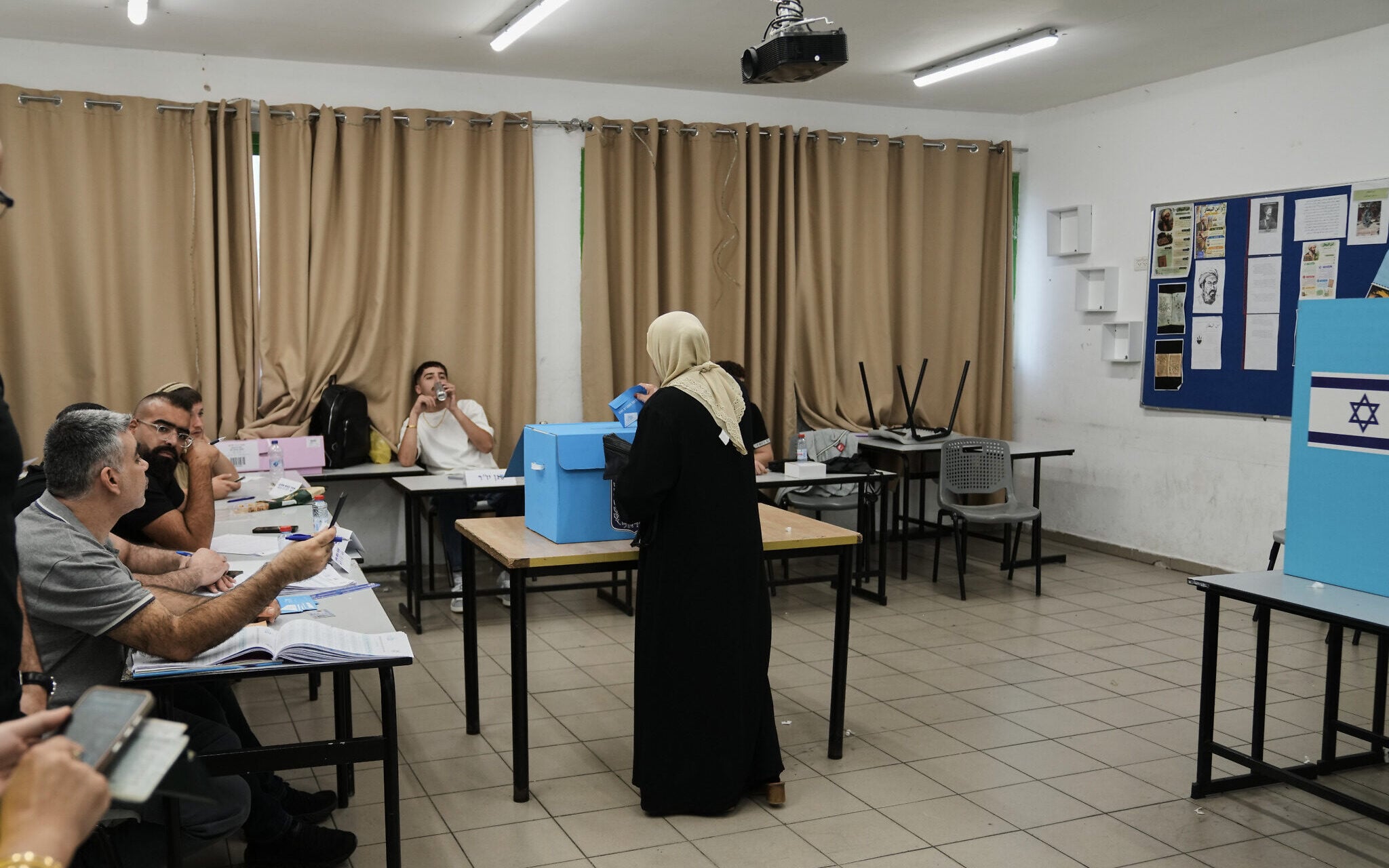
In conclusion, I would like to thank the thousands of workers, volunteers, and everyone who took part in the complex task of managing the election. There is no measure of the professionalism, diligence, and sense of mission of the Central Elections Committee staff, headed by Dean Livne, a man of immense capability, who knew how to steer the ship through stormy waters. Thanks to the dedication and hard work of these good people, we can stand here today.
The election process, which I was entrusted with running, strengthened my recognition of our resilience and our aspiration for the best. We brought you the results: 5,717,397 men and women went to vote. We must all respect their decision. Thank you very much.
KioskNews shows a cleaned-up reading view extracted from the publisher’s page — the original always lives on their site, not ours.