From Gran Turismo 7 to a smartphone with a second screen: How Xiaomi is linking cars, homes and devices
In mid-October, the Xiaomi Vision GT will make its debut in the popular racing game Gran Turismo 7 (GT7).
The announcement was made by Gran Turismo series producer Kazunori Yamauchi and Jean-Arthur Madelaine, head of design at Xiaomi Auto’s European Research and Development and Design Centre, during the third round of the Gran Turismo World Series 2026 in Singapore on Oct 3.
GT7 will also introduce EV Experience, an electric vehicle driving programme that lets players experience the acceleration, braking and handling characteristics of high-performance electric cars. The first vehicles featured will include the Xiaomi SU7 Ultra, which is already in production and on sale in China, and the Xiaomi Vision GT concept car.
Launched in 2013, the Vision Gran Turismo project invites carmakers from around the world to create original concept cars that reflect their vision of the future. So far, 50 designs have been developed, with participating brands including Bugatti, Ferrari, Porsche and McLaren.
Xiaomi is the 36th brand to join the project and the first Chinese technology company to do so.
The Xiaomi Vision GT’s entry into GT7 marks a milestone in Xiaomi Auto’s push onto the global stage. By bringing together automotive design, AI and digital experiences, it also offers a glimpse into the company’s wider vision of smart living.
Inside the aerodynamic design of the Xiaomi Vision GT

Designed around the concept of being “sculpted by the wind”, the Xiaomi Vision GT concept car features a floating, teardrop-shaped cockpit.
PHOTO: XIAOMI
The Xiaomi Vision GT was designed around a simple idea: letting airflow shape the car.
This approach can be seen in its floating, teardrop-shaped cockpit, cross-shaped headlights that help channel air, ring-shaped taillights with integrated air channels and an active wake-control system.
Some of these design ideas could eventually make their way into production models.
French designer Madelaine says: “Being sculpted by the wind is a direction our team wants to explore. We also hope to bring together comfort and a high-performance driving experience in the future.”
Before arriving in Singapore, Yamauchi had taken the Xiaomi Vision GT for a virtual drive in the game, where he also worked on adjusting its driving soundscape.
“Electric vehicles can deliver a very exciting driving experience too. It’s just a different kind of excitement from what you get with conventional cars,” he says.
Since the first Gran Turismo game was released in 1997, the series has sold more than 100 million copies worldwide. Its international player base gives Xiaomi an opportunity to reach a global audience, including younger consumers.
How Xiaomi is building a connected ecosystem around its users
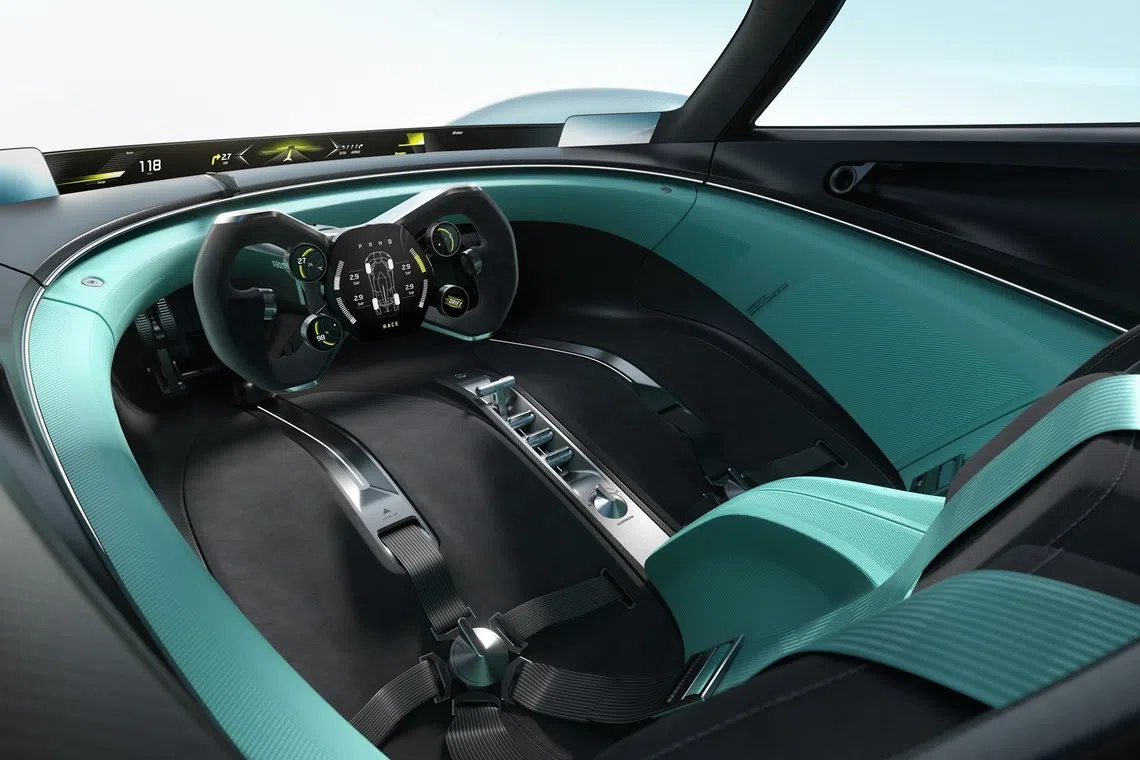
Moving away from traditional bucket seats found in supercars, the Xiaomi Vision GT features a continuous loop connecting the dashboard, door panels and seats to create a soft yet supportive cocoon-like cockpit.
PHOTO: XIAOMI
In October 2023, Xiaomi expanded its corporate strategy to focus on what it calls the “Human × Car × Home” ecosystem.
The idea is to connect personal devices, smart homes and cars to create a more seamless, user-centred experience. It was also one of the reasons Madelaine was drawn to join Xiaomi.
He believes cars should become connected devices in people’s everyday lives, much like smartwatches, computers and televisions.
“We place greater emphasis on putting people first. We’re also more focused on users and how people might use cars in the future,” he says. The Xiaomi Vision GT reflects this thinking.
According to Madelaine, the cockpit’s “sofa racer” concept was inspired by the comfort of sitting on a sofa while playing a racing game.
The cockpit also incorporates artificial intelligence capabilities from Xiaomi Hyper XiaoAi and its MiMo AI model, allowing it to sense and recognise the driver’s intentions while connecting with Xiaomi’s wider Human × Car × Home ecosystem.
He explains: “The steering wheel can work like a smartwatch, sensing the driver’s heartbeat and monitoring their emotional state. It can also interact with the driver like a co-driver.”
Behind these concepts is Xiaomi’s continued investment in technology. Beyond automotive design and engineering, the company is also developing capabilities in chip design, AI, operating systems and smart manufacturing.
Its Xiaomi MiMo models span language, multimodal and speech capabilities, while Xiaomi HyperOS is designed to connect personal devices, cars and homes.
Between 2021 and 2025, Xiaomi invested a total of 105.5 billion yuan (S$20.1 billion) in research and development. It has also been granted more than 47,000 patents worldwide.
The company’s long-term investment in core technologies is aimed at turning innovative concepts into products and experiences that consumers can use in everyday life.
A closer look at the Xiaomi 18 Pro’s rear display and camera features
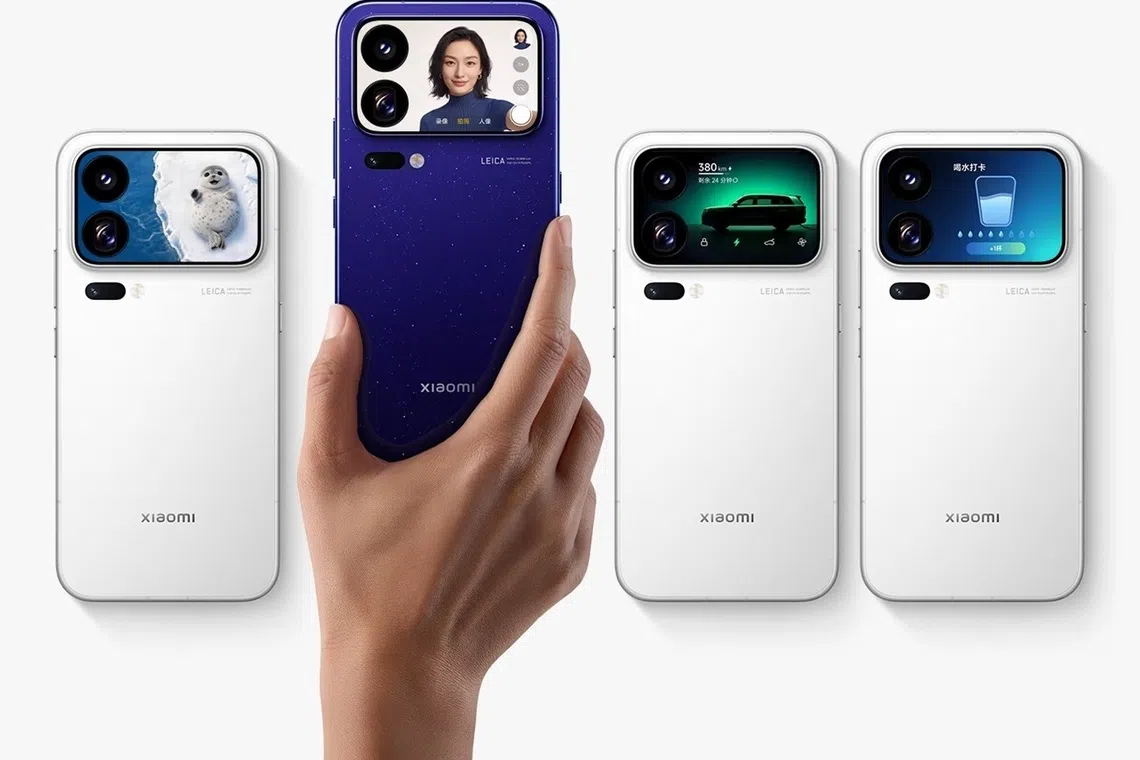
The Xiaomi 18 Pro’s new customisable rear display lets users check important information without flipping their phone over, display personalised photos and wallpapers, and frame selfies using the rear Leica main camera. PHOTO: XIAOMI
Personal devices are another important part of Xiaomi’s Human × Car × Home ecosystem. The company plans to launch its Xiaomi 18 Pro series in Singapore later this year.
These days, many flagship smartphones are becoming increasingly similar in design and functionality.
Traditionally, the back of a smartphone has largely been home to its cameras. But the Xiaomi 18 Pro takes a different approach, turning that space into an interactive display. Its new versatile rear screen opens up different ways to use the phone.
When the phone is placed face down, users can check important information at a glance without having to keep turning it over.
The rear display can also show photos and personalised wallpapers. And when taking selfies with the rear Leica main camera, users can use the screen as a viewfinder, making it easier to frame their shots.
While it might seem like a simple addition, fitting another display onto a smartphone requires different components to work together.
The screen, camera system, phone structure and software all need to be integrated while balancing considerations such as thickness, power consumption and durability.
For Xiaomi, the goal is to turn technical innovation into practical improvements that make the phone more convenient to use while introducing new ways to interact with it.
Under the hood, the Xiaomi 18 Pro series is powered by Qualcomm’s 2nm Snapdragon 8 Elite Gen 6 processor.
Both the Xiaomi 18 Pro and Pro Max feature a triple-camera Leica system, comprising a 200-megapixel main camera, a 200-megapixel periscope telephoto camera and a 50-megapixel ultra-wide camera.
The phones also introduce several photography features.
AI-assisted composition helps users frame their shots, while the Style Palette feature lets them adjust colours and apply filters to personalise their photos. Another new feature, Essential Moment, is designed to deliver image quality comparable to that of professional cameras, helping users capture memorable moments on the go.
From experimenting with the future of mobility through the Xiaomi Vision GT to rethinking how people interact with their smartphones through the Xiaomi 18 Pro, Xiaomi is bringing its technology into more aspects of everyday life.
The goal is to create an experience where different devices work together around the user.
Beyond expanding its smartphone business, Xiaomi also plans to enter the European electric vehicle market in 2027 and broaden its range of home appliances in South-east Asia.
As its product portfolio grows, the company aims to bring its core technologies into more areas, from transport and connectivity to the home, as it continues to develop its Human × Car × Home ecosystem.
Find out more about Xiaomi’s Human × Car × Home ecosystem here.
KioskNews shows a cleaned-up reading view extracted from the publisher’s page — the original always lives on their site, not ours.