Opinion: Opinion | Great 'Exceptions': How The Oil India Was Attacked For Is The Oil Trump Now Seeks
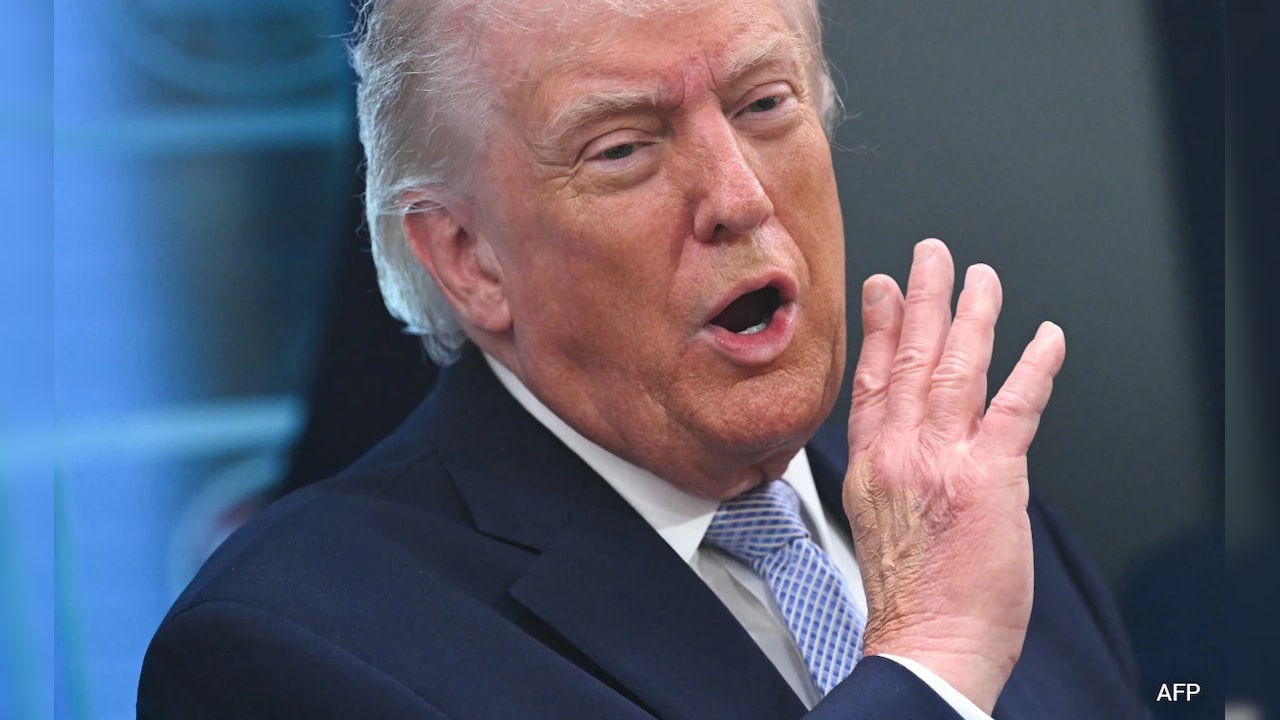
Brent crude closed at $109.86 a barrel on October 16, crossing $110 intraday for the first time since May 20. Retail diesel in the United States averaged $6.18 a gallon on October 1, up from $3.48 at the start of the year. US' Consumer Price Index rose 0.6% in September, taking annual inflation to 3.7%. Midterm elections fall on November 3. On October 9, President Donald Trump announced a deal with President Vladimir Putin. Russia would immediately supply more than 300,000 tonnes of diesel (2.25 million barrels) to American and global markets, with 500,000 tonnes in November, a million tonnes thereafter, and 3 million tonnes depending on the state of its refineries, 4.8 million tonnes in all. The Treasury issued a temporary licence suspending sanctions on Russian diesel deliveries until April 2027.
The Logic Behind Sanctions
Scarcity during run up to the elections should be "blamed". The Iran war took Brent above $120 in late April. Ukrainian strikes on Russian refineries removed the diesel supply precisely when diesel was scarce. It left a global deficit that Kpler estimates at 130,000 tonnes, or about a million barrels, a day. The Group of Seven released 100 million barrels of emergency stocks. The International Energy Agency added over 20 million barrels of diesel on October 15. Prices barely moved. The diesel crack spread, the refiner's margin on converting crude to diesel, stood at $72.51 a barrel on October 6 against a 2021 to 2025 average of $31.50. A president who promised cheap energy faced $6 diesel three weeks before polling.
Advertisement - Scroll to continue
Now the implications. First, scale. The full 4.8 million tonnes is 35.76 million barrels, roughly ten days of American distillate demand and a single day of global demand. Released all at once, it would cover the world for about three weeks. The 300,000 tonnes arriving this month cover three-quarters of one day of American consumption. Goldman Sachs estimates the October and November cargoes will shave $1 to $2 a barrel off wholesale American diesel, against a crack spread running $41 above its five-year average. Second, the fiscal transfer to Moscow. Sergey Aleksashenko of the NEST Centre estimates the first 1.8 million tonnes would earn Russia up to $1.25 billion over three months, about 1% of its commodity export revenue in that period, with under $30 million a month, or 0.07% of monthly federal revenue, reaching the budget of a war now in its fifth year. The money is marginal. The licence until April 2027, which permits exports well beyond the announced volumes, is not. Third, alliance. On October 12, even as Washington licensed Russian diesel, the European Union adopted its largest sanctions package yet, nearly 1,600 new listings. The same barrel is now contraband in Rotterdam and merchandise in New York. Fourth, the home front. Americans have spent $135 billion more on gasoline and diesel since March 1 than in the same period last year, with gasoline at $4.33 a gallon. Twelve senators wrote on October 13 and twenty-two House members on October 15, questioning the deal's legality, since Russian fuel imports have been banned since 2022, and lifting the ban requires certifying a ceasefire and withdrawal that have not occurred.
Which brings us to the statute. The Lindsey O. Graham Sanctioning Russia and Iran Act of 2026 passed the Senate 86 to 11 on August 7 and the House 262 to 159 on September 16, and was signed on September 18. It provides for duties of 500% ad valorem on Russian goods and 100% on all goods from the five largest importers of Russian crude oil or natural gas that knowingly make new purchases on or after October 18, besides sanctions on Russia's defence and energy sectors and its shadow fleet. On October 16, two days before his own law would bite, the President signed an executive order that imposed the duties in Section 2 and waived them in Section 4, invoking Section 115(a) and certifying to Congress that the waiver was in the national interest. The order also waived the sanctions provisions in Sections 102 through 111 and 117. Congress wrote a mandate at 86 to 11. Section 115 contained its own escape hatch, and the escape hatch has swallowed the mandate. What survives is a Trade Representative monitoring exercise, with the waiver lasting until the President or the Secretary of State determines otherwise.
Advertisement - Scroll to continue
For India, squarely in the Act's sights with China and Turkey, the sequence matters. The 25% penal duty of August 2025, which took the tariff on Indian goods to 50%, was rescinded under the interim framework of February 2, 2026, which set the reciprocal rate at 18% against Indian commitments on Russian crude. Purchases nonetheless ran at 2.6 million barrels a day in June and 2.57 million in July before easing to 1.82 million in September, by Kpler data, still the world's largest, against China's 1.49 million. Russia's share of India's basket fell from 56% in July to about 35% in September, less because of Washington than because Urals now prices near par with Gulf grades. The crude import bill rose 48.4% to $74.8 billion in April to August by Petroleum Planning and Analysis Cell data, with the Indian basket at $90.19 a barrel in August against $69.11 a year earlier, and petroleum at 22.5% of merchandise imports.
Is The Waiver A Respite?
In cash flow, yes. A 100% duty stacked on 18 % has died before birth, conveniently before Secretary of State Marco Rubio lands in Mumbai on October 20. In structure, no. The waiver is revocable with a signature, the top five list is recalculated every 180 days, and India will remain on it. A law written to punish the buyers of Russian oil was suspended to protect a purchase of Russian oil. India spent fourteen months being lectured for less.
(The author was with the Economic Advisory Council to the Prime Minister)
KioskNews shows a cleaned-up reading view extracted from the publisher’s page — the original always lives on their site, not ours.