Remembering in the diaspora: In solidarity with EJK victims

Already have Rappler+?
to listen to groundbreaking journalism.
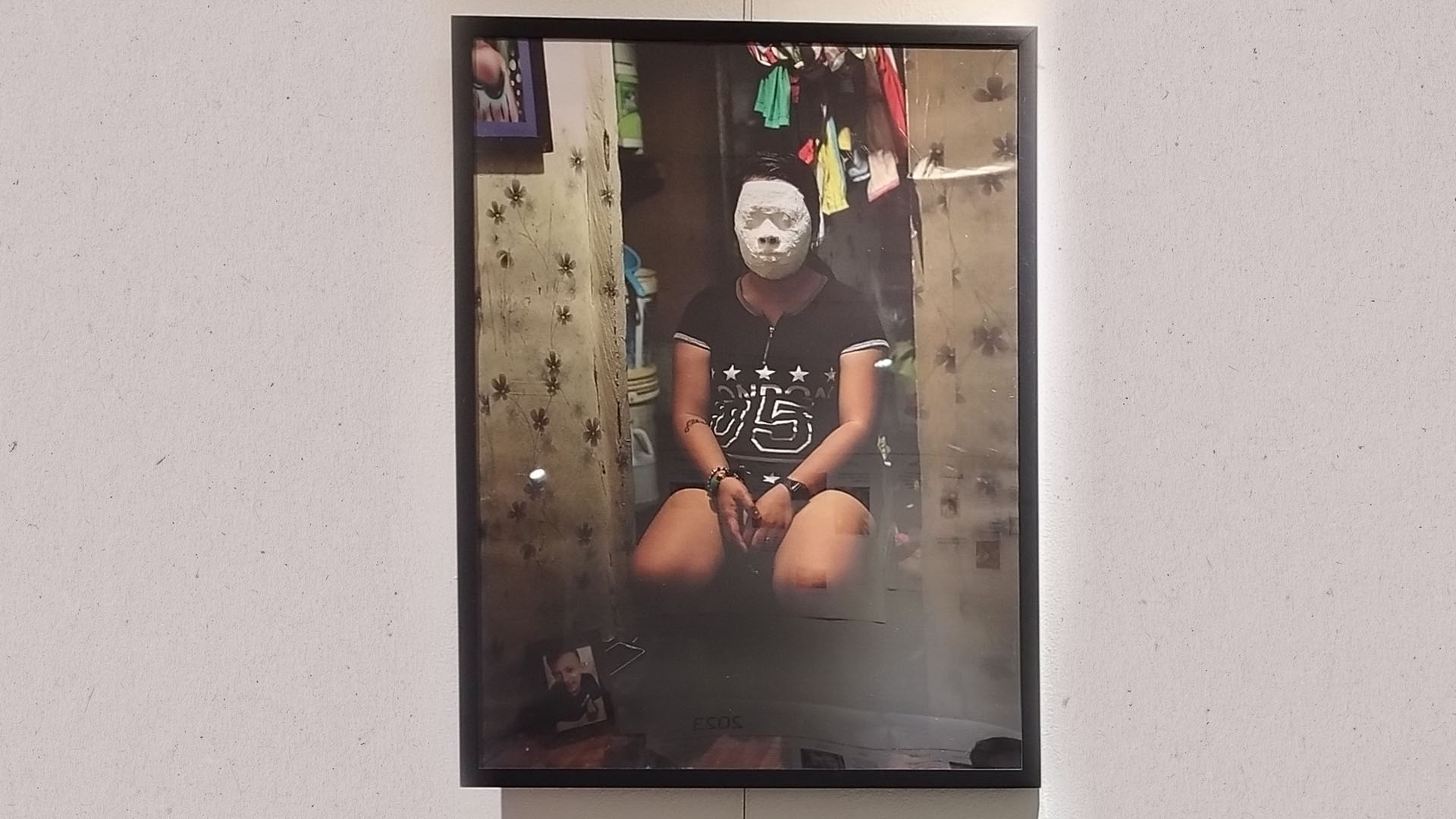
EJK EXHIBIT. One of Kiri Dalena’s works in the series “Life Mask.”
Photo by Dada Docot
The artworks open up a conversation about the ongoing stigma and dehumanization faced by EJK victims and their surviving families — even among Filipinos in the diaspora who watched the war on drugs unfold from afar
AT A GLANCE
- Duterte's war on drugs, initiated shortly after his 2016 inauguration, led to thousands of extrajudicial killings justified by police claims of suspects 'fighting back.'
- The Filipino diaspora remains divided, with Diehard Duterte Supporters (DDS) actively celebrating his legacy while others advocate for justice for EJK victims.
- An art exhibition at Purdue University commemorates the victims of the war on drugs, fostering dialogue about the ongoing impact of state violence and the need for accountability.
This is AI-generated. Read the article for full context. Report any errors.
The war on drugs began as an electoral promise of Duterte when he was vying for the presidency. He said he would end the drug industry in the Philippines in six months. His campaign style and his crude language and persona drew millions of Filipinos to his populist politics.
Soon after his inauguration in June 2016, Duterte formally launched the war on drugs through a robust deployment of police personnel and paramilitaries to hunt down suspected drug users and peddlers. In the initial phase of the war on drugs, he called on people involved with drugs to come forward to authorities. Thousands complied, in the hope that they would avoid extreme punishment through their surrender.
In the succeeding months and years, tens of thousands of extrajudicial killings (EJK) of suspected drug users and peddlers were carried out. The routine justification given by the police was that those killed were “nanlaban” (fighting back), forcing the police to use lethal force.
On July 1, 2026, family members and friends of victims of EJK and human rights activists gathered at the Bantayog ng mga Bayani to commemorate the 10th anniversary of the launch of Duterte’s war on drugs. Portraits of EJK victims were placed on the steps at Bantayog ng mga Bayani as attendees lit candles to remember their loved ones who were unjustly killed without due process. Families continue to seek justice by raising awareness, both in the Philippines and in the diaspora.
The DDS diaspora?
It is commonly heard that there are many Diehard Duterte Supporters (DDS) in the Filipino diaspora. Everywhere in the diaspora, the DDS are mobilizing and even if they may not be in the majority, they are loud and visible in their support for the former president currently accused of crimes against humanity.
In March 2025, just after Duterte was arrested and extradited to the ICC, social media exploded with videos of Filipino migrants celebrating Duterte’s 80th birthday in restaurants across Europe, and even outdoors, as they withstood the cold of winter to express their undying support for Duterte, whom they claim was kidnapped by the Philippine government in his own country.
Duterte’s life-size cardboard cutouts animated these birthday gatherings. Supporters also gathered in front of the Philippine Embassy in Washington, DC, for a solidarity prayer rally for Duterte. In late July of this year, about three thousand Filipino migrants rallied in the streets of London, chanting slogans in support of their idol Rodrigo Duterte who is currently in custody at the International Criminal Court (ICC) in The Hague: “Bring him home!”
But the Filipino diaspora is not all DDS. Filipinos around the world are also voicing their support for and solidarity with the families of EJK victims.
We remember in Indiana
On November 13, we opened A Decade of Collective Remembrance: An Art Exhibition Commemorating the Victims of the Philippine War on Drugs at The ALab, Purdue University, in West Lafayette, Indiana. This exhibit is a US-based iteration of the Dekada exhibits that were first launched at the University of the Philippines and Ateneo de Manila University earlier this year.
Through coordinating with artist-activist group Respond and Break the Silence Against the Killings (RESBAK), we were able to bring together the artworks for this exhibition. It is meant to represent an act of solidarity with the families of EJK victims, human rights groups, and the entire Filipino nation’s remembrance of the EJK victims.
Holding this exhibit is also an opportunity for Filipinos in the diaspora to continue the conversation about the war on drugs and to demand justice and accountability.
One of the works featured in the exhibit is Kiri Dalena’s Life Mask, a piece that brings together photography and sculpture. By concealing the faces of family members of victims of Duterte’s war on drugs, Dalena shields the families from persecution and stigma while also casting them not as victims but as active agents seeking justice.
The piece The Execution of Bener Densing, meanwhile, names the victim in the artwork’s title. Artist Bheng Densing recounts through a meditative illustration the murder of his brother by police officers in front of his wife and children during the early stages of the war on drugs.
Together, these two pieces invite conversations about the persistent stigmatization of EJK victims and their families by the Filipino public, including those in the diaspora who observed the unfolding war on drugs from afar.

For Filipinos, Americans, and other visitors, the exhibit aims to foster a deeper understanding of the conditions surrounding the war on drugs and the dehumanization of victims and their surviving families. It also aspires to contribute to advancing global advocacy for justice.
The exhibit invites visitors to be critical of how political power and state-sanctioned impunity are wielded against the marginalized. It also articulates to its viewers the important point that the war on drugs in the Philippines did not conclude with the end of Duterte’s presidency.
Plastered on one of the exhibition walls is a timeline recounting the 10-year unfolding of the war on drugs, which shows that over a thousand drug-related killings have occurred under the watch of President Ferdinand Marcos Jr., according to human rights group Dahas.
Despite this piece being text-heavy, visitors diligently read and engaged with its contents, occasionally making side remarks about the absurdity of the politics and politicians entangled.
On April 23, charges of three counts of crimes against humanity were confirmed by the ICC prosecutor against Duterte. On July 23 to 27, confirmation of charges hearing was held at the ICC, where the statements of the legal representatives of the victims and of the defense were heard.
The trial will finally open on November 30, 2026 where Duterte is expected to be present. This is also the day when the exhibit at Purdue will end, but it will conclude with high hopes for an eventual, much-awaited conviction: Guilty! – Rappler.com
Dada Docot is an associate professor of anthropology at Purdue University and a member of RESBAK.
Gaizel Arguelles Adan is a PhD student in anthropology at Purdue University.
KioskNews shows a cleaned-up reading view extracted from the publisher’s page — the original always lives on their site, not ours.