Some NRL stars can earn over $1m. This is how the RLPA wants to help the lower paid players
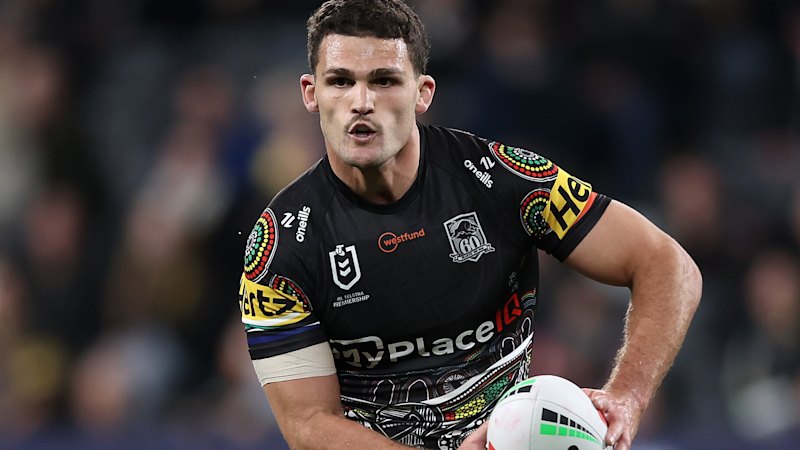
The Rugby League Players Association wants to protect NRL players on the lower end of the pay scale by introducing match payments in the next collective bargaining agreement.
The new $5.3 billion broadcast deal is set to result in the game’s elite players, like Penrith’s Nathan Cleary, commanding salaries well above $1.5 million a season, with the salary cap expected to rise to about $15-16 million in 2028.
But the RLPA wants players who sit at the bottom end of playing rosters to have their salaries topped up with match payments worth up to $3000 a game.
That money would sit outside the salary cap and reward players who don’t normally play in the NRL each week but get more game time, including in the middle of the year when representative players are rested or unavailable. Under the RLPA’s proposal, which has not been pitched to the NRL yet, the match payments would be extended to all players, including the highest-paid stars in the game.
For example, if a player receives $150,000 a season, he could make an additional $36,000 if he plays all 24 games with match payments set at $1500. That figure would double to $72,000 if payments were $3000 a game.
RLPA chief executive Clint Newton said the “pay-for-play model” was embraced during the last CBA negotiations, and said some clubs had indicated they were more than supportive of the concept being introduced this time.
“The best players will always be paid the most, but we also believe a lot of the journeymen, the players who sit mid-tier in the cap, and even young players who are asked to play more games and contribute way more than first expected, should be rewarded,” Newton said.
“You would still have your salary cap, but the match payments would sit outside that.
“We wanted to introduce it in the last CBA, but we couldn’t do it due to where the salary cap ended up. It had broad support last time, and we believe that support has since increased.
“This money helps the guys who are out there in the absence of the superstars who are asked to play more matches [at representative level].”
Match payments capped at $1500 would cost the NRL an additional $11m per year, based on eight games a week, and 38 players involved in each game, excluding finals. That figure rises to $22m if the payments are doubled.
Newton said match fees would also be used to pay judicial fines, rather than money being deducted from salaries.
Origin payments have remained at $30,000 a game for several seasons, and could potentially rise to at least $40,000, while minimum salaries could jump from $145,000, plus medical insurance, to as much as $175,000.
Players collect about 41.5 per cent of all NRL revenue under the current CBA, but Newton said “there would be a valid argument” for that percentage to rise given the addition of two – and possibly three – teams in the coming years.
News, results and expert analysis from the week in sport sent every Friday. Sign up for our Sport newsletter.
KioskNews shows a cleaned-up reading view extracted from the publisher’s page — the original always lives on their site, not ours.