In Flood-Hit Nepal, Teachers Mourn Students Who Never Returned
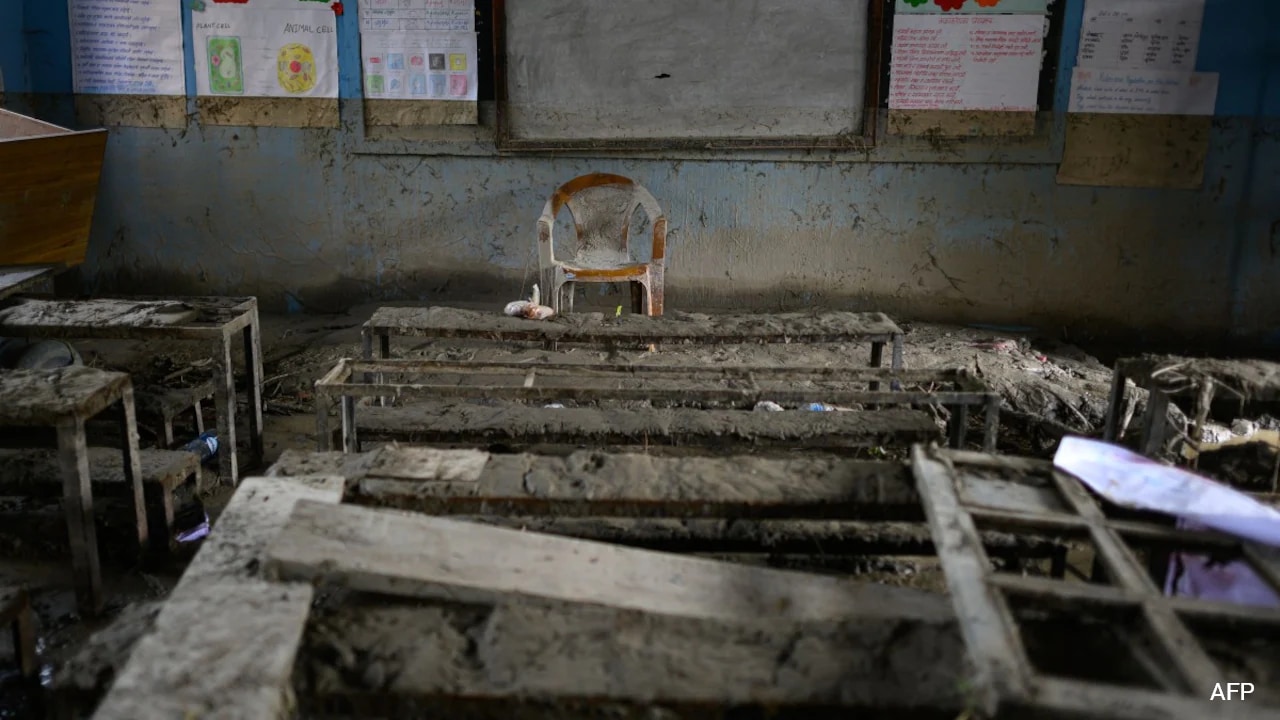
Each morning at a school in flood-ravaged Nepal, teachers taking attendance are served a painful reminder of the disaster as they mark in red the names of students who never came back.
The catastrophic flood, triggered by a glacial collapse near the China-Nepal border, killed more than 1,400 people, the majority in Nepal.
Over 5,000 remain missing in the Himalayan nation one month after the tsunami-like waves swept away roads, bridges and settlements in the mountainous regions up north.
At the Neelakantha Secondary School in hard-hit Rasuwa district, a teacher marked red circles beside the names of children missing since the August 26 flood.
Unlike more than a dozen schools destroyed by the floods, the Neelakantha school, sitting on relatively higher ground, remained largely intact.
But it lost 70 of its students and four teachers.
"If you look at Rasuwa, you can't find a family that has not lost a family member," principal Madhav Lamichhane told AFP.
"All the students and teachers are going through the same pain."
Most of the missing Neelakantha pupils were on their way to the school from riverside settlements when floodwaters tore through the valley.
"We have been remembering our students with every breath," said Rama Paudel, a 36-year-old teacher.
"They have lost their lives in this disaster at such a young age. It's a great loss."
Across Rasuwa and neighbouring districts, around 500 students and 24 teachers remain missing, while 18 schools have been damaged, with recovery costs estimated at up to $15.47 million, according to government data.
"This is the worst situation ever the education sector has experienced," education ministry spokesman Shree Prasad Bhattarai told AFP.
'Feel normal again'
Initial assessments by UNICEF show learning has been disrupted for more than 14,000 children at 62 schools and learning centres across the flood-affected region.
"Education is a critical part of children's recovery after a disaster," UNICEF representative Alice Akunga said last week.
"Returning to learning provides children with a sense of stability, routine and hope at a time when many have experienced significant loss and uncertainty."
For many families, however, sending children back to school was not yet possible.
Fewer than half of Neelakantha Secondary School's 508 students have resumed classes since lessons restarted two weeks ago.
Principal Lamichhane said around 150 students were still unable to reach the school because bridges and roads had been swept away.
Some classrooms have been repurposed as relief distribution centres, underscoring the challenges of restoring normalcy.
Teachers say psychological scars may prove even harder to overcome than damaged infrastructure.
"We have many students who do not have their parents or have seen their friends being swept away," said teacher Shiva Ram Bhatta.
"It has been a month now, but it is difficult for them to focus."
Relief supplies are reaching many survivors, he said, but the next phase of recovery will require much more than food and shelter.
"We have enough relief materials," he said.
"Now we need psychosocial therapy and a permanent way out so that they can feel normal again."
(Except for the headline, this story has not been edited by NDTV staff and is published from a syndicated feed.)
KioskNews shows a cleaned-up reading view extracted from the publisher’s page — the original always lives on their site, not ours.