Bishop calls for accountability, RE shift amid Visayas power crisis
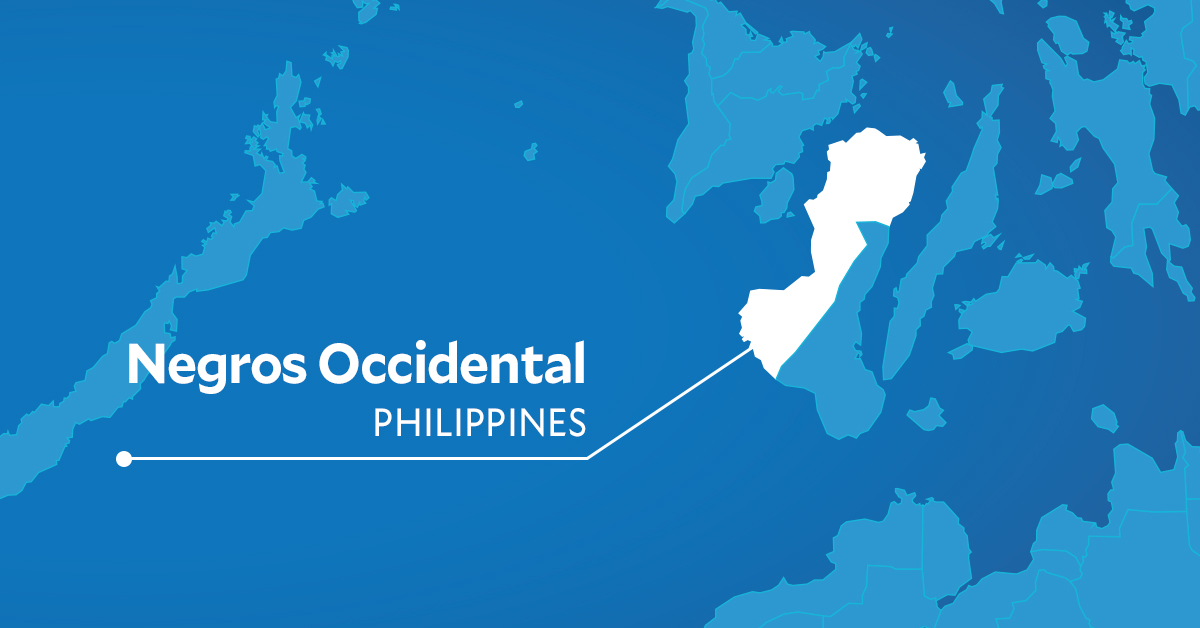
BACOLOD CITY, NEGROS OCCIDENTAL, Philippines — San Carlos Bishop Gerardo Alminaza, president of Caritas Philippines, called for strict accountability and an urgent transition to distributed renewable energy (RE) following recurring power outages that have disrupted lives and local economies across the Visayas region.
Addressing the ongoing grid instability, Alminaza cited findings from a recent report by the Center for Energy, Ecology, and Development (CEED), which revealed that coal power plants accounted for 5,492.3 megawatts of aggregated lost power capacity due to outages in the Visayas between January and June 2026.
Beyond the physical inconvenience, the outages carry severe economic impacts, he said.
Article continues after this advertisement
In Cebu alone, CEED estimated that a two-hour rotational brownout on Sept. 9 resulted in approximately P221.65 million in economic losses—averaging nearly P111 million for every hour without electricity, Alminaza said.
FEATURED STORIES
NEWSINFO
NEWSINFO
NEWSINFO
READ: Power outages loom anew across Visayas
Alminaza raised concerns over potential market manipulation during power supply crunches, citing CEED’s findings that affiliated power plants of major generation companies were significant suppliers to the Wholesale Electricity Spot Market (WESM) while their large units were on forced outages.
“The repeated power outages in the Visayas should make us ask a basic question: How long will we continue depending on an energy system that leaves entire communities vulnerable whenever large fossil fuel plants fail?” Alminaza said.
READ: Consumers group backs call to penalize power firms over Visayas outages
Article continues after this advertisement
The bishop urged regulatory bodies—including the Department of Energy (DOE), the Philippine Electricity Market Corp. (PEMC), and the Philippine Competition Commission (PCC)—to deliver a thorough, transparent investigation into possible market abuse.
“Authorities should disclose which plants were on outage, how long they were unavailable, which affiliated companies were selling power into WESM during those periods, how much electricity they supplied, and at what prices,” Alminaza said.
Article continues after this advertisement
“Consumers should not have to carry both sides of the burden: losing electricity when power plants fail and then paying more when scarce supply pushes prices upward,” he said.
Alminaza said if violations are uncovered, penalties must be proportionate to the damage inflicted on consumers and local economies.
To build long-term energy security and resilience, Alminaza advocated shifting away from centralized, fossil fuel-dependent energy grids in favor of distributed renewable energy (DRE)—such as rooftop solar for homes, schools, parishes, and public buildings, alongside battery storage and community-managed power systems.
He commended local initiatives like the province of Negros Occidental’s SecuRE Negros program as a model moving in the right direction.
“The value of distributed energy is that it gives communities greater capacity to meet part of their own power needs. It can reduce the consequences when a large plant fails and lessen dependence on a system in which tight supply can quickly translate into higher prices,” he said.
Alminaza also extended a call to action to religious institutions, urging dioceses, parishes, and schools to examine how their roofs, land, and facilities can be utilized for renewable energy installations to support vulnerable communities.
The bishop appealed to government leaders and regulators to simplify processes for households, cooperatives, and local government units to adopt renewable energy solutions while enforcing stricter reliability standards on current power suppliers.
“The Visayas experience has exposed two problems that must be addressed together: the unreliability of fossil fuel-dependent generation and the risk that a tight power market can work against consumers,” Alminaza said.
Your subscription could not be saved. Please try again.
Your subscription has been successful.
“We need clear answers, accountability, and stronger safeguards for consumers,” he said. /cb
KioskNews shows a cleaned-up reading view extracted from the publisher’s page — the original always lives on their site, not ours.