Greens rethink opposition to Ukraine military aid after fierce criticism
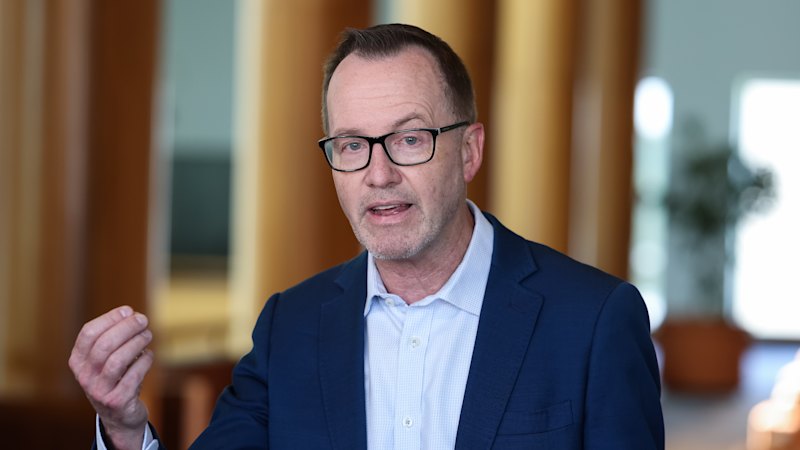
The Greens are considering ditching their opposition to Australian military aid being sent to Ukraine after party leader David Shoebridge’s remarks on the issue alarmed party members and attracted widespread condemnation.
Shoebridge told this masthead after winning the leadership in October: “The Greens have been clear from day one that we’re a party of peace and non-violence, and we don’t support military aid to the Ukraine.”
He said the party would support military aid for Ukraine if it were backed by the United Nations Security Council, but critics have noted Russia would inevitably use its veto power to block any such move.
The policy, which was not previously well known, has drawn heated criticism from Labor, the Coalition, the Ukrainian diaspora and the Ukraine Green Party, who said the stance was dangerously naive and played into Russian President Vladimir Putin’s hands.
Plenary minutes from the Greens’ national conference, held in Adelaide earlier this month, state that the party will consult members across Australia to determine the party’s position on providing military aid to peoples facing invasion or occupation, including the provision of military aid to Ukraine.
Forums will be held among the Greens member bodies over coming months before the party’s national council meeting in January, according to the plenary minutes obtained by this masthead.
The motion notes that Greens positions are ultimately decided by the party’s policy coordinating committee and national conference.
A Greens source, speaking on condition of anonymity to discuss sensitive internal matters, said the successful passage of the motion showed there was significant disquiet within the party about Shoebridge’s comments on military aid and that many members wanted the party to adopt a clearer pro-Ukraine stance.
Members from Shoebridge’s NSW branch were among those leading the charge on the motion, which was backed by all states and territories except Western Australia and the Northern Territory (who abstained) and the Australian Capital Territory (who opposed the motion).
The Greens policy principles state that the party supports a ban on issuing defence export licences and states that non-military conflict resolution is the most effective way of building and promoting peace.
A spokesperson for Shoebridge said: “As a grassroots party we determine party policy at the member level, and that is a long-standing process.
“The Greens membership regularly has meetings and discussions on a variety of issues. It is encouraged in our party.”
Shoebridge has repeatedly stressed that the party supports the transfer of non-military aid to Ukraine and the imposition of tough sanctions on Russia.
Foreign Minister Penny Wong said: “Senator Shoebridge’s first move as leader of the Greens political party was to stop supporting military aid for Ukraine.
“Everybody except Senator Shoebridge knows Putin can use his veto in the UN Security Council.
“The Greens position is embarrassingly naive - and if Senator Shoebridge had his way, Putin would be able to do whatever he wants.”
The Green Party of Ukraine said the party was stunned by the “absurdity” of a position it argued was “detached from reality”.
“It is equivalent to asking a criminal for permission to call the police,” the party said.
Greens Senator Sarah Hanson-Young, who lost the leadership contest to Shoebridge last month, broke with her leader to say she supported giving Ukraine military aid if necessary to protect its sovereignty.
“If that’s the support that people need in order to defend themselves from the invasion of Russia, I think Australians need to support that,” she told the ABC’s 7.30.
“We always come from a position of wanting to de-escalate military violence ... we want to see humanitarian support, we want to see diplomatic support, but of course you can’t allow people to be left fending for themselves.”
Ukrainian ambassador Vasyl Myroshnychenko has urged the Greens to rethink their position, saying: “Even the most pacifist of observers would recognise that the United Nations has enshrined the right of all nations to defend themselves against invasion, and that is what Ukraine is doing.”
Cut through the noise of federal politics with news, views and expert analysis. Subscribers can sign up to our weekly Inside Politics newsletter.

KioskNews shows a cleaned-up reading view extracted from the publisher’s page — the original always lives on their site, not ours.