A baby tyrannosaur possibly cannibalized its dead relative
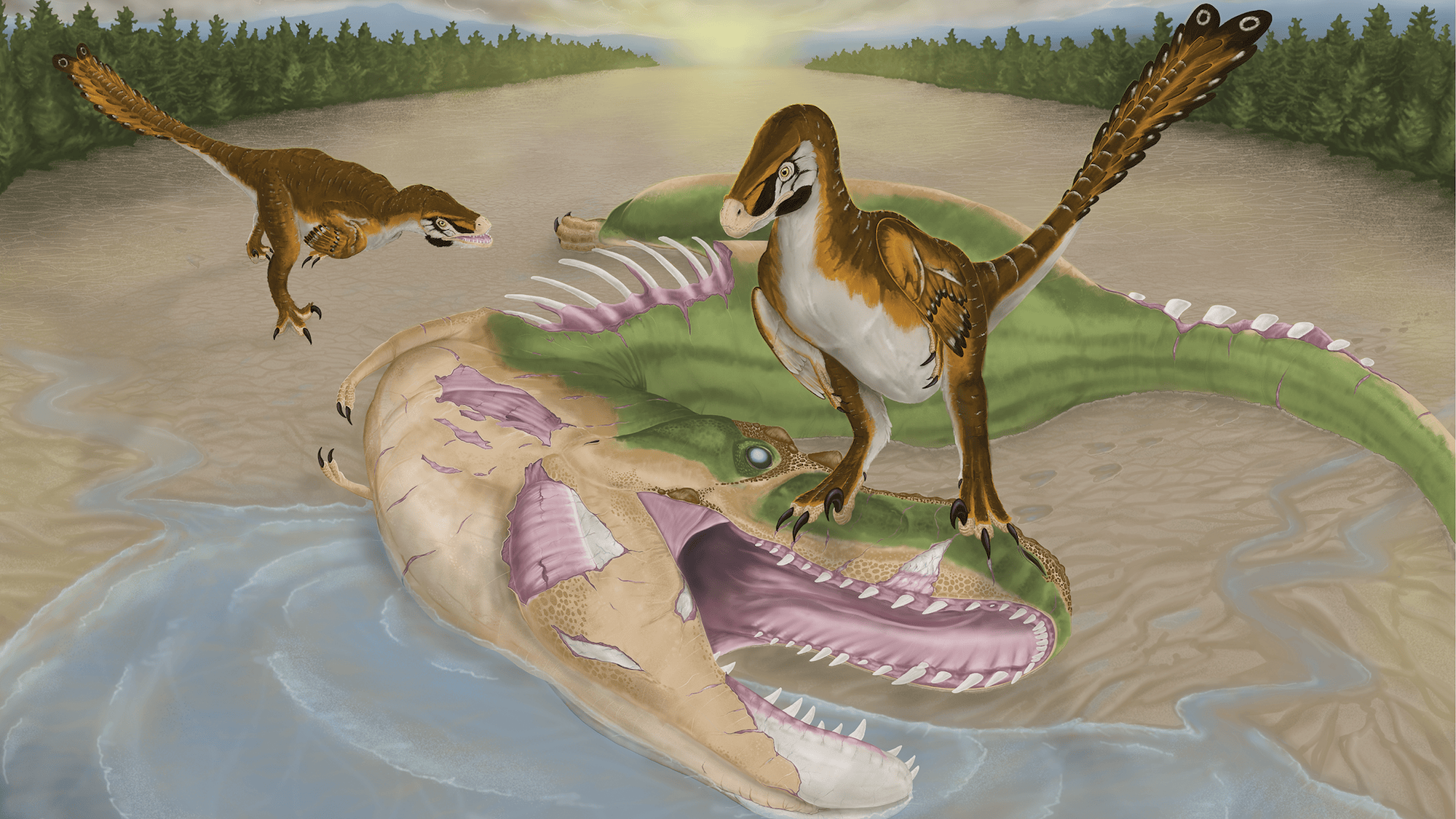
Bitemarks on the fossilized jaw of a tyrannosaur called Albertosaurus appear to illustrate the first known example of scavenging raptors feasting on a much larger dinosaur The prehistoric snack scene is detailed in a recent study in the Journal of Paleontology. However, researchers, one alternative theory may point to an even darker fate.
A close relative of Tyrannosaurus rex, Albertosaurus roamed its present-day namesake Canadian territory about 73 to 67 million years ago (Late Cretaceous period). It was the region’s undisputed apex predator,and regularly grew upwards of 30 feet long while weighing around 6,000 pounds. But even a fearsome dinosaur like Albertosaurus ultimately succumbed to injury, illness, and old age. In this case, paleontologists analyzed fragments of an immature specimen who died when it was 8 to 10 years old. Despite only being a “teenager” at the time of death, the Albertosaurus was already over 19 feet long and weighed about 1,170 pounds.
Interestingly, the tooth marks on the dinosaur’s lower jaw suggest an unexpected postmortem scenario. Paleontologists didn’t find any evidence of bone healing, which strongly implies the Albertosaurus received the bites around its time of death. This means whoever dined on the dinosaur was a scavenger, or at least an especially hungry carnivore—and they were much smaller than their meal.

A jaw-dropping discovery on the badlands
“This turns everything on its head, because you’re dealing with a very small dinosaur eating a very big, mean, nasty dinosaur like a tyrannosaur,” study co-author and University of Alberta (UA) paleontologist Philip Currie explained in a recent video.
Paleontologists currently suspect the most likely explanation is that a pack of dromaeosauridae (raptors) chowed down on the dead Albertosaurus. Made famous by the dinosaurs depicted in the Jurassic Park franchise, these small-to-medium sized hunters included recognizable species like Velociraptor and Utahraptor. Another dromaeosaurid example is Albertavenator curriei, a feathered, sickle-clawed hunter who existed alongside Albertosaurus.
While the authors believe the bite marks could point to A. curriei, they can’t rule out another, even more macabre possibility. Based on the distance between each individual tooth mark, an even younger Albertosaurus measuring about 6.5-foot-long is the only other plausible suspect.
“If it is a young Albertosaurus, this would be an event of cannibalism—by a baby,” said study co-author and UA paleontologist Joshua Doyon.
Incidents of cannibalism are common across evolutionary history, but finding direct paleontological evidence is extremely rare. No matter who ate the unlucky Albertosaurus—be it raptor or relative—the fossilized leftovers graphically reveal a complex prehistoric food chain.
KioskNews shows a cleaned-up reading view extracted from the publisher’s page — the original always lives on their site, not ours.