At UN, Russia Backs India's Bid For Permanent Security Council Seat
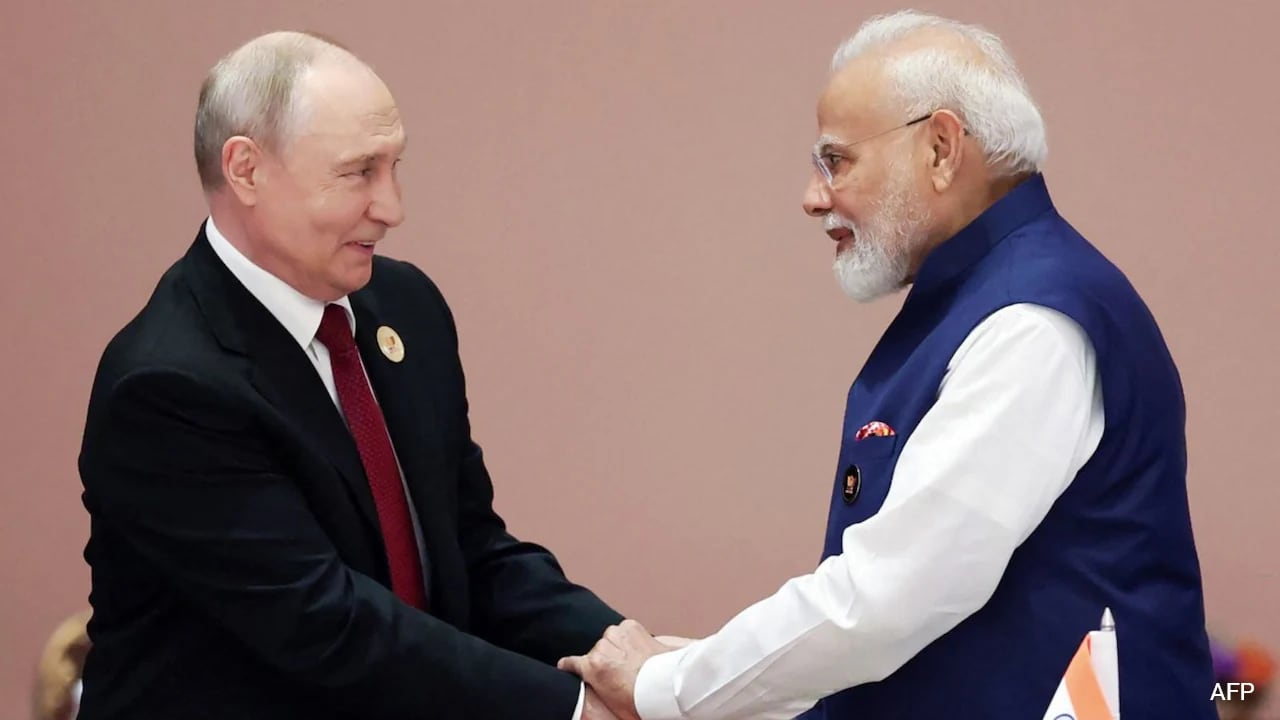
Russia's Foreign Minister Sergey Lavrov strongly backed India's permanent membership on the United Nations Security Council during his address at the 81st United Nations General Assembly (UNGA) in New York on Saturday.
This high-level endorsement underscores Russia's official policy on global governance reform, aligning with broader BRICS declarations to advocate for the Global South while drawing a firm line against expanding Western influence within the UN's top security body.
He advocated for more seat allocation to the Global South and voiced strong support for Brazil and India.
BIG AT UNGA
— Shadow IND (@ShadowIND_IN) September 26, 2026
Russian Foreign Minister Sergey Lavrov backs India's bid for a permanent seat on the UN Security Council. pic.twitter.com/Qb3h4KgSvO
"We are in favour of broadening the representation of Asia, Africa, and Latin America. We support Brazil's and India's candidatures for a permanent seat," he said.
In his speech, he also cautioned against additional seats being allocated to Western countries. He specifically named Germany and Japan and claimed that they are "on the path to militarism and revanchism".
"UN Security Council reform cannot involve any additional seats being allocated to Western countries, especially to Germany and Japan, who are now on the path to militarism and revanchism," Lavrov stated.
However, Lavrov warned that any modernisation of the UN Security Council must not dilute the core prerogatives or powers of the existing permanent members.
Russia was not the only country which threw its weight behind New Delhi. Mauritian Foreign Minister Dhananjay Ramful explicitly endorsed India's bid for a permanent seat on the UNSC during his speech.
"We support the positions of the G4 and of L69 on Council reform, and we reiterate our support for India's candidature for a permanent seat, commensurate with its constructive role in global affairs", Ramful said.
The UNSC has 15 members total, which includes five permanent members with veto powers, China, France, Russia, the UK, and the US and ten non-permanent members elected for two-year terms.
Changing the UN Charter requires a two-thirds majority vote in the UN General Assembly and formal ratification by two-thirds of member states, which must include all five permanent members.
While Russia continues its clear support for New Delhi's bid, formal reform remains deadlocked. Other permanent members have mixed views, and Russia's close strategic partner China remains strongly opposed to India's inclusion.
KioskNews shows a cleaned-up reading view extracted from the publisher’s page — the original always lives on their site, not ours.