More than 150,000 public officers to receive AI, cybersecurity training at new institute
SINGAPORE – As part of a push to get the public service artificial intelligence ready, a new institute aims to provide more than 150,000 public officers here with training in digital, data and AI capabilities by 2028.
A collaboration between the Ministry of Digital Development and Information (MDDI) and the Civil Service College (CSC), the Institute of Digital Government (IDG) was officially launched on Sept 18 at the AI Tech Festival, held at the CSC’s North Buona Vista campus.
Announced in March during the debate on MDDI’s budget, the new institute will enable all public officers here, across different roles and digital proficiency levels, to develop practical digital and AI capabilities relevant to their work.
While officers have previously undergone such training, IDG provides a standardised and centralised avenue for such training, which will be conducted online or via workshops.
All officers will be required to complete annual mandatory foundational modules, which will cover cybersecurity, data protection and AI literacy, MDDI said in a statement.
These modules will be regularly refreshed to ensure they remain relevant and aligned with the latest technological developments.
To help public officers use AI effectively, IDG will provide them with foundational skills in product thinking – an approach that aims to build meaningful solutions to real problems faced by users.
These skills include understanding user needs and defining the right problem to solve, before considering how technology can be applied in a given scenario.
Officers will then be able to build their digital capabilities via three structured learning pathways, based on their level of familiarity with AI or digital tools.
These pathways are Aware 101 for those unfamiliar with such tools, Apply 201 for those with a basic understanding of AI and Build 301, for those who wish to design and build solutions to solve problems at work.
The institute aims to have all public officers acquire a basic level of proficiency in AI by 2028, enabling them to use the technology effectively in their work.
The Singapore Public Service currently employs about 158,000 public officers across 16 ministries and more than 50 statutory boards.
To complement these learning pathways, IDG will support government agencies’ transformation efforts through AI Sprints – workshops held at the agency level, which allow officers to experiment and apply digital and AI skills to real workplace challenges.
“Officers will learn to frame problems, rapidly prototype and test solutions, and apply enterprise tools to improve how work is done, contextualised to the work in their agencies,” said MDDI.
The ministry added that these workshops have been conducted since May, with more than 1,000 public officers participating.
Senior Minister of State for Digital Development and Information Jasmin Lau, who launched the new institute, noted that 150 senior leaders in the public sector – including permanent secretaries, deputy secretaries and heads of agencies – had already undergone foundational digital capability training.
“More recently, they rolled up their sleeves and tried to build with AI themselves, from developing morning briefs to creating personal agents,” she said, adding that members of the Cabinet had also attended similar training sessions.
“We had to make sure that all of our ministers also understand how digital products are built, what cybersecurity is about, what AI is and how AI can be used,” she said.
Lau, who is also Acting Manpower Minister, noted that it is important for AI to become not just another key performance indicator, but a tool that helps public officers do their jobs better.
“It should give officers more time for work that requires judgement, context and care,” she said, adding that AI could possibly also free up time for such officers to spend with their families.
As part of its efforts, the institute is also establishing communities to bring officers across agencies together to share useful products and practices.
One such community is the Champions of AI Transformation, made up of officers in non-technical roles who are driving AI-enabled workflow redesign in their agencies.
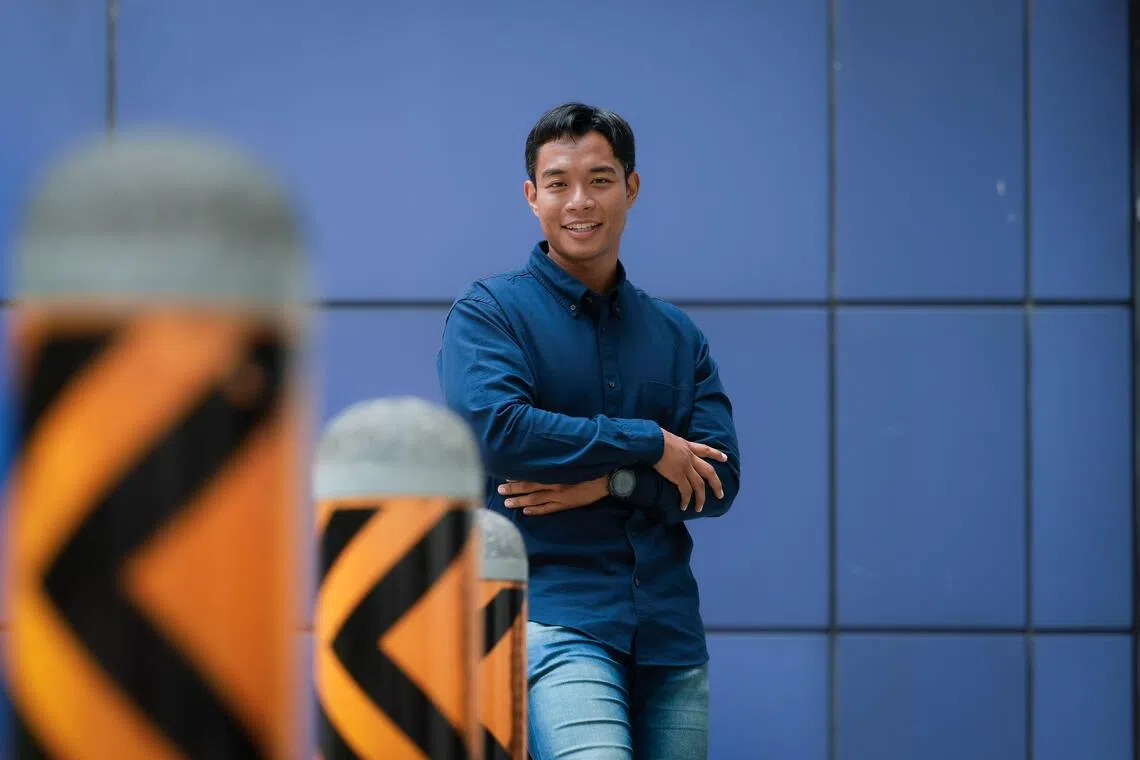
SCDF firefighter and emergency medical technician Muhammad Naim Zahari, who began his AI journey in 2023, at the launch of IDG on Sept 18, 2026.
The Straits Times
Muhammad Naim Zahari, a firefighter and emergency medical technician with the Singapore Civil Defence Force, began his AI journey in 2023, when he took part in a data visualisation competition.
The 35-year-old father of one said he sees his role as providing an important human element to learning digital skills.
“It’s very important to not lose that human touch,” he said.
KioskNews shows a cleaned-up reading view extracted from the publisher’s page — the original always lives on their site, not ours.