10 Horror Films That Are Perfect From Start to Finish

A New York native, Joe graduated from an avant-garde theater school upstate, where he was obsessed with sketch comedy. There, he and his lunatic friends founded The Sketchies — which still lives on at Skidmore College today. Living in New York City, a screenwriter friend of his then taught him how to write for film. This awakened a new passion in Joe. Since then his scripts have garnered over 200 festival selections, nominations, and wins all over the globe (including the BlueCat Best Feature award). Several of his screenplays have been made into feature films — some of them not that bad! Overall, he loves to create unique, hilarious, touching, and bizarre stories.
Sign in to your Collider account
Horror movies often do a lot more than just scare. The really good ones cause the viewer to think, to really contemplate, the issues addressed in them. The scariest horrors also tap into our most deep-seated fears, and exploit them in very clever ways. Here are ten of the most chilling and thrilling horrors ever produced, for your perverse pleasure — with not a single frame that doesn’t deviously deliver.
Most of the films on this list will come as no surprise to even the most casual horror enthusiast. Basically, every decade has produced a groundbreaking horror film that is considered as “perfect” as a movie can be. With horrid homicidal maniacs and gnarly ghouls galore, these horrors all “possess” the essential elements of a great scary flick: terrifying villains, methodical pacing, pitch-black tone, and a scary score that sticks in your head for years.
10 'Halloween' (1978)
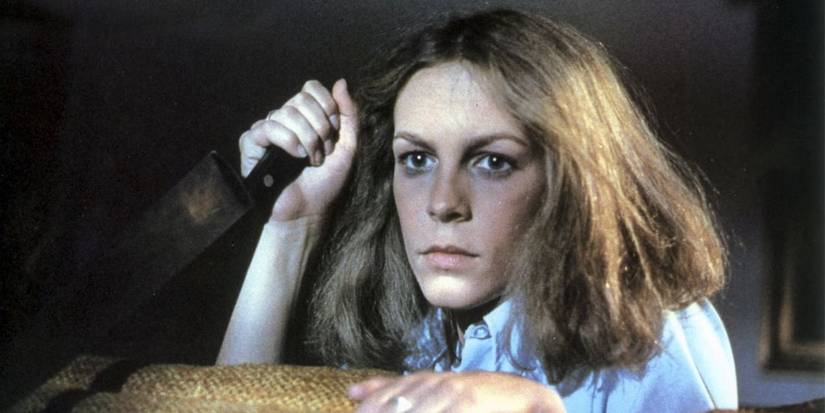
Yes, when one thinks of Halloween, it’s hard to not mentally conjure up the countless sequels, remakes, and reboots that it has inspired (most of which will never find themselves on any “best of” lists). But the original, the groundbreaking movie that created the roadmap for the modern slasher, is a phenomenal experiment in horror.
Director John Carpenter’s story (from a script originally tepidly titled The Babysitter Murders) is about a studious babysitter who is forced to confront an escaped lunatic that becomes fixated on her (and ending her young life). This first movie doesn’t feature any overtly supernatural elements, just the sheer brutality of a psychotic with a very large knife (the iconic Michael Meyers, here portrayed by Tony Moran). While numerous other films had previously explored the “teens who have intercourse will die” motif, Halloween perfected it. Jamie Lee Curtis as Laurie Strode also helped redefine the coveted titles of Scream Queen and Final Girl, with a truly inspired performance. With the chilling theme music added in, Halloween will go into the annals of film as one of the horror genre’s finest. Just, please, try to ignore basically every sequel in this bafflingly long franchise run (it’s almost as if the franchise itself refuses to die, in the same manner that Michael Meyers is impossibly immortal).
9 'The Exorcist' (1973)

William Friedkin’s The Exorcist has a lot going on. It’s the story of a mother trying to heal her sick child. It’s the tale of a youngish priest grappling with his own inner demons, one of which is his failing faith. It’s also the chronicle of a lesser demon masquerading as the Devil (talk about low self-esteem). Again, a ton going on here, narrative-wise, and every single story chapter is extremely well-thought-out and executed. It’s almost as if the filmmakers were possessed in their determination to produce an eternally relevant and petrifying film.
Father Merrin (Max von Sydow) begins the tale in Northern Iraq, at an excavation site, where he discovers a weird little demonic-looking figurine. Next we’re in the exclusive Georgetown area of Washington D.C., where a famous actress, Chris MacNeil (Ellen Burstyn), is living with her daughter, Regan (Linda Blair). Then we catch up with Father Karras (Jason Miller), an intelligent priest who just may be leaving the cloth. Then, in the event that brings all of these people together, Regan begins showing signs of demonic possession. Very scary signs. From the makeup to the elevation effects, every time that Regan is on-screen, it’s another opportunity for a decades-long nightmare vision. Aside from the horrifying elements of this film, the humanistic ones really ring true as well (concluding with an introspective, poignant shot). Ultimately, it’s a tale of bravery and self-sacrifice, but, man oh man, this is one frightening film with one of the coolest scores around.
8 'The Omen' (1976)
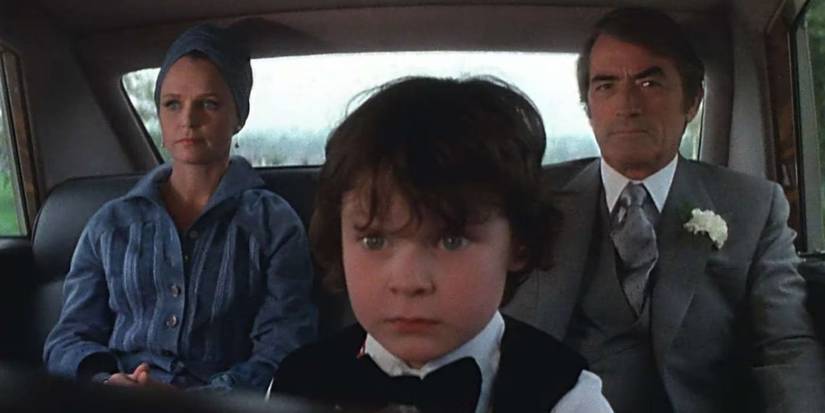
Scary little kids were not a new concept when Richard Donner’s The Omen was released in 1976. Famously, there was The Bad Seed (1956), The Innocents (1961), and Village of the Damned (1960), to name just a few. However, what The Omen did was to present said naughty tyke — the literal spawn of Satan — in a light that is oddly sympathetic. Damien (Harvey Stephens) doesn’t know that he’s a product of the devil’s loins (not right away, anyway), and the innocent discovery of his dark powers is organically expressed with eerie, child-like wonder.
The story, similar to The Exorcist, begins in a far-off land; here it’s Rome, where the diplomat Robert Thorn (Gregory Peck) has just learned that his newborn son has died — but a mysterious priest suggests he takes another infant in its place, to spare Robert’s wife, Katherine Thorn (Lee Remick), from the painful truth. Bad move. Back stateside, the Thorn’s, a powerful political family, welcome the “orphaned” Damien into their home with open arms (little do they know that they are being played by a Lucifer-worshipping cabal that have orchestrated this whole seductively satanic endeavor). As Damien grows, he slowly learns of his hell hound roots, as bizarre things seem to pop off everywhere he goes. Aside from being engaging the whole way through, this film boasts some of the most iconic shots in horror history, such as the jubilant nanny hanging, the sudden priest-impalement, and the captivating paparazzo decapitation. Plus, the parting shot of Damien, now somewhat aware of his baller Antichrist status, gives the camera an adorably devious little grin. “It’s all for you, Damien!,” but luckily we get to indulge in the dark fun, too.
7 'Jaws' (1975)

And now, the film that kept thousands of beach goers from venturing into the water…and also spawned a sub-genre of horror: the shark survival film, aka the “sharksploitation” flick. Steven Spielberg’s Jaws definitely cast the mold for virtually every shark movie to come, and that’s probably due to the fact that it’s a flawless film. Many people are acquainted with the behind-the-scenes anecdote that the original script called for more salty shark action, but because of the malfunctioning shark, Spielberg and the other filmmakers had to alter the script and make it a more human story. Whatever circumstances coalesced and helped create this phenomenal movie, we can luckily thank the filmic gods that they did.
A true “fish out of water” story, the plot is centered on a relocated NYC cop, Brody (Roy Scheider), who is now the chief of police of a small island in Massachusetts. After a night swimmer is…da da, da dum…attacked and devoured by a great white shark, Brody’s internal radar goes off that this thing is far from over. Naturally, the mayor of the town, Vaughn (Murray Hamilton), capitalist pig that he is, doesn’t want to alert the summer tourists, so he tries to downplay the whole thing. Eventually, the shark snacks on some more swimmers, and it’s up to Brody, with the help of one of the best supporting characters ever, the grizzled Quint (Robert Shaw), to catch the big gnarly fish — accompanied by the slightly annoying marine biologist, Hooper (Richard Dreyfuss). The character work alone in this film is amazing, and when coupled with Spielberg’s inherent sense of what thrills viewers, this flick remains one fresh catch, to this very day.
6 'Us' (2019)

While writer-director Jordan Peele’s debut film, Get Out, is widely considered a tremendous film in its own right, blending satire, horror, and racial drama, his second outing is a bona fide horror masterpiece. Us is the kind of movie that entertains while it raises a host of mind-blowing philosophical questions — all while scaring the heck out of any viewer. From the opening, savagely scary sequence set in a boardwalk “house of mirrors,” to the epic, “hands-across-America” finale, Us is a film that has a lot to say and keeps the audience utterly rapt while doing it.
Adelaide Wilson (Lupita Nyong'o, in one of the best “dual roles” in any horror film, ever) takes a trip to the beach with her family. This is the same place where she, as a wee one, had a harrowing experience in the aforementioned not-so-fun-house. So, later that evening, a crew of almost exact replicas of each family member, clad in red jumpsuits and ominously sporting golden scissors, show up on their doorstep. These doppelgängers have homicidal intentions for some reason, and the Wilsons have to use their ingenuity to stave them off. With Elisabeth Moss, as Kitty Tyler, and Tim Heidecker, as Josh Tyler, in supporting roles that alternate from hilarious to terrifying, the entire cast of this movie is very, very committed. Without spoiling everything, there are some incredible twists in this movie that involve the true identity of certain characters, and their alleged copycat personas. The film ends in a supremely satisfying manner (with the now creepy classic version of the Luniz song “I Got Five On It” reverberating throughout). It’s a very heady movie, tackling themes of not only race but class, that pays tribute to other classic horrors — all showcased with one of the more striking color palettes in recent memory. You don’t have to fully understand everything that occurs in Us to appreciate just how good it is — it’s enough to walk away with the horrifying knowledge that something akin to this bloody revolution could easily happen to us.
Collider Exclusive · 8 Questions · 2 Minutes What Is Your Biggest Horror Nightmare? Elm Street · Chucky · Scream · The Conjuring
Four horror franchises. Four completely different ways of scaring you. One waits until you fall asleep. One makes sure nobody believes you. One is already in your group of friends. And one is in the house with your family. Answer eight quick questions about how you actually watch horror, and find out which nightmare was built for you.
😴Elm Street(Freddy Krueger)
🧸Chucky(Child's Play)
📞Scream(Ghostface)
🕯️The Conjuring(The Warren Files)
01
Which horror scene makes you cover your eyes? Four classic images. One of them is worse than the others for you.
02
You are home alone and you hear a noise. First thought? Everybody has one. It arrives before you have decided anything.
03
Which horror movie rule would you break first? Everybody thinks they would survive. Almost nobody actually does.
04
Something genuinely frightening happens. What do you do? Not in a film. In your actual living room, tonight.
05
How do you actually watch a horror film? Be honest about this one. Nobody is checking.
06
Somebody offers you serious money. Which do you still refuse? The amount does not matter. There is one on this list you are not doing.
07
Which feeling stays with you a week after the film? Good horror does not stop when the credits do.
08
Something wakes you at 3am. What is the worst possibility? Eight questions in, this is the one that decides your nightmare.
The Lights Just Went Out Your Nightmare Is…
Four franchises, four completely different ways of getting underneath your skin. This is the one built out of your particular fear, why it works so well on you, and what it would leave behind.
Elm Street
Your nightmare does not wait outside the door. It waits for you to close your eyes, which you are going to have to do eventually, because nobody has ever won that particular argument.
- Freddy is horror's cruellest idea: a threat that lives in the one place you cannot guard, cannot lock, and cannot avoid forever.
- You are the one who is fine during the film and wide awake at two in the morning. Your own head is where this does its damage.
- These films understood exhaustion as a horror engine. The kids on Elm Street do not lose because they are weak. They lose because they are tired.
- You can lock every door in the house. You still have to sleep.
Chucky
Your nightmare is not really the doll. It is the face of the person you tell, and the way they decide, very kindly, that you have imagined all of it.
- Chucky works precisely because he is absurd. That is the trap: the more accurately you describe him, the less anybody is going to believe you.
- You are the one shouting at the screen because the characters are not listening. You know that feeling from real life too.
- The franchise is at its best when the adults in the room are the real obstacle, and you have met those adults.
- By the time somebody finally believes you, you will have handled most of it on your own.
Scream
Your nightmare has your number, knows your name, and has almost certainly been inside your house before. The worst part is that you already know them.
- Scream is the only one of these where the killer takes the mask off and turns out to be somebody who was at the party.
- You are the person who calls the twist out loud before it lands. You watch people the same way you watch films.
- The franchise made the rules of horror part of the plot, which means the survivors are the ones paying attention. You would be paying attention.
- Everybody is a suspect, including the person who just offered to walk you home.
The Conjuring
Your nightmare is not really about you. It is about the people asleep down the hall, and the feeling that whatever is here is not interested in leaving.
- The Conjuring films are domestic horror. The house, the family, the perfectly ordinary room that quietly stops feeling ordinary.
- Your instinct is to get everybody into one room. Your fear is protective rather than personal, which is rarer than it sounds.
- This is the one franchise where belief is the weapon. The people who come through it are the ones who are not alone and refuse to be.
- Whatever is here did not come for you. It came for the household, and you are the one standing in the hallway.
5 'Alien' (1979)
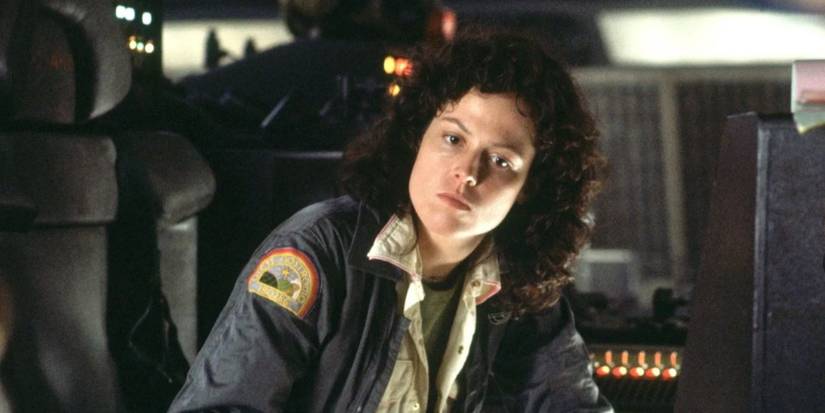
There isn’t a surplus of movies that take place in space that are actually scary. Ridley Scott’s Alien is, of course, the prime exception. Alien works on all levels, not just because of the stunning special effects and compelling performances, but because it makes space feel real — not like some weird distant sci-fi jibber-jabber.
The story focuses on a crew of long-haul “space truckers” that are awakened from hyper-sleep and sent to a remote planet to check on a distress signal. Unbeknownst to them, there is another life form that exists there, and it’s not all that open to receiving visitors. The team is, of course, led by Ripley (Sigourney Weaver, in possibly her most beloved role — that, by the way, was never diminished in any of the sequels), who is the voice of reason once the “xenomorphs” emerge and ultimately begin eviscerating the squad. The aliens are naturally terrifying to behold — and not just the big mommas, the little ones are just as lethal (as Kane, played by John Hurt, finds out — when one erupts out of his chest cavity). From the intriguing opening where their ship silently careens through deep, dark space, to the epic finale where Ridley squares off against the humongous mother space bug and blows her own ship up, every sequence in this film is fraught with intergalactic tension. No one can hear you scream in space, but this movie is a scream the whole way through.
4 'The Shining' (1980)
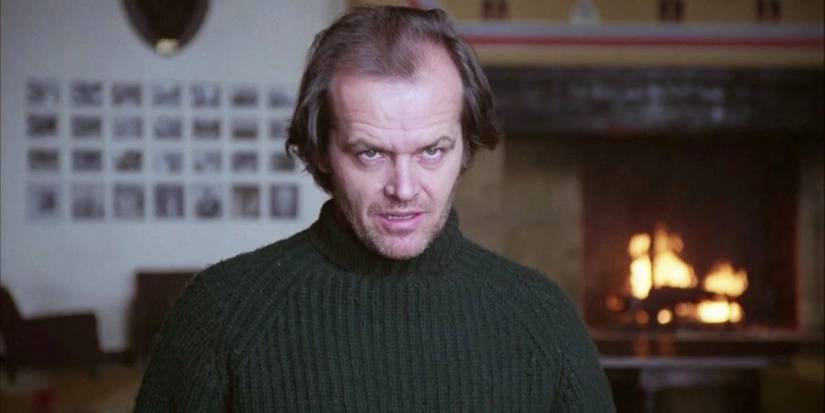
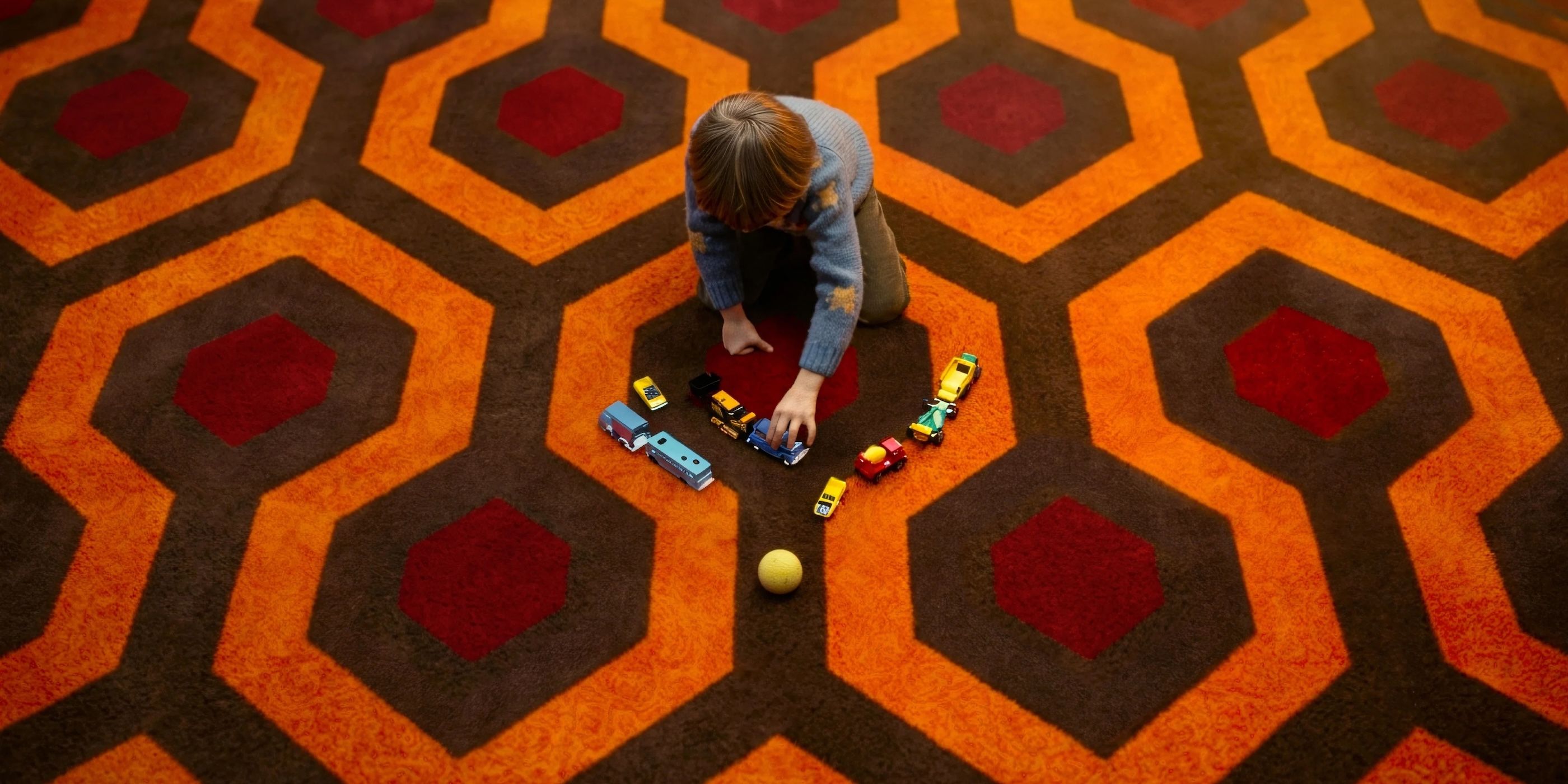
Every once in a once in a while, a film is released that holistically succeeds in the entertainment department and the highly sophisticated intellectual one, too. Welcome to the majestic Overlook Hotel, the setting where the best-ever-book-adaption-into-a-horror The Shining takes place. This is the kind of movie that one can watch over and over again, and pick up little nuances that were missed the previous viewings. Stanley Kubrick is regarded as one of the best directors to ever call “action,” and this attempt at pure horror is one of his greatest achievements.
The story is of a struggling author, Jack Torrance (Jack Nicholson, proving he can scare the hell out of anyone), who moves with his adoring, querulous wife, Wendy (Shelley Duvall, who Kubrick apparently tortured during filming to get the most authentic, frightened performance out of…and, cruelly, it worked), and his clairvoyant son, Danny (Danny Lloyd), to act as the caretaker of the hotel during the winter off-season. The previous guy who attempted to do this job went bonkers and murdered his family. No worries, scriber Jack really needs the dough and the peace and quiet. Unfortunately, none of those things come to fruition, as the hotel itself is pure evil — laden with some of the scariest spirits ever witnessed (the lady in the tub alone is permanent nightmare-fuel). With one of the most indelible horror performances in history, art and set direction that work in tandem to create the spookiest of atmospheres, highly innovative camerawork, chillingly delicious scoring, and some of the best one-liners of all time, The Shining is pitch-perfect from the sprawling opening credits to the final image of Jack Torrance, stuck in an old-timey photograph, smiling vivaciously. Shine on, you crazy Nicholson.
3 'The Silence of the Lambs' (1991)
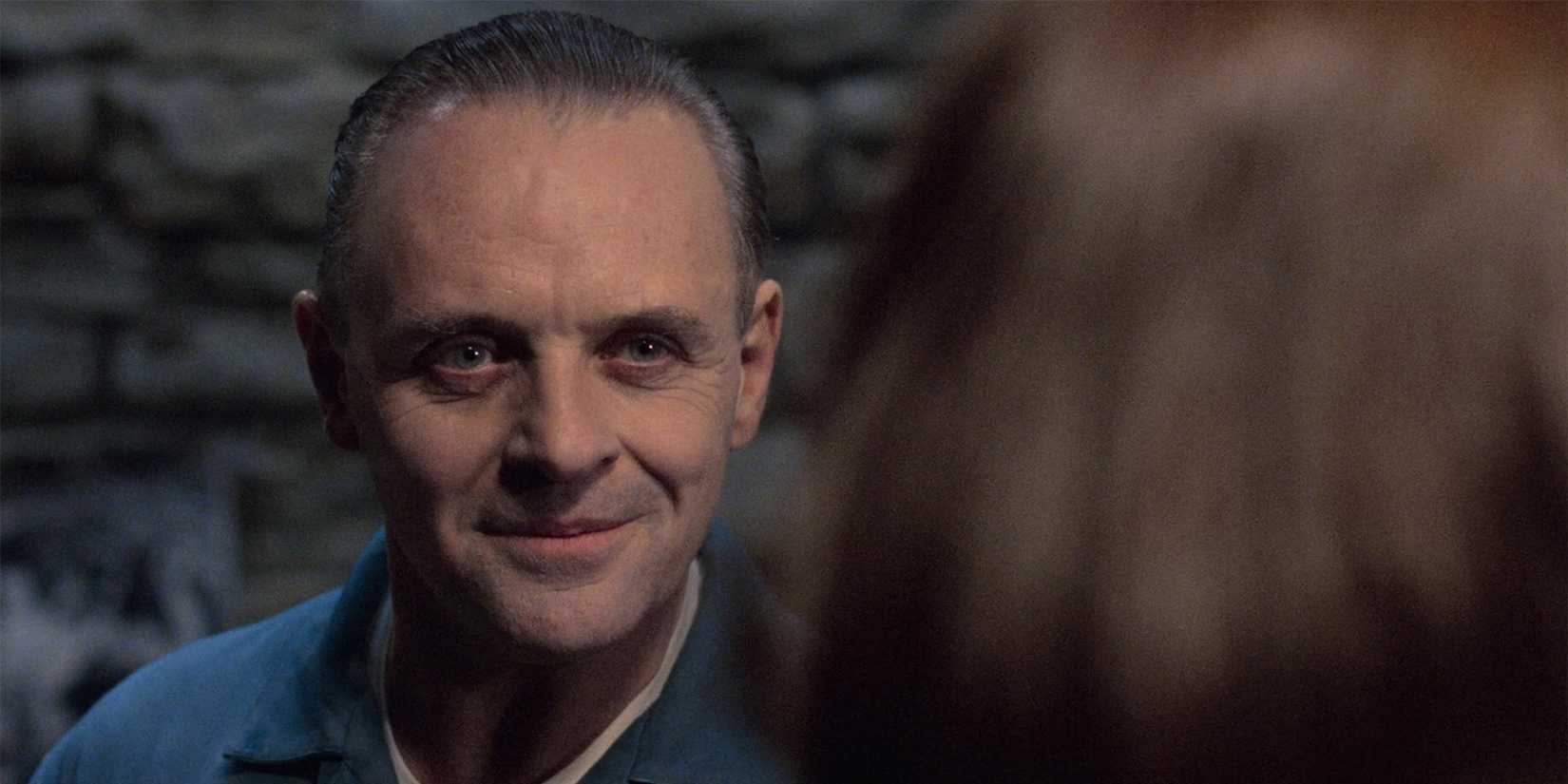
There aren’t that many horror films that mostly feature FBI agents for the majority of the movie. The Academy Award Best Picture-winner, The Silence of the Lambs, manages to be both a taught crime-thriller and an absolutely blood-curdling horror movie at the same time. With an extremely tight script that never lets up on the tension, and two of the best performances to ever come out of any horror movie of any kind, Silence is the quintessential psychological horror film of the modern age.
Agent Clarice Starling (Jodie Foster, who won an Oscar for this role) is a young FBI recruit, willing to do just about anything to prove herself. Well, that takes shape in the form of having to “interview” a convicted serial killer, the oh-so-infamous Dr. Hannibal Lecter (Anthony Hopkins, who won an Oscar for this role) to garner information about a new multiple-murderer who has a Senator’s daughter held captive in his basement of horrors. Director Jonathan Demme (who won an Oscar for this film) plays Ted Tally’s script (that also won the Oscar) like a Stradivarius, crafting one of the most elegant horror features ever conceived. This perfect film starts off with a bang, as Agent Starling hustles through a Quantico obstacle course, keeps the audience on the edge of their seat for all subsequent sequences (including the heart-in-your-throat scene with Starling and Jame “Buffalo Bill” Gumb (Ted Levine) in the pitch-black basement), and then closes with one of the more memorable play-on-words in cinematic history.
2 'Frankenstein' (1931)

While there have been roughly 13,984 revisions and reboots of the original Mary Shelley novel, Frankenstein, none have been as revered and downright legendary as the original film version of the same name. Drenched in German Expressionism, this Gothic interpretation of the source material is a true classic in every sense of the term. James Whaleys’s direction of this masterpiece in moody horror is in itself a work of art. When combined with Boris Karloff’s performance as The Monster, this film emerges as one of the irrefutable kings of horror — still highly entertaining and engaging nearly one hundred years later.
The iconic story is centered on a scientist, Henry Frankenstein (Colin Clive), whose obsession with defying death leads to his downfall. Indeed, unbridled ambition leads to the demise of many in literature and cinema, but this bold portrayal really hits the mark. When Dr. F. does defy all odds and create a “man” from discarded corpse parts, he achieves a “god-like” status. Naturally, the creature is unsettling to behold, and so all the surrounding townspeople want it dead. The commentary here on mob mentality was strangely prescient, with World War 2 only eight years away. In any event, the film is top-notch in every respect. The look, and feel of it, were unprecedented. And then, there are the performances. While Frankenstein is unhinged and a delight to watch, there is something just so poetic and nuanced about Karloff’s Monster. This figure is one of the first (and perhaps only) “antagonists” in cinema history to achieve being both horrific and threatening and also melancholic and touchingly poignant. The way the creature shares a sweet moment with little (non-judgmental) girl, Little Maria (Marilyn Harris), and then assumes a terrifying form in the next instance, is a masterclass in sensitive and reactive acting. Frankenstein’s Monster acts not out of unchecked desire, lust, or rage, the way Dracula or the Wolf Man does, but out of the basic human need to survive. Overall, this film is not simply a classic because it was the first of its kind, it's a classic because it exemplifies everything that a horror should be: frightening, thought-provoking, and profoundly impactful. Plus, it still makes a great Halloween costume.
1 'Psycho' (1960)
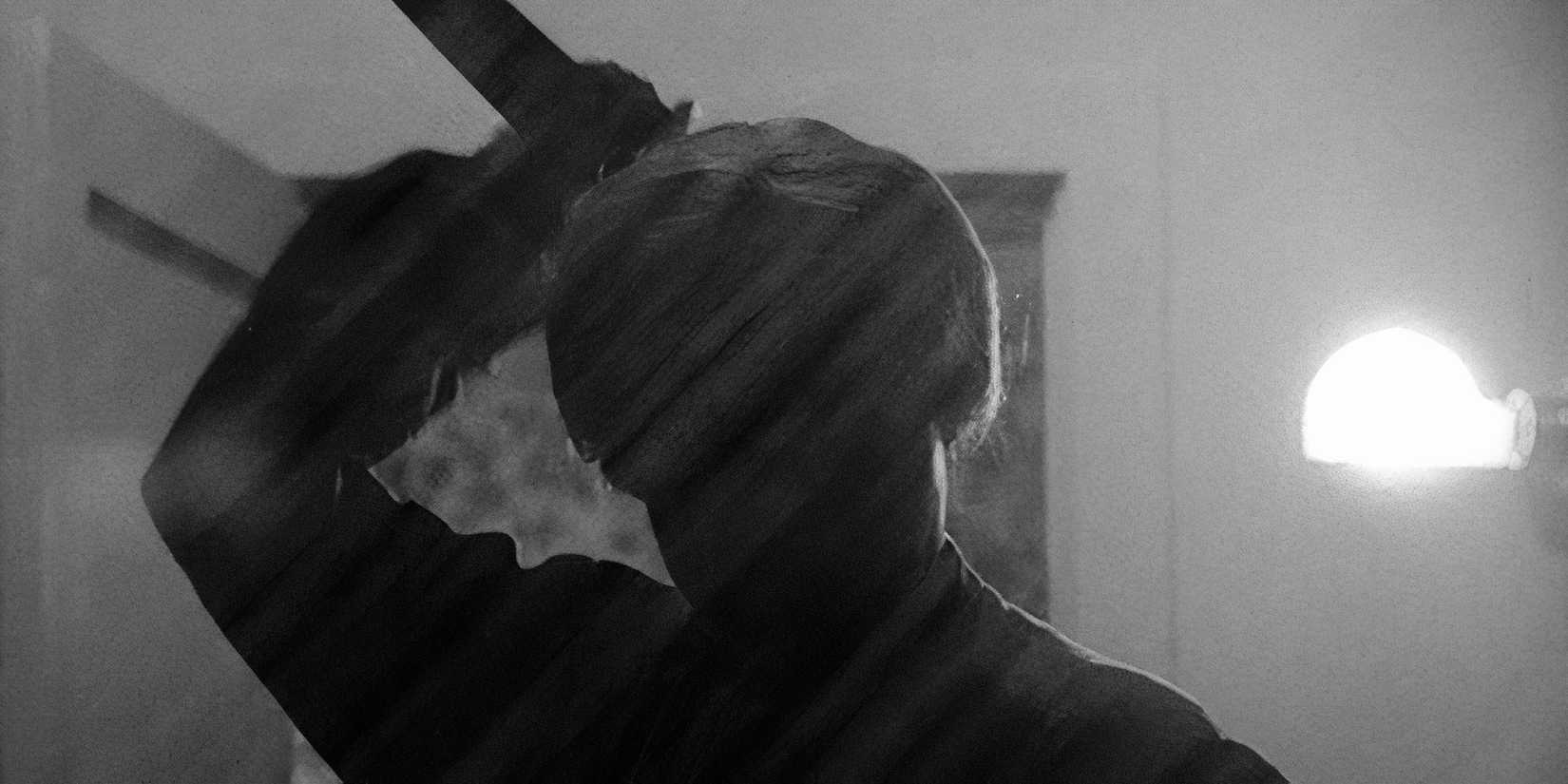
Alfred Hitchcock has obviously made some of the most venerated films that explore a plethora of deep-seated human fears. There’s fear of the unknown, in Rear Window, fear of the unpredictable and sometimes savage nature of, well, nature, in The Birds, fear of being manipulated and gaslit, as in Vertigo, and one of the most primal fears of all: that of fellow man…when that man is a psychopath. With an expansive catalog of groundbreaking movies in his oeuvre, none may be as perfectly executed as Psycho.
Norman Bates (Anthony Perkins, in the role that propelled him to stardom and type-cast him for the remainder of this career) loves his mother. The only issue is that he also killed her many moons ago, and keeps her in a taxidermic state in his creepy-as-all-hell home. One of the coolest aspects of this movie, though, is how the plot was devised — with the ostensible main character of the film introduced well before Norman. This is Marion Crane (Janet Leigh, who was already a major starlet at the time), a woman with some pilfered loot, who is on the run. She snags a room at the illustrious Bates Motel, and Norman (disguised as his mother) sends her to an early grave — in hands-down the most famous murder scene of all time. Oh, the audience thinks it really is Mrs. Bates, as the big reveal comes later. The thing about killing Marion off in the first act is that it was totally unexpected, since she was the film’s true star. Everything from the highly choreographed shots to the systematic pacing to the dynamic performances to the scathing score is truly perfect. Look, if you don’t love this movie, you most likely are… psycho.

Psycho
- Release Date
- June 22, 1960
- Runtime
- 109 minutes
- Director
- Alfred Hitchcock
- Writers
- Joseph Stefano
KioskNews shows a cleaned-up reading view extracted from the publisher’s page — the original always lives on their site, not ours.