The King and the colonies: Why Charles will have to confront slavery
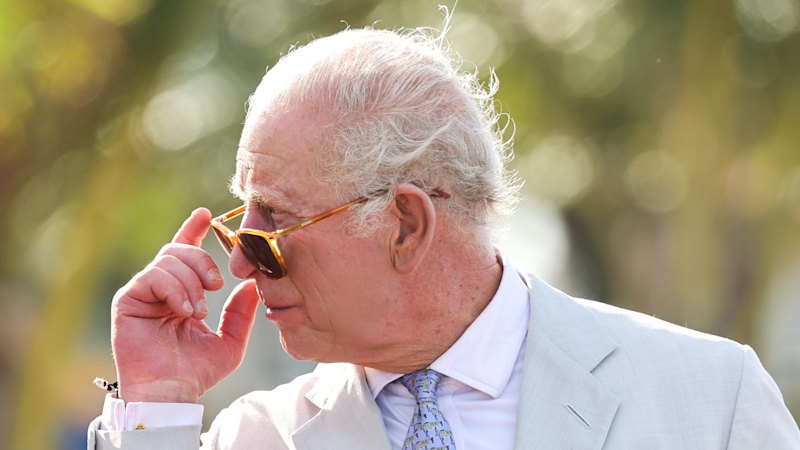
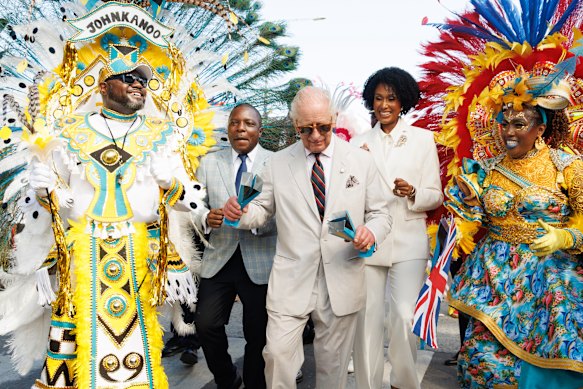
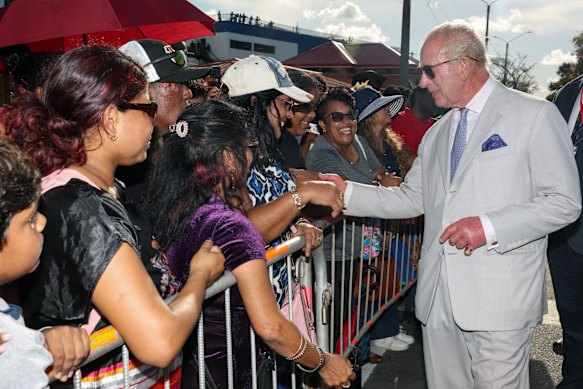
London: King Charles has been greeted with joyous music, smiling dancers and a shot of rum on a journey through the Caribbean that looks like an endless celebration.
But every stop takes the King closer to a meeting in Antigua where he will have to navigate the grim history of slavery in his talks with Commonwealth leaders from former British colonies.
Charles has expressed sorrow about slavery, but has stopped short of a formal apology, given that he is guided by British policy that rules out paying reparations for the damage done over centuries.
At this meeting, however, several leaders from the Commonwealth appear determined to force a debate about a response from Britain over its imperial past. And the response, they say, is not only about money. They want an apology.

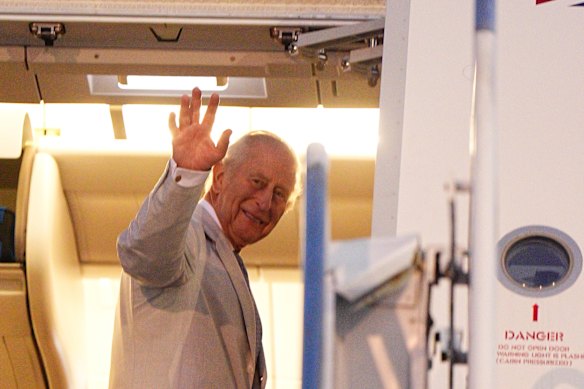
“What benefit do we have from this man coming to our country?” asked Niambi Hall Campbell-Dean, the chair of the Bahamas National Reparations Committee, after the King flew out of the island nation a few days ago.
“We know what we are giving, but what are we getting, you know? And if all that we’re getting is an opportunity to smile and wave and say hello, I think for a lot of Bahamians that just wasn’t worth it.”
One seasoned observer, Alan Lester, professor of historical geography at the University of Sussex, believes this sets up an opportunity for a unified statement and an apology that helps Britain build better relations with the Commonwealth.
Without an agreement, however, it could merely lead to more acrimony.
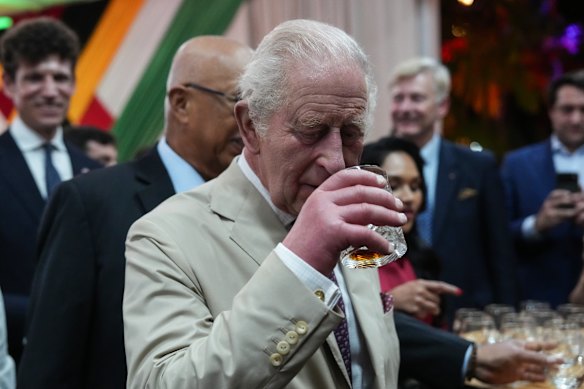
The King began his Caribbean tour on Tuesday in the Bahamas, where he displayed some dance moves in a parade, and then visited Guyana, where he tasted the local rum.
He arrives in Antigua on Sunday for events that include a cricket match among famous West Indies champions and several Commonwealth leaders.
The argument about slavery will shape the agenda after a formal event on Wednesday to open the Commonwealth Heads of Government Meeting, or CHOGM.
Of course, the King has proven his skill at delicate diplomacy in the past, not least in handling Donald Trump during two state visits – the American president’s trip to London last year and the King’s visit to Washington DC this year. On both occasions, the King made pointed remarks about liberty, climate change and Ukraine with no display of tension with Trump.
The talks on slavery could be more difficult because the King may be outnumbered.
Caricom, which represents 15 states and several territories around the Caribbean, is calling for significant action on slavery because of the evidence that European nations enslaved Africans, shipped them across the Atlantic, stripped them of their humanity and set up the financial systems to treat them as chattels.
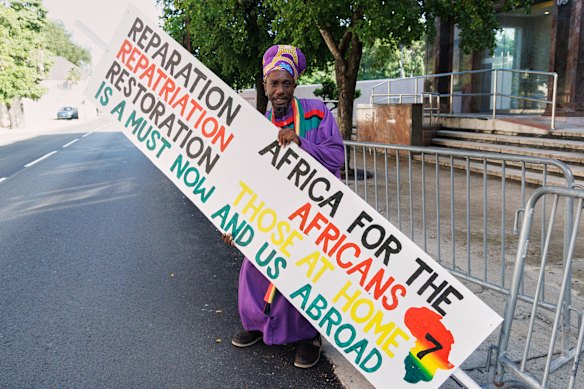
The Caribbean manifesto, issued in June, notes that Britain paid compensation to slave owners when it abolished slavery, but did not compensate those who had been enslaved.
Setting out a 10-point plan for justice, the group seeks a formal apology, a development program for Indigenous people, repatriation for descendants of slaves who might seek to return to Africa, the restitution of cultural heritage, help to remedy a crisis in public health and help with education and training.
A key goal is compensation for gender-based violence, given estimates that 6 million African women were transported across the Atlantic as slaves, almost one-third of the 20 million who were forcibly removed.
Caricom also seeks support with psychological rehabilitation and sovereignty over technology development.
The final point of the 10-point plan is debt cancellation, monetary compensation and decolonisation.
“The crimes against humanity committed against African people by enslaving nations have left an enduring legacy of psychological trauma, financial dependency and socioeconomic disparities,” it says.
“The demand for monetary compensation and debt cancellation is a call for financial redress.”
The Caribbean nations do not name the amount due in reparations. Crucially, their claim is against all European empires, not just the British. But they note reports that estimate “Britain’s black debt” ranges from £7.5 trillion to as much as £18 trillion. That is roughly $14 trillion to $34 trillion.
Given that Britain’s annual economic output is just over £3 trillion, and its net public debt is climbing toward 100 per cent of annual GDP, the full bill for slavery looks unpayable.
British Prime Minister Andy Burnham rejects it completely. “I am clear we do not and will not pay reparations,” his spokesman told the media last Tuesday.
Some academics have dismissed the case for reparations based on history. Nigel Biggar, a professor emeritus of moral theology at Oxford University, has argued that the demands ignore Britain’s achievement in abolishing slavery.
“Black Africans had been busy enslaving other Africans and selling them to the Romans and then to the Arabs long before Europeans arrived on the scene,” Biggar wrote last year.
He cited estimates that the Arab slave trade as a whole, which lasted from the seventh century until well into the 20th century, transported about 17 million slaves, most of them African.
This is not just an argument for leaders from Africa and the Caribbean. Pacific leaders have also engaged on the issue because of the “blackbirding” of islanders to work on sugar cane and other farms in Australia and other colonies.
Former prime minister Scott Morrison sparked a storm in 2020 by saying Australia had no history of slavery, with some historians arguing that colonial businessmen such as Ben Boyd shipped slaves from Melanesia to Australia in the 1800s.
More than 62,000 people were transported from the Pacific Islands to Australia over four decades, including “blackbirds” who had been kidnapped.
King Charles, as the head of the Commonwealth, has to face this debate in Antigua given that so many leaders want it addressed. There is a clear majority behind a statement on slavery, given the way the debate turned out at the last CHOGM, in Samoa in 2024.
The final statement from leaders in Samoa called for talks on “reparatory justice” on slavery and mentioned “blackbirding” – a first for a CHOGM communique.
Lester says he can understand why Burnham strongly rejects reparations.
“The word ‘reparations’ has become an electoral landmine thanks to the weaponisation of the idea that it involves British taxpayers putting their hands in their pockets for distant strangers who may, or may not, need the money,” says the University of Sussex professor.
“But repair can take many forms. I would hope that Britain would begin negotiating debt relief, financial reform, climate adaptation assistance and other items on Caricom’s agenda even if they are not defined as paying reparations.”
Lester argues that it would actually serve Britain’s interests if it accepted the concerns of its former colonies, especially when it has to contend with a world of uncertainty in the US, Russia and China.
Burnham does not appear to see things this way. And the King cannot negotiate the outcome; he simply has to navigate the divisions.
“Our cohesion requires that we acknowledge where we have come from,” Charles told the Commonwealth meeting in Samoa two years ago.
“I understand, from listening to people across the Commonwealth, how the most painful aspects of our past continue to resonate.”
The King has always acknowledged the suffering from slavery, but that may not be enough in Antigua. Prepare for a lively debate about whether he must go further.
Get a note directly from our foreign correspondents on what’s making headlines around the world. Sign up for our weekly What in the World newsletter.
Read more royal news:
- ‘Trafficked’: Police launch inquiry into Andrew and Epstein at royal estate in Scotland
- ‘Great suffering and injustices’: King Charles in the Bahamas as calls for slavery reparations grow louder
- ‘Something was always off’: Thomas Markle’s granddaughter speaks
- Meghan’s new role: Duchess to co-host of Junior MasterChef Australia
- Prince Harry: ‘I want family reconciliation ... but some people don’t’
KioskNews shows a cleaned-up reading view extracted from the publisher’s page — the original always lives on their site, not ours.