Record-breaking bluefin tuna landed off Devon as species returns to British waters
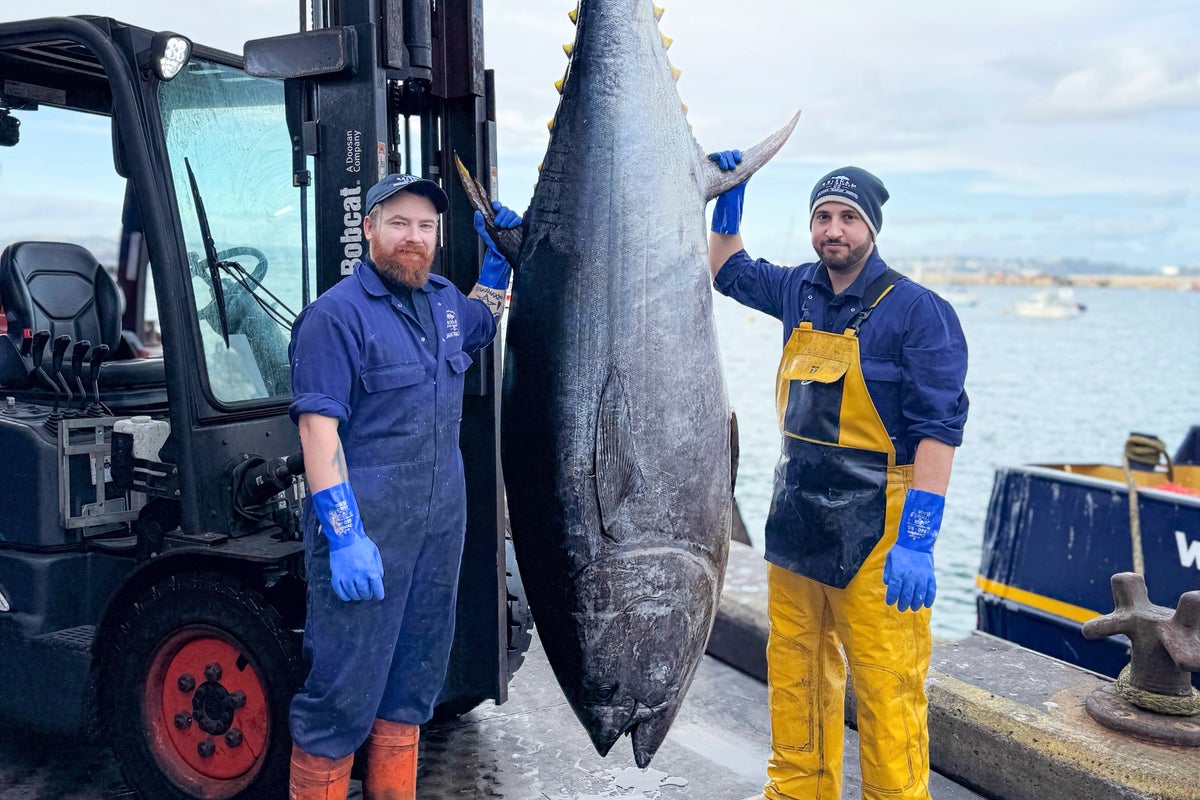
England’s largest fish market has recorded its biggest ever bluefin tuna with the landing of a 44-stone specimen off the south-west coast.
The nine-foot fish, caught using rod and line before being brought ashore at Brixham in Devon, weighed 621lbs. The catch surpassed the market's previous size record for a bluefin tuna, also known as a 'tunny', by approximately 160lb.
Industry experts estimate the specimen is large enough to supply around 500 portions of premium tuna.
It was purchased for an undisclosed price at auction by Flying Fish Seafoods, which supplies Michelin-starred establishments across the country. Fine dining menus frequently charge between £20 and £45 for a dish of high-grade bluefin.
The record catch arrives as British coastal waters see a notable rise in tuna populations. Over the past decade, the species has returned in huge numbers to the south-west coast, establishing a viable, sustainable fishery.
The return has extended into the North Sea, where fishermen in Whitby, East Yorkshire, landed their first bluefin tuna in 60 years in August.
To regulate the sector, Defra has allocated special licences to 30 commercial vessels, allowing them to land a small quota to sell at fish markets.
Barry Young, managing director of Brixham Trawler Agents, said that the species is becoming an increasingly valuable asset to British fishing.
"Landing a 282kg bluefin tuna is a fantastic achievement for Brixham Fish Market," he said.
"It’s a record-breaking fish of exceptional quality."
The company had sold over 17 tonnes of bluefin tuna, with more than 200 fish landed in this year alone, he said.
"It’s a fantastic moment for Brixham and its fishing heritage.
"Fish of 200-300kg are being encountered, making Brixham’s 282kg catch an exceptional example of the size and quality of tuna now being landed here.
"It provides a valuable additional opportunity for Brixham’s licensed vessels, while also bringing activity through the fish market and the wider supply chain, including merchants, processors and transport.
"It’s an increasingly important part of the commercial fishery here."
Exeter University marine ecologist Tom Horton said that a 621lb tuna was certainly an “impressive fish”, but was not unprecedented.
“Bluefin tuna are among the largest bony fish in the Atlantic and can exceed 1,000 lb (450 kg) in weight,” he said.
“The really interesting aspect is that a fish of this size is relatively unusual for the South West of England.”
Very large bluefin tuna are more commonly associated with the cooler, highly productive waters further north, including around Norway and Denmark, and increasingly the north-east coast of England, he said.
The return of the species to UK waters was “one of the most encouraging marine recovery stories in Europe”, Dr Horton said.
Bluefin tuna were once common around the UK, but disappeared during the 20th century.
”Bluefin first began reappearing in significant numbers off the South West more than a decade ago and their abundance appears to have increased steadily since.
“The primary driver is likely to be the recovery of the wider Atlantic population following improved international management.”
KioskNews shows a cleaned-up reading view extracted from the publisher’s page — the original always lives on their site, not ours.