Why the world’s most fearless investor wants to bet RM203 billion on Malaysia
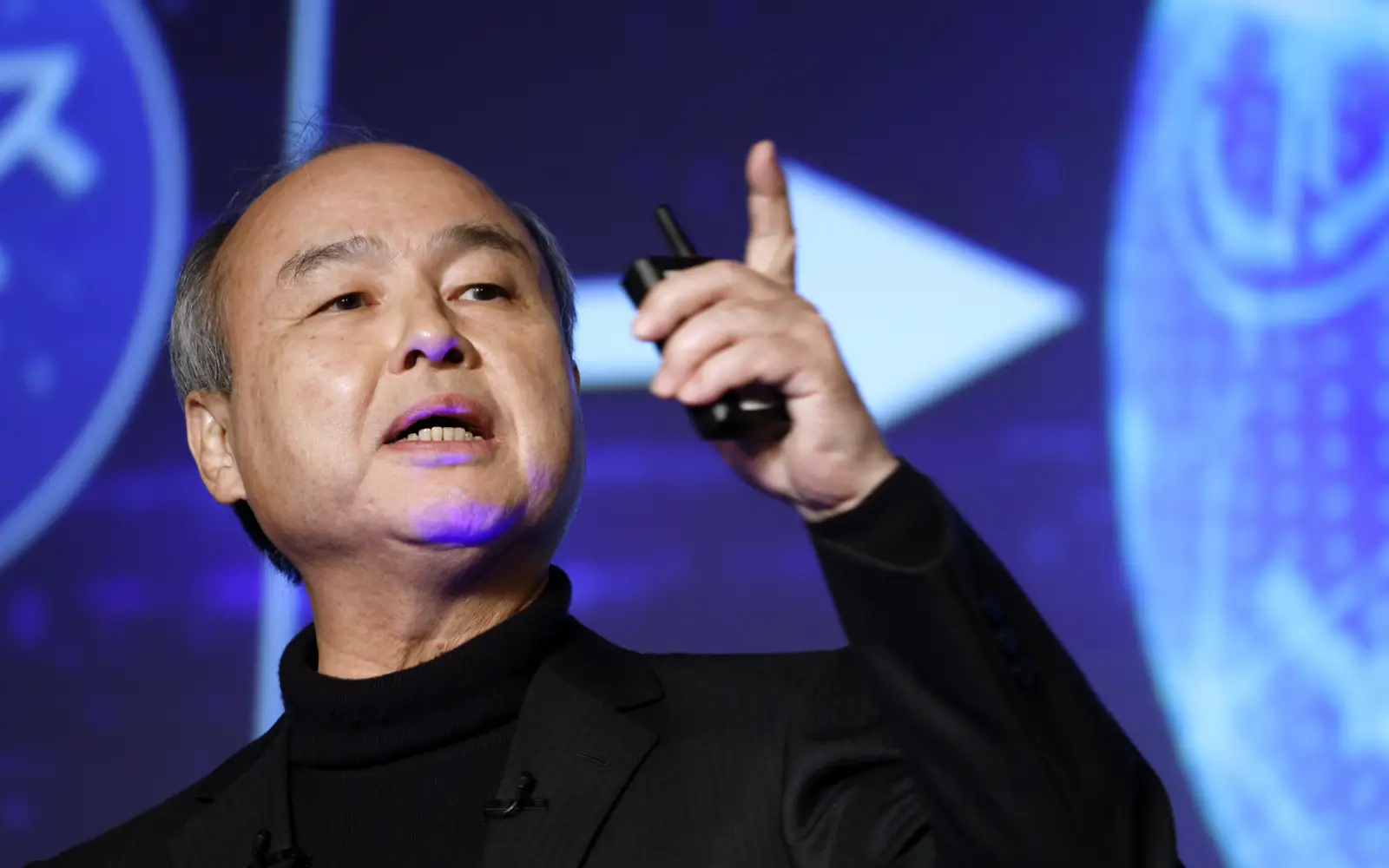

Five minutes into a pitch from a former English teacher in 2000, a Japanese tycoon decided he had seen enough and handed him over about US$20 million, roughly RM81 million at today’s rates. The tycoon was Masayoshi Son, the teacher was Jack Ma, and by the time Alibaba listed in 2014, CNBC reckoned Son’s stake was worth US$50 billion (RM203 billion) or more.
Son’s explanation was pure instinct: “It was the look in his eye, it was an ‘animal smell’.”
That same RM203 billion is what Prime Minister Anwar Ibrahim says Son now wants to spend here in Malaysia. Let that sink in for a bit.
Speaking in Melaka on Oct 24, Anwar said the SoftBank Group founder had told him over a video call days earlier that he had picked Kuching in Sarawak and sites in Peninsular Malaysia for some US$50 billion of investment. “In what areas? AI, new technology and data centres,” Anwar said.
A man who bets big, and sometimes loses big
Son is no stranger to numbers like these. At the height of the dot-com bubble he was, for three days, the richest man on earth, before SoftBank’s shares fell 93% by the end of 2000 and, by Bloomberg’s tally, some US$70 billion (RM284 billion) of his fortune went up in smoke.
SoftBank later poured billions into WeWork, the office-sharing firm once valued at a whopping US$47 billion (RM191 billion), only to watch it file for bankruptcy in 2023. Yet Son bounced back again, and in June Forbes crowned him Asia’s richest person, with US$97 billion (RM394 billion) to his name.
Why Malaysia, and why now?
The answer lies in Son’s obsession with artificial superintelligence (ASI), AI that vastly outperforms the brightest humans, which he predicted in 2024 would be 10,000 times smarter than us within a decade. “I think I was born to realise ASI. I am super serious about it,” he told shareholders that June.
Superintelligence needs gargantuan amounts of computing power, and computing power needs land, electricity and water. That’s why SoftBank has already sunk about US$64.6 billion (RM262 billion) into OpenAI, the maker of ChatGPT, and is planning a US$500 billion (RM2 trillion) data centre campus in Ohio.
Here in Malaysia, he finds what few other countries can offer: RM385.7 billion of data centre-related investment recorded since 2021, according to the Malaysian Investment Development Authority (MIDA), a government pitching us as neutral, non-aligned ground for technology and, in Sarawak, a state energy company ready to supply the power.
On Oct 8, Son signed a framework agreement with Petroleum Sarawak (Petros) and Grab to explore an AI and digital infrastructure platform in Sarawak. Talk about coming full circle: Grab began life as MyTeksi in Kuala Lumpur in 2012, and SoftBank backed it with US$250 million (RM1 billion) in 2014.
What’s in it for you?
The sum is about a tenth of our economy, which the Department of Statistics Malaysia (DOSM) put at RM2.03 trillion last year, and more than three times the RM61 billion that Google pledged here on Nov 4.
But here’s the thing: data centres are heavy on capital and light on people. The 27 projects approved by the government’s Data Centre Task Force, worth RM225.97 billion, are expected to create just 4,053 jobs, or more than RM55 million of investment per job.
Sure, 3,523 of those are high-skilled roles in engineering, networking and cybersecurity, and Digital Minister Gobind Singh Deo told Parliament on Oct 28 that Malaysians were expected to fill nearly 90% of them.
I can’t help but feel the bigger prize is everything around the servers. Google expects its expansion to support more than 37,000 construction jobs a year but more than 9,000 once the campuses run, and the Sarawak pact lists robotics and local workforce development.
So how do we make sure Malaysians collect on Son’s bet? Three things.
1. Get it in writing
SoftBank’s only public word so far, an emailed statement reported by Dow Jones, says it is exploring AI and digital infrastructure opportunities with the government and others, but confirms no figure. Nikkei Asia reports it would fund only part of it, with financiers and partners covering the rest.
Putrajaya and Sarawak should publish a phased schedule with dated milestones and SoftBank’s own share, so the public can tell a pledge from a project.
2. Make the jobs and contracts Malaysian
The Data Centre Task Force already requires at least 30% local content from approved projects.
For a deal this size, that floor should rise, and SoftBank, which brings robotics and “physical AI” to the Sarawak pact, should train Malaysian technicians there, with MIDA publishing what was being spent locally each year.
3. Make the servers pay for their own power
Investment, Trade and Industry Minister Johari Ghani has said data centres on Tenaga Nasional Berhad’s (TNB) grid pay market rates without subsidies, and pay for every megawatt they reserve.
Son should go one step further, as Google did when it pledged to add over 1GW of clean energy to the grid without public subsidies, so that no household in Kuching or Klang pays a sen more for his servers.
Son once turned RM81 million and an “animal smell” into a stake worth upwards of RM203 billion. He is now offering Malaysia a bet of the same size, and it’s up to Putrajaya to make sure that this time, ordinary Malaysians hold a share of the winnings.
The writer can be contacted at [email protected].
The views expressed are those of the writer and do not necessarily reflect those of FMT.
Subscribe to our newsletter and get news delivered to your mailbox.
KioskNews shows a cleaned-up reading view extracted from the publisher’s page — the original always lives on their site, not ours.