‘Disgusted’: Ugly row over the loss of a major award at Australia’s version of the Oscars
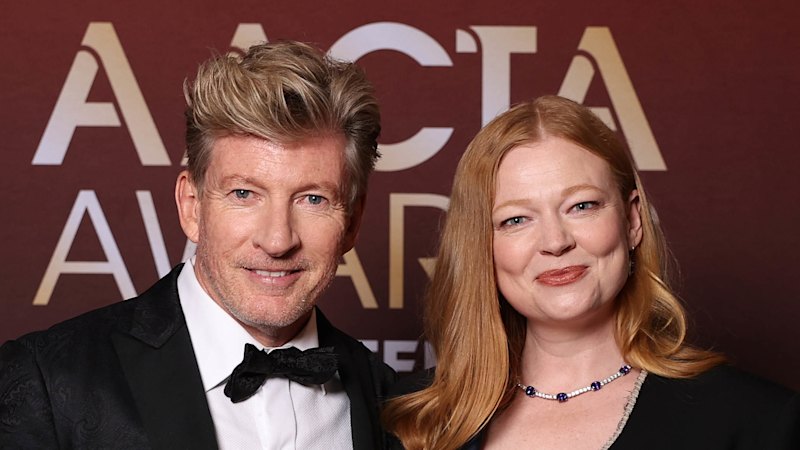
An ugly row has broken out over the removal of one of the major awards from the country’s version of the Oscars, with Mad Max director George Miller saying he has taken it away in “disgust” and the Australian Film Institute insisting it made the decision.
The latest development in a bitter dispute between the institute and Miller, its patron of 25 years, centres on the Byron Kennedy Award for outstanding creative enterprise, which has been won by the likes of Jane Campion, Baz Luhrmann and Catherine Martin, Rachel Perkins, John Polson, Ivan Sen and John Clarke over more than four decades.
Miller said he had taken it from the Australian Academy of Cinema and Television Arts Awards to the revived Tropfest, “where it’s been welcomed”, from next year.
But the AFI board responded in a statement that it made the decision not to present the “discretionary award” during its July review of next year’s awards program.
“We are thrilled to hear that the Byron Kennedy Award will live on under the Tropfest banner,” the board said. “It is the perfect place to acknowledge innovative filmmaking.”
The row comes as former chief executive Damian Trewhella’s Federal Court case against the AFI that claimed he was dismissed from his $327,000 a year job in a sham redundancy – the trigger for the dispute – has entered mediation. Neither party would comment on hopes of a settlement.
Miller said his concerns about the not-for-profit AFI, which runs the AACTA Awards, included its financial position, governance, members’ rights, long-term direction, reliance on Foxtel as its major commercial sponsor and the ceremony’s expansion into such marginal categories as favourite online channel, digital creator and podcast.
“I’m disturbed by how the AFI board has been operating,” he said.
The five-day AACTA Festival will run for the third time on the Gold Coast from February 3 to 7 next year, with the AFI announcing this week that it would include the awards, industry gala, industry day, screen careers expo, screenings, masterclasses and other programming with the support of the Queensland government and Gold Coast Mayor Tom Tate.
Miller has written to the other holders of honorary positions at the AFI, including president Russell Crowe, vice president Nicole Kidman and ambassadors Cate Blanchett, Luhrmann and Martin, to say he will remain as patron to pursue “a genuine path to its restoration” for members.
He claims the AFI chairman, Jack Christian, refused an application by more than 5 per cent of members, as required under company law, to hold an extraordinary general meeting to vote on the board’s composition and seek more transparency on financial and other issues.
Miller had proposed an alternative board that included three long-time colleagues, cinematographer John Seale, hair and makeup artist Lesley Vanderwalt and producer Dean Hood, as well as Jo Smith, “the only member-elected female board member” who was sacked earlier this year, and others.
He is now forming an independent advisory council to devise plans to overhaul the awards and provide better support for Australian film, including nationwide and international festivals, conventions, screenings, masterclasses and events.
“This aligns with the federal government’s new Australian Cultural Engagement initiative, aimed at reconnecting Australians with our own screen culture,” he said.
“As Nick Hayes’ report Made, Not Seen highlighted earlier this year, Australian screen stories are being made but too often are failing to find Australian audiences. We should be doing what Bollywood, the French, the Koreans and many others do so successfully for their own cinema: actively creating audience engagement around their own screen stories.”
The AFI board said that “if George has any further suggestions for how we can improve our already world-class slate of festival activities, member events and international engagement, we would love to engage with him further”.
In another development, Miller’s producing partner at Kennedy Miller Mitchell, chartered accountant Doug Mitchell, has raised concerns about the AFI’s finances in a letter to company secretary Tony Petani and such stakeholders as Queensland’s Arts Minister John-Paul Langbroek, Screen Queensland chief executive Jacqui Feeney and Foxtel Group boss Patrick Delany.
Mitchell claimed the AFI had registered four consecutive deficits totalling more than $350,000, declining reserves, two successive years of negative operating cash flow and substantial expenditure, including legal costs, this financial year.
“I am not asserting that the AFI is insolvent or advocating that it be wound up,” he wrote. “My concern is that, on the information presently available, the possibility of serious financial distress can no longer responsibly be excluded.”
KioskNews shows a cleaned-up reading view extracted from the publisher’s page — the original always lives on their site, not ours.