British soldiers issued emoji advice in new guidance
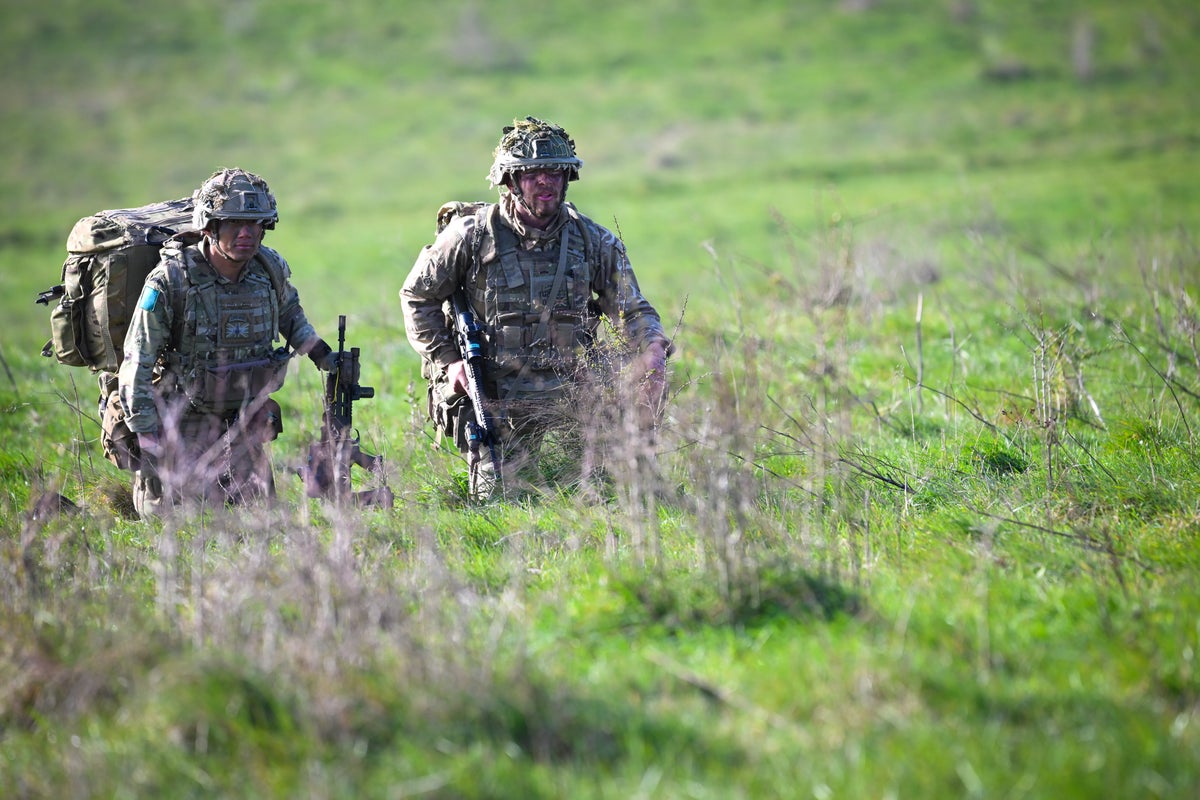
British soldiers have been encouraged to take 10-minute screen breaks every hour and use emojis in internal messages to combat stress under new health and safety guidance introduced by the Ministry of Defence (MoD), according to a report.
The policies apply to UK-based service personnel and civilian defence staff, including those deployed on drone operations, cybersecurity defences, and intelligence analysis, The Times reported.
Military chiefs have ordered the measures in an effort to combat “visual fatigue and mental stress”, instructing managers to intervene directly if staff fail to step away from their workstations in addition to their standard lunch breaks.
Troops have also been advised to swap long-winded messages for concise updates accompanied by emojis to reduce strain.
The Independent has contacted the MoD for comment.
According to the new internal rulebook circulated to personnel, display screen equipment (DSE) users are instructed to take short intervals away from their desks rather than saving up rest periods.
“You should allow yourself short natural breaks (ten minutes in every hour) away from the DSE,” the document states.
It adds: “A break of [five to ten] minutes duration should be taken every hour, breaks should not be accumulated into one longer break (for example, 30 minutes after [four] hours) … If a DSE user is not taking regular breaks, then the manager is to explain the need for regular breaks and make sure that they are taken.”
The extensive guidance also covers everyday workplace etiquette, advising personnel to avoid crossing their legs or ankles to prevent posture complications and to ensure their feet remain flat on the floor. Personnel are also urged to adopt the “20-20-20” eye-care guideline by looking at an object seven metres (20 feet) away for 20 seconds every 20 minutes.
Beyond workstation setups, the rulebook discourages personnel from looking at mobile phones while walking to reduce the risk of “slips, trips, and falls”, and warns against charging devices via extension leads due to fire hazards.
It also stipulates that formal risk assessments must be completed before electrical appliances such as kettles, toasters, coffee machines, or desk fans are introduced across the MoD estate.
The detailed guidance has drawn sharp criticism from military veterans, who have questioned the tone and priorities of the directives.
Stuart Crawford, a former lieutenant colonel who served 20 years in the Royal Tank Regiment, told The Times the guidance amounted to a “nanny state” intervention.
“I think it’s ludicrous. I think it’s really stupid. ‘Don’t cross your legs’? Sorry, I can’t stop laughing at it,” Mr Crawford said. “I can just imagine going to my blokes 20 years ago and saying, ‘Oh, by the way, you’ve crossed your legs’. I would have been laughed out of court.”
He questioned the MoD’s rationale regarding mental strain, telling the outlet: “It is highly likely most of the mental stress will be coming from soldiers physically fighting. I don’t think we should play that down. That’s why so many former military people suffer from various levels of PTSD and so on.
“Sitting in a container somewhere on an airfield in the UK, looking at a computer screen or governing a radar, cannot be at the same level of stress as being in combat on the ground. There is a bit of nanny state about that.”
An MoD spokesperson said that guidance on screens has been in place since 2016, and is one of a “range of measures to keep its staff fit, ready and able to perform at their best.”
KioskNews shows a cleaned-up reading view extracted from the publisher’s page — the original always lives on their site, not ours.