US commerce secretary’s resistance to cutting tariffs has stalled trade talks with Mexico
Mexico’s trade talks with the United States have stalled as a direct result of U.S. Commerce Secretary Howard Lutnick’s opposition to tariff cuts, The Wall Street Journal reported Thursday.
Citing people familiar with the negotiations, the Journal said talks were at an impasse due to disagreements over the U.S. tariffs on vehicles, steel and aluminum from Mexico.
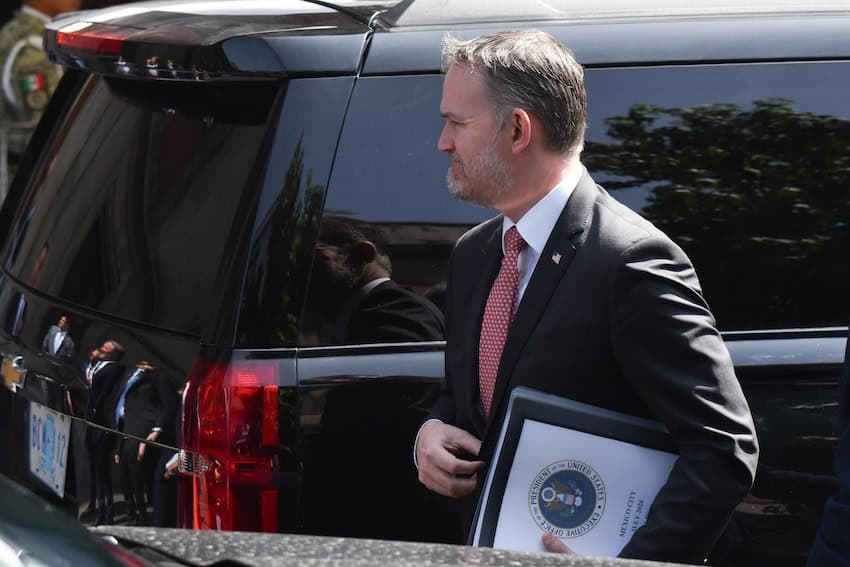
The report said Lutnick has opposed significant cuts to the 25% tariff on Mexican cars and the 50% tariff on steel, aluminum and derived manufactures (finished products made of steel and aluminum). Such levies were imposed by the Trump administration for what it called national security reasons and are administered by Lutnick’s department.
Mexico is on record as citing tariff relief as its top priority in trade negotiations with the U.S.
The Journal traces Lutnick’s intransigence to pressure from U.S. domestic industry, which has told the Trump administration that reducing tariffs would harm businesses and lead to layoffs.
Lutnick is not leading the negotiations with Mexico, but according to the Journal his presence is creating tension with the man who is — U.S. Trade Representative Jamieson Greer.
It is the second time Lutnick has disrupted advanced negotiations with a North American partner, the report said, apparently referring to Canada. But he has now re-inserted himself into Trump’s trade agenda after being sidelined through most of 2026 as Greer gained more prominence.

Sources told the newspaper that the two countries appeared close to finalizing a deal that would have reduced the U.S. tariffs in exchange for a series of concessions from Mexico.
Mexico had already agreed to suspend for five years the 10% tariff it applied to imports of parts and components intended for vehicle assembly. This concession also seeks to reduce assembly costs, attract investment in new production lines and strengthen supply chains, especially as the automotive industry has been contracting.
Finalizing this bilateral deal would pave the way for further talks on renewing the U.S.-Mexico-Canada Agreement, which is currently under review.
Officials from both countries denied that the bilateral talks had stalled. Mexican officials and numerous business executives had expressed optimism about an imminent agreement.
On Wednesday, Mexico’s Economy Minister Marcelo Ebrard updated federal deputies about the perceived progress in the bilateral trade talks.
During his meeting with members of the Social Economy and Cooperativism Promotion Committee and the Economy, Commerce and Competitiveness Committee of the Chamber of Deputies, Ebrard told the lawmakers that President Claudia Sheinbaum’s leadership had helped Mexico consolidate itself as the country with the best conditions for accessing the U.S. market.
Just two weeks earlier, after meeting with U.S. Trade Representative Jamieson Greer at the National Palace, Ebrard declared that “Mexico is ever closer to reaching new trade agreements with the United States and does not expect to lose the favorable position it maintains with other Washington partners.”
Ebrard was scheduled to meet with the same two legislative committees on Friday.
With reports from The Wall Street Journal, El Universal, Reuters, El Economista, LopezDoriga.com, La Silla Rota and The Latin Times
KioskNews shows a cleaned-up reading view extracted from the publisher’s page — the original always lives on their site, not ours.