Nana Patekar, the actor who made intensity his signature, dies at 75
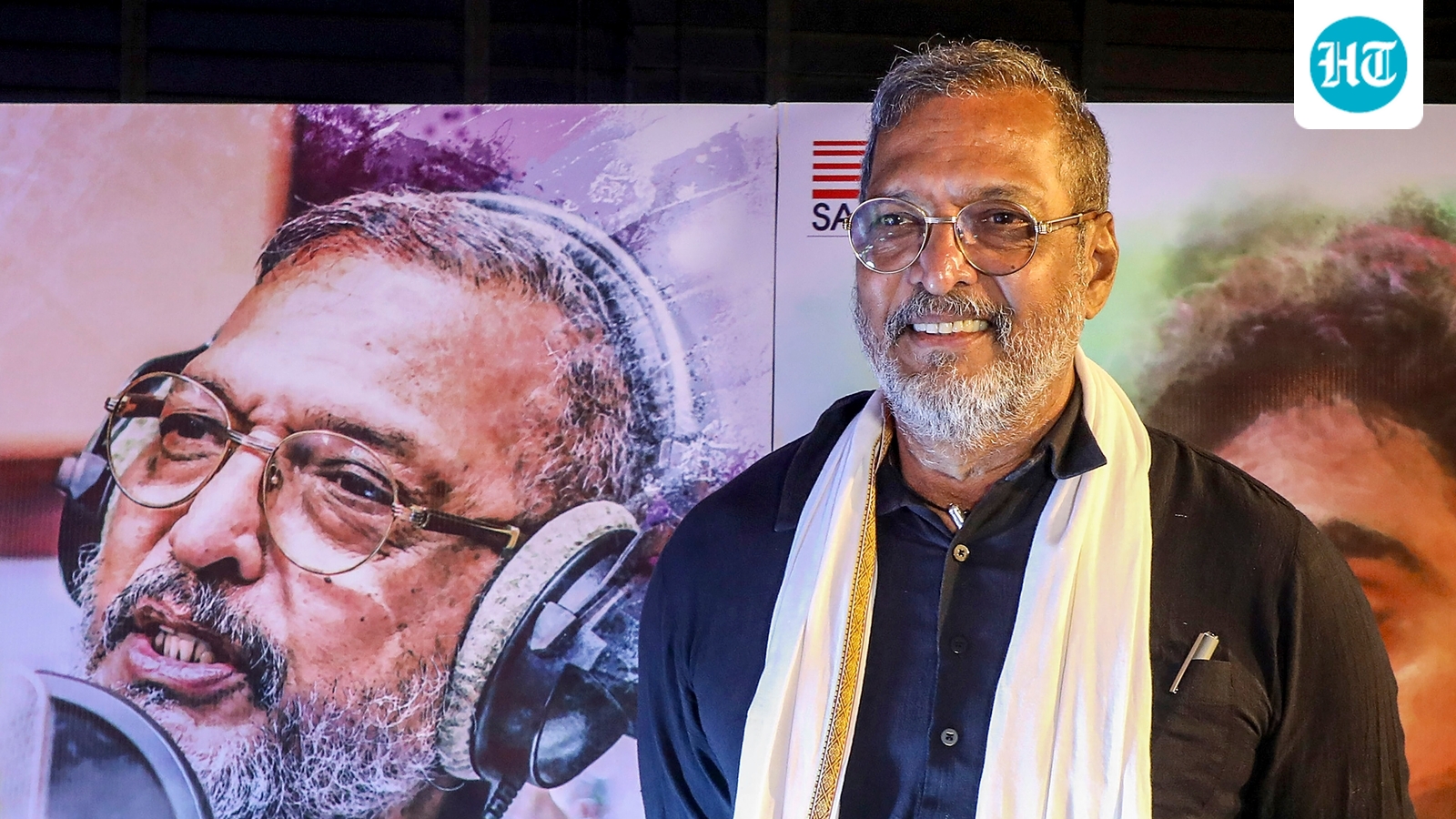
PUNE: Nana Patekar, the actor whose raw intensity, unmistakable voice and explosive dialogue delivery made him one of the most distinctive performers in Hindi and Marathi cinema, died in Goa early Thursday. He was 75.
Patekar was found unconscious at his residence in Dona Paula and taken to Manipal Hospital, where doctors attempted to revive him for about 45 minutes. He was declared dead at around 5.20am following a cardiac arrest, according to hospital sources and his son, Malhar.
For nearly five decades, Patekar refused to fit comfortably into the mould of the conventional Bollywood star. He could be menacing, vulnerable, angry, comic or deeply restrained, sometimes within the same performance. His greatest gift was making characters seem less like performances and more like people who had walked in from real life.
Born Vishwanath Patekar in Murud-Janjira in Maharashtra’s Raigad district on January 1, 1951, he grew up amid financial hardship. He began working at the age of 13 and, in his early years, painted film posters to earn a modest income while studying at the Sir JJ School of Art in Mumbai. It was theatre, however, that eventually gave shape to his artistic life.
Patekar spent years in Marathi theatre, honing the craft that would define his screen career. His performances in plays such as Hamidabai Chi Kothi, Purush and Maha Sagar established him as a serious actor long before cinema gave him wider recognition.
He made his film debut with Gaman in 1978 and gradually built a reputation through character roles, including Ankush. But it was Parinda in 1989 that transformed his standing in Hindi cinema.
As the terrifying crime lord Anna, Patekar created a character whose menace came as much from controlled intensity as from violence. His performance earned him his first National Film Award, for Best Supporting Actor, and established the template for many of the unforgettable characters that followed.
The 1990s brought some of the defining performances of his career. In Prahaar: The Final Attack, which he directed and starred in, Patekar explored his longstanding fascination with discipline and the armed forces. Tirangaa made him an instantly recognisable screen presence, while Krantiveer (1994) gave him one of his most celebrated lead performances and earned him the National Film Award for Best Actor. Agni Sakshi brought him another National Film Award for Best Supporting Actor.
Yet intensity was never the limit of his range.
Patekar could be unexpectedly funny, too. As Uday Shetty in Welcome (2007), he brought the same force of personality that had made him formidable in dramatic roles to comedy, becoming a mainstream favourite in the process. He went on to appear in films including Raajneeti and Ab Tak Chhappan, further adding to a filmography that resisted easy categorisation.
His return to Marathi cinema produced another defining performance in Natsamrat (2016). As Ganpatrao Belwalkar, an ageing stage actor confronting loneliness, pride and emotional disintegration, Patekar drew deeply from his own theatre roots. The role seemed to collapse the distance between actor and character: a veteran performer playing a veteran performer confronting the fading of the stage and of his own life.
Natsamrat also reinforced a paradox at the heart of Patekar’s career. For all his success in cinema, he remained, in temperament and training, a theatre actor at heart.
He continued to work in Marathi cinema, including in Dr Prakash Baba Amte – The Real Hero, extending a legacy that went well beyond the roles that first made him famous.
His contribution to Indian cinema was recognised with three National Film Awards and the Padma Shri in 2013.
But Patekar’s life outside the screen increasingly became as important a part of his public identity as his acting. In 2015, he and actor Makarand Anaspure established the Naam Foundation, which worked to provide assistance to farmers and drought-affected families in Maharashtra.
For an actor who spent much of his career playing men of extraordinary anger, authority and vulnerability, Patekar remained difficult to reduce to a single image. His voice could turn an ordinary sentence into a threat. His silences could be as forceful as his dialogue. Even when he was playing larger-than-life characters, there was often something recognisably human beneath the rage.
His legacy rests not simply on the number of films he made, but on the characters that became inseparable from him: Anna in Parinda, Pratap Narayan Tilak in Krantiveer, Sadhu Agashe in Ab Tak Chhappan, Uday Shetty in Welcome and Ganpatrao Belwalkar in Natsamrat.
In an industry built around stars, Patekar carved out a different kind of space. He made the actor himself the spectacle, relying not on glamour but on presence, voice, stillness and an ability to inhabit a character so completely that the performance could feel almost unsettlingly real.
KioskNews shows a cleaned-up reading view extracted from the publisher’s page — the original always lives on their site, not ours.