6 Stephen King Books That Are Scarier Than Any Movie

A New York native, Joe graduated from an avant-garde theater school upstate, where he was obsessed with sketch comedy. There, he and his lunatic friends founded The Sketchies — which still lives on at Skidmore College today. Living in New York City, a screenwriter friend of his then taught him how to write for film. This awakened a new passion in Joe. Since then his scripts have garnered over 200 festival selections, nominations, and wins all over the globe (including the BlueCat Best Feature award). Several of his screenplays have been made into feature films — some of them not that bad! Overall, he loves to create unique, hilarious, touching, and bizarre stories.
Sign in to your Collider account
While many frightening films have been made out of the Emperor of Evil’s novels and short stories, a haunting handful of his chilling books are far scarier than any moving picture could ever insidiously hope to be. Indeed, Stephen King may be the master of the macabre, in terms of inspiring horror movies, but his writing alone conjures scarier mental images than any 2-dimensional feature is capable of.
Here are just six of King’s most terrifying books (out of the 60+ works he’s crafted). These all touch on various types of fears, from that of the unknown and mystical, to the insatiable monsters just lying in wait, to the all-too-real horrors of unfettered nature itself. So pour yourself a glass of your favorite spooky brew, light a candle or two, and ready yourself for some wondrously worrying words.
6 'Revival' (2014)

Many of King’s early, widely-known books are considered his scariest. However, there are a few that he scribed in more recent years that are surreptitiously spine-tingling nonetheless. One of these new classics is Revival. Seemingly taking inspiration from several of his own previous works (namely, It), the cosmic horror of H. P. Lovecraft, and the existential angst and uncertainty of Mary Shelley, Revival combines hard drama with an otherworldly, science-fiction-based view of reality. It’s a riveting book throughout, but the grand finale contains one of the bleakest and most frightening concepts ever devised by King.
The story spans several decades, while it focuses on two main characters, Jamie Morton, initially introduced as a boy, and Charles Jacobs, a pastor who comes with his family to Jamie’s small Maine town to preach the good word. Unfortunately (a word all too commonly used in describing King’s stories), Jacobs’s wife and little son are killed in a car accident. This sends Jacobs spiraling down a hole of despair, where he abandons his faith completely and desperately attempts to understand the afterlife, through highly unconventional means. Meanwhile, Jamie grows up to be a musician…who, unfortunately, becomes addicted to heroin and ends up homeless. But, as luck would have it, Jamie and Jacobs cross paths (perhaps, fate?). Jacobs shows Jamie something that he’s discovered that he calls “secret electricity,” which helps struggling people with all manner of things. It actually cures Jamie of his addiction…but causes him to have some very odd thoughts and visions. The still-obsessed Jacobs wants to uncover the link between the living world and the afterlife, and plans to perform a rather bizarre experiment to achieve this. And this…is where things start to get quite scary indeed. Jacobs enters another dimension, a trippy (in not a good way) place called “The Null.” Since many people (aside from King diehards) are not necessarily acquainted with this story, it’s best not to spoil what happens here — but just know that King vividly details a truly horrifying reality. It’s a monstrously hopeless view of what happens to people when they die; something far scarier than any growling ghoul.
5 'Christine' (1983)

It’s hard to imagine a book about a possessed car being scary. Like, just let it run out of gas and call it a day. Unfortunately for the protagonist of this terrifying tale, things aren’t that simple. Not the only work of King’s about automotive vehicles going rogue (the story “Trucks” in the compilation book Night Shift was made into the film Maximum Overdrive), Christine is actually one of his most alarming books all-around. The scares are not so much about the ways in which the menacing car eradicates the foes of the main character, but rather the manner in which a person can be so obsessed with something, so utterly consumed by it, that they irrevocably change (typically, for the worse).
Arnie Cunningham is an average nerd at his school; not remarkably smart or exceptional at any one thing. Naturally, he’s bullied by the “cool kids,” but, all things considered, he handles this pretty well. His life dramatically changes, though, when he purchases a used car with the money he’s saved up from his summer job at a motorway. This beauty is a real looker under all her rust; a 1958 Plymouth Fury named Christine. When Arnie first snatches her up, she’s a bit…of a pile of useless scrap metal. Arnie spends his days (and nights) meticulously restoring Christine to her former glory. As he falls down the rabbit hole of classic automotive repair, he begins to lose himself, even aging prematurely and resembling Christine’s former macho owner, Roland LeBay (who, incidentally, has possessed the car). This book is a disturbing look at how kitschy 1950s style was being revived in the late 70s (when King began this story), with all its performative machismo and toxic masculinity. Christine also represents drug addiction (something King was dealing with at the time), where she gives Arnie a high at first, a real confidence boost. Then, as he becomes further obsessed with the car, he descends into a vile pit of isolation and bitterness. All this being said, the car itself is one scary piece of machinery once she really gets rolling, too, and the novel’s open-ended ending leaves the reader with a parting chill.
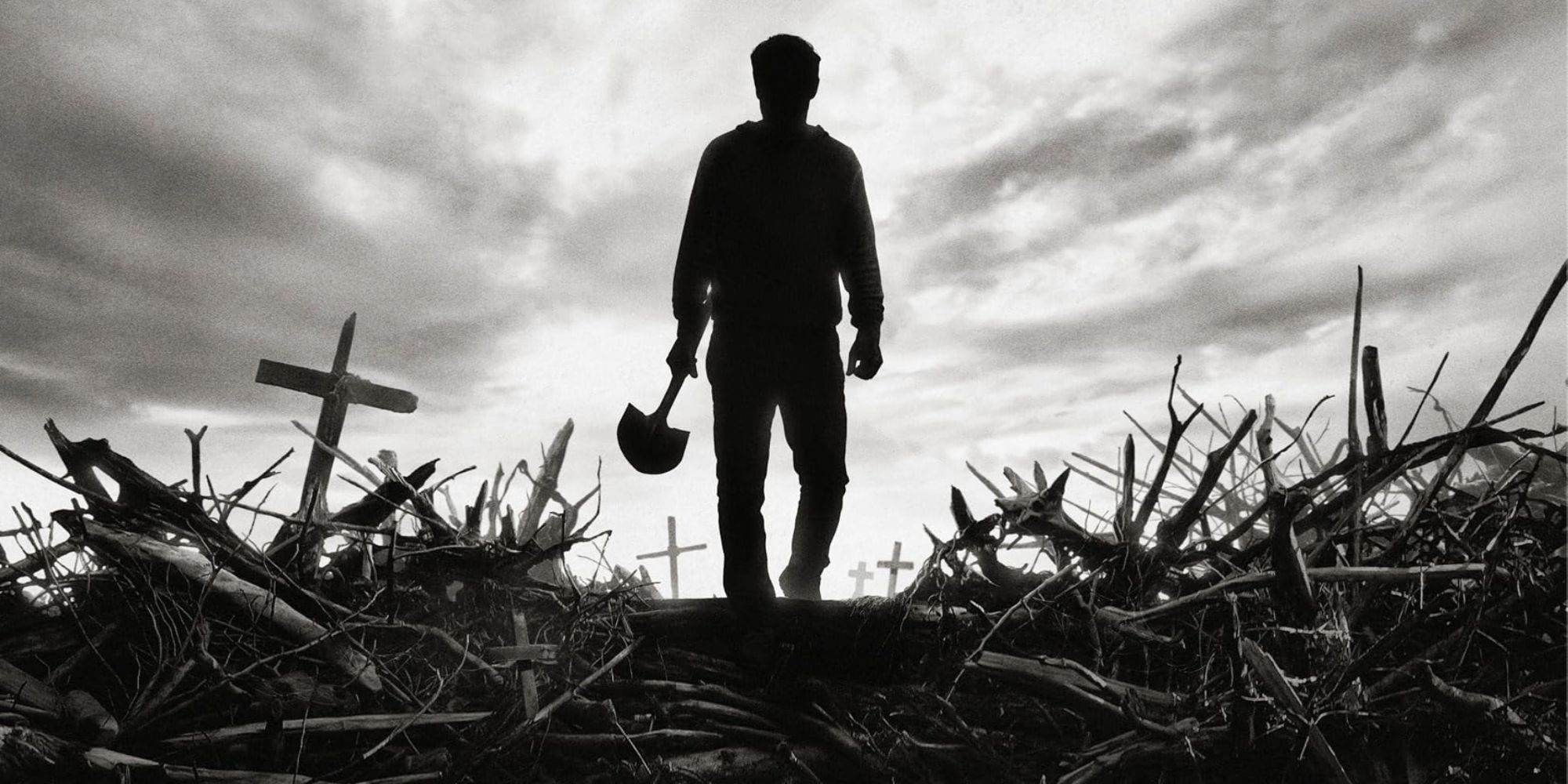
4 'Pet Sematary' (1983)

While the original 1989 film did a stupefyingly terrific job of capturing the horribly malignant magic and evil imagery of the book (which gave way to a tepid sequel that was more comedic than scary, and an arguably unnecessary reboot that was meh at best), the source material truly can not be out-done. Here King worms his way into every dark corner of the reader’s mind, elaborately illustrating some of the scariest figures to ever ghoulishly grace a page.
The heart of the story is an age-old, allegorical one; that of a man trying to defy death. The lesson of such a tale is typically that one simply can not cheat or modify death, and the end result in attempting to do so is usually tragic. Pet Sematary doesn’t deviate from this moral, it just presents it in a way that hasn’t been as scarily seen since Mary Shelley scribed Frankenstein. Louis Creed is a doctor, so, naturally, he has a scientific mind. Yet, when his cat is killed by a truck, his neighbor, Jud, helps him “revive” it with the aid of an ancient Micmac burial ground, conveniently located not that far from his backyard. Of course, there’s no lesson in just that, so Louis’s little son, Gage, soon meets his maker as well. Jud warns Louis not to use the burial ground, and to just cope with his bitter grief. Yet, the magic soil is far too tempting to just ignore. When Gage returns, he is beyond horrific. And then, Louis’s wife, Rachel, is also killed (by her own tiny son), and Louis needs to find yet another plot in the tainted earth. It’s a vicious cycle that just keeps resulting in worse and worse pain and tragedy. But, getting back to the scary…there is an interlude where Rachel recalls a trauma from her childhood that involves her deformed sister, that is way too frightening to even mention here. Overall, King is quietly, yet adamantly, telling us that we must accept the awful things in life sometimes, or else…
Collider Exclusive · 8 Questions · 2 Minutes What Is Your Biggest Horror Nightmare? Elm Street · Chucky · Scream · The Conjuring
Four horror franchises. Four completely different ways of scaring you. One waits until you fall asleep. One makes sure nobody believes you. One is already in your group of friends. And one is in the house with your family. Answer eight quick questions about how you actually watch horror, and find out which nightmare was built for you.
😴Elm Street(Freddy Krueger)
🧸Chucky(Child's Play)
📞Scream(Ghostface)
🕯️The Conjuring(The Warren Files)
01
Which horror scene makes you cover your eyes? Four classic images. One of them is worse than the others for you.
02
You are home alone and you hear a noise. First thought? Everybody has one. It arrives before you have decided anything.
03
Which horror movie rule would you break first? Everybody thinks they would survive. Almost nobody actually does.
04
Something genuinely frightening happens. What do you do? Not in a film. In your actual living room, tonight.
05
How do you actually watch a horror film? Be honest about this one. Nobody is checking.
06
Somebody offers you serious money. Which do you still refuse? The amount does not matter. There is one on this list you are not doing.
07
Which feeling stays with you a week after the film? Good horror does not stop when the credits do.
08
Something wakes you at 3am. What is the worst possibility? Eight questions in, this is the one that decides your nightmare.
The Lights Just Went Out Your Nightmare Is…
Four franchises, four completely different ways of getting underneath your skin. This is the one built out of your particular fear, why it works so well on you, and what it would leave behind.
Elm Street
Your nightmare does not wait outside the door. It waits for you to close your eyes, which you are going to have to do eventually, because nobody has ever won that particular argument.
- Freddy is horror's cruellest idea: a threat that lives in the one place you cannot guard, cannot lock, and cannot avoid forever.
- You are the one who is fine during the film and wide awake at two in the morning. Your own head is where this does its damage.
- These films understood exhaustion as a horror engine. The kids on Elm Street do not lose because they are weak. They lose because they are tired.
- You can lock every door in the house. You still have to sleep.
Chucky
Your nightmare is not really the doll. It is the face of the person you tell, and the way they decide, very kindly, that you have imagined all of it.
- Chucky works precisely because he is absurd. That is the trap: the more accurately you describe him, the less anybody is going to believe you.
- You are the one shouting at the screen because the characters are not listening. You know that feeling from real life too.
- The franchise is at its best when the adults in the room are the real obstacle, and you have met those adults.
- By the time somebody finally believes you, you will have handled most of it on your own.
Scream
Your nightmare has your number, knows your name, and has almost certainly been inside your house before. The worst part is that you already know them.
- Scream is the only one of these where the killer takes the mask off and turns out to be somebody who was at the party.
- You are the person who calls the twist out loud before it lands. You watch people the same way you watch films.
- The franchise made the rules of horror part of the plot, which means the survivors are the ones paying attention. You would be paying attention.
- Everybody is a suspect, including the person who just offered to walk you home.
The Conjuring
Your nightmare is not really about you. It is about the people asleep down the hall, and the feeling that whatever is here is not interested in leaving.
- The Conjuring films are domestic horror. The house, the family, the perfectly ordinary room that quietly stops feeling ordinary.
- Your instinct is to get everybody into one room. Your fear is protective rather than personal, which is rarer than it sounds.
- This is the one franchise where belief is the weapon. The people who come through it are the ones who are not alone and refuse to be.
- Whatever is here did not come for you. It came for the household, and you are the one standing in the hallway.
3 'Cujo' (1981)
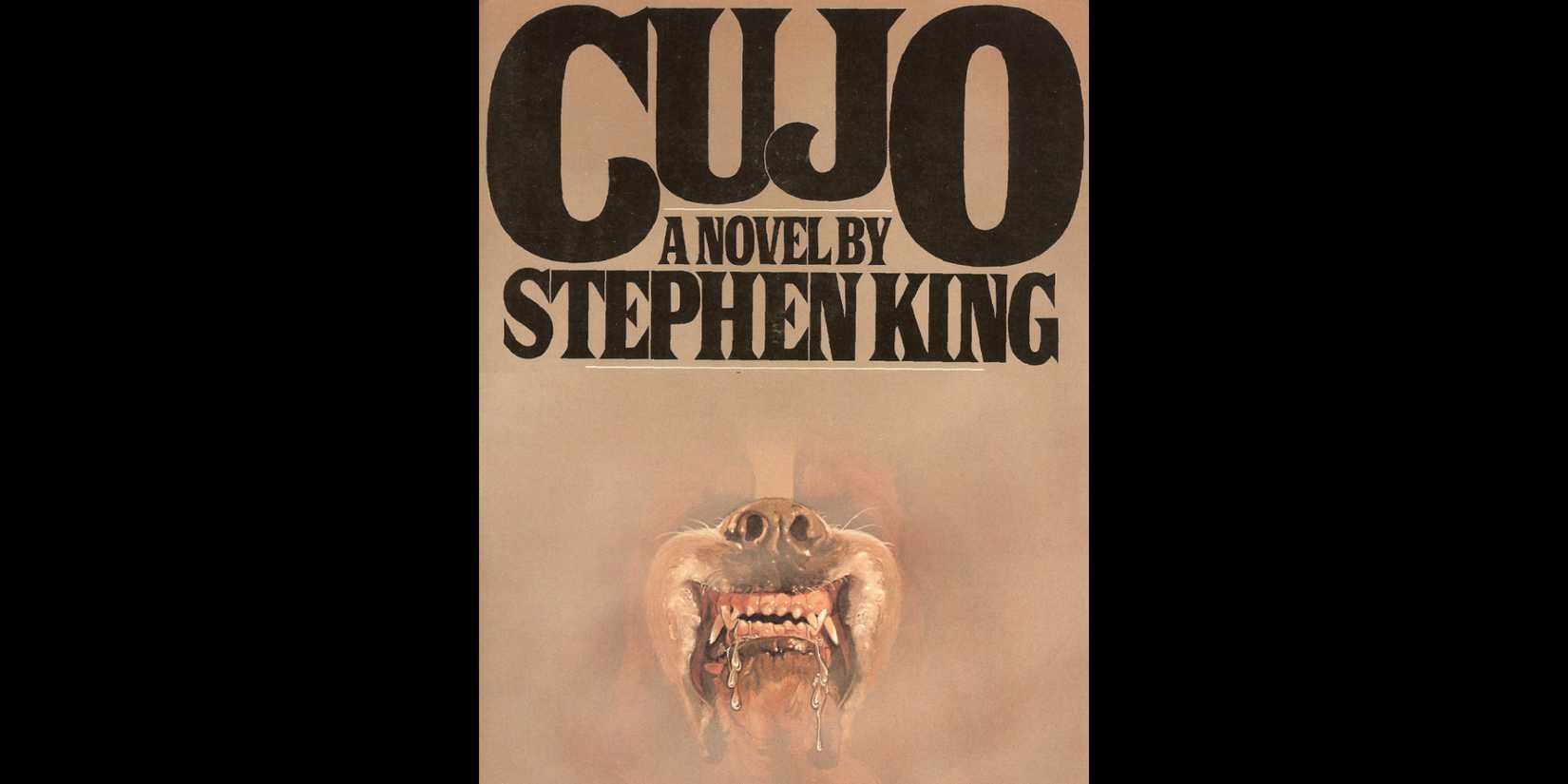
A woman’s maternal instincts can often vanquish even the most formidable foe, and that’s ultimately what happens in King’s scariest animal-centric novel, Cujo. Yet, the days of terrifying torture that the protagonist, Donna Trenton, and her little son, Tad, must endure are almost too much to bear. Cashing in on the terrifying aspects of claustrophobia and feelings of abject helplessness, King crafts a slow-burn masterpiece with this fuzzy look at up-close savagery.
The simple story is about a mom and her child, who, after traveling to a mechanic’s house, become trapped in their car as a once friendly dog tries to claw its way inside and rip them to shreds. The possessed pup, Cujo, is a hulking beast that lunges intermittently at the vehicle, but ultimately seems content to wait them out; it’s blazingly hot outside and his prey will eventually run out of water in the iron prison-tomb of the car. There is another aspect of fear in this book that is one of the most primal that humanity has ever known: fear of the unknown (just ask Lovecraft). To spin it in a slightly different fashion: fear of the unpredictable, and the instability of everyday life. Cujo, while a big boy, starts off the story as a sweet and loving, 200-pound ball of fluff. He playfully chases a rabbit in a hole and is then bit by a rabid bat. Poor Cujo’s quick descension in the fever madness that is rabies is merciless and brutal (the way, sadly, nature can often be). Like many of King’s relentless chimeras, Cujo’s evil side represents addiction; how a passive, and even caring, individual can transform into a feral creature with no regard for anyone other than themselves. Quite the scary concept, indeed. Unlike the Hollywood movie version, King is not concerned with a happy ending, and the tragedy of this tale is frightening on a primordial level.
2 'Salem’s Lot' (1975)
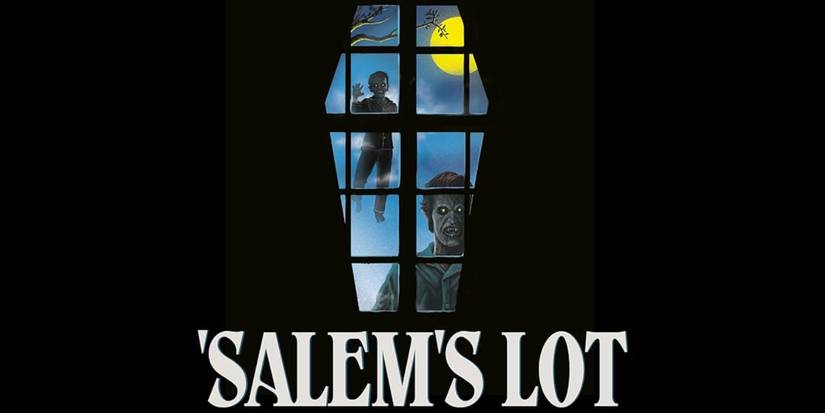
Mr. King only wrote one novel where vampires are the main focus. That’s all he needed. That novel is, of course, Salem’s Lot, and it certainly is one of the creepiest in his collection. It’s the type of story that steadily builds in its scariness; a growing dread rises in the reader as the inhabitants of Jerusalem’s Lot, a little hamlet in Maine, are taken over, one at a time. King uses such effective imagery here, like claws scratching at foggy windows and undead kids with glowing eyes eerily floating around, that even the most seasoned horror reader is bound to get goosebumps.
The story focuses on a writer, Ben Mears, who returns to his "idyllic" hometown to write a new book about a creepy old house. As the plot progresses, it turns out that the town isn’t that quaint after all, as various secrets ooze out and the sordid details of people’s infidelities, blackmailing, and pilfering are revealed. This is a device to show that this happy little place is morally corrupt and rife to be plundered. Enter some mysterious chaps, Richard Straker (the familiar) and Kurt Barlow (the head vamp) who move into the very house that Ben has always been intrigued (and scared witless) by. The vamps don’t just kill people; they turn them as well, as they seem intent on growing an army of the undead. The vampirism appears to spread like an infection through the populace, a virus that can not be stopped. This creeping sense of doom is daunting enough on its own, but the way that King teases out the attacks, intermittently utilizing subtle, shadowed scares and then extremely gruesome ones, is unsettling to the core. The story culminates in an epic showdown at the house, with Ben and a small cadre of survivors facing off against the bloodthirsty ghouls. This finale is a real nail-biter, terrifying on all fronts. Ben, with the help of a little dude, Mark Petrie, gives the Barlow beast the ole stake through the heart…but this unfortunately doesn’t turn the rest of the townspeople back to normal. It’s this final bit of knowledge that is perhaps the most unsettling of all…
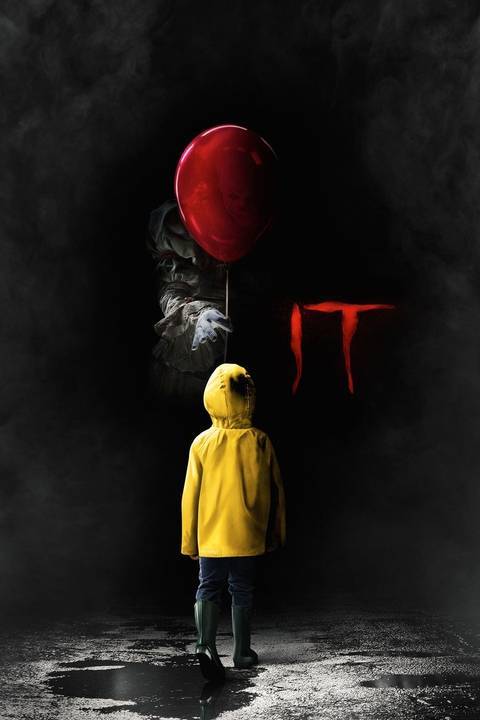
1 'It' (1986)

Perhaps, King’s scariest tome is It. The story grew in popularity with the 2-part miniseries that aired in 1990 and then exploded in notoriety with the 2017 film adaptation. However one interprets and enjoys these cinematic works, the general consensus among readers is that they pale in comparison to the haunting, 1,138-page novel. Just about everyone has seen the depiction of the book’s central villain, Pennywise, in either or both of the filmed works, but the sheer manner in which King describes “him” in the book is enough to fuel a thousand nightmares.
The story is about a group of unpopular kids who come together to defeat an eternal evil in their small town of Derry, Maine. It’s split up into two timelines; when they were little ones, and when they come back to Derry, 27 years later (when “it” reemerges). Rather than unravel the sprawling, complicated plot, here are some of the most hair-raising portions of the story. First, there’s the book’s opening, where the little bro, Georgie, of the main character, Bill, is tempted by a “dancing clown” in a storm drain — and then has his arm savagely bitten off by said jester. Then, the female member of the group, Beverly Marsh, hears eerie, echoing voices in her sink drain…and then gets splattered with rancid blood that erupts from therein. Next, the kids (who’ve deemed themselves “The Losers’ Club”) venture to a dilapidated house where they meet Pennywise in the ferocious form of a werewolf, and then a revolting, zombified version of Eddie’s bully brother. Speaking of bullies, the psychotic kid Patrick Hocksetter isn’t spared a horrific death either, as the baby-killer (he murdered his own baby brother) is dealt the hand of being besieged by a bunch of killer leaches. Then, Stan gets stuck in a standpipe, and a bunch of absolutely bone-chilling corpses descend on him, causing permanent psychological damage. And then, there’s the “Deadlights,” the interdimensional location that Pennywise calls his true home; it’s a hellish, rave-like cavernous space of pulsating light, and if one gazes into it, they go permanently insane. There’s just so much haunting imagery in this book, it’s insane, too. Ultimately, the novel is all about abuse, familial neglect, and hidden trauma — which are all scary enough topics on their own, in reality. When merged with the horrific images that King concocts, you’ve got one of the most deviously impactful and scary books of all time.
It
- Release Date
- September 8, 2017
- Runtime
- 135 minutes
- Director
- Andy Muschietti
- Writers
- Cary Joji Fukunaga, Gary Dauberman, Chase Palmer
KioskNews shows a cleaned-up reading view extracted from the publisher’s page — the original always lives on their site, not ours.