Vaibhav Sooryavanshi At No. 3: Is It A Wrong Move From India?
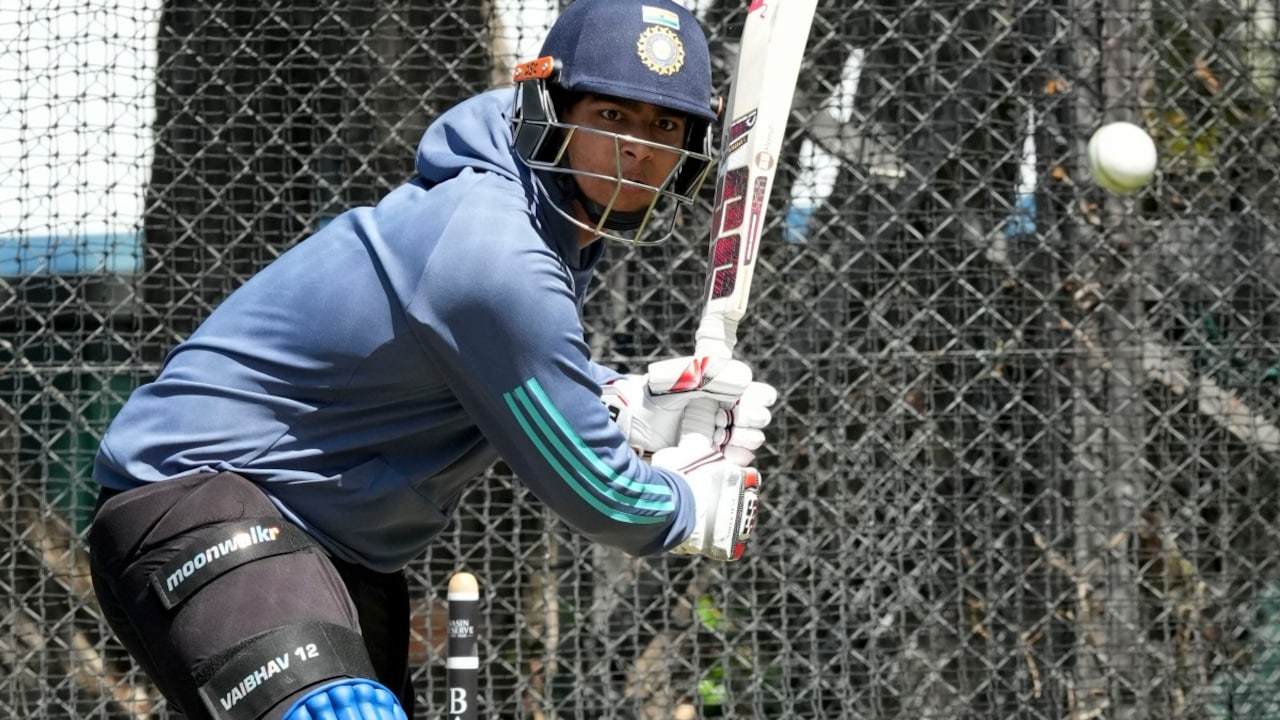
Fifteen-year-old Vaibhav Sooryavanshi continues to fight for his spot in the T20I team as India back their proven openers, Abhishek Sharma and Sanju Samson. While Abhishek's position is never a matter of debate, Samson has, on multiple occasions, lost his place to the wonderkid, who has mesmerised one and all with his incredible stroke play. However, of late, the Indian team management has been backing Samson, the Player of the Tournament at the 2026 T20 World Cup. As a result, Sooryavanshi has been warming the bench and gets an opportunity only when a batter is unavailable.
Ishan Kishan could not play the second game against the Blackcaps due to a low-grade right adductor strain and will miss the third contest as well. For the second match, India included Sooryavanshi in the playing XI but made him bat at No. 3. The southpaw scored four off eight deliveries before finding the fielder at extra cover.
Did India Get The Experiment Wrong?
While a single knock cannot determine the success or failure of the experiment undertaken by the Indian team management, it does open the door for a debate: was it right to alter Sooryavanshi's batting position?
The 15-year-old swashbuckling batter has been a serious headache for opposition bowlers while opening the innings. Be it the fastest IPL century by an Indian (35 balls) or the breathtaking 175 off 80 balls in the 2026 Under-19 World Cup final, all of Sooryavanshi's stunning knocks have come while opening the innings.
Given the striking ability the teenager possesses, the best use of his talent could be in the Powerplay, where he is nothing short of a nightmare for even the best bowlers in the world.
However, in the second T20I against New Zealand, the Indian team management opted to stick with Samson and Abhishek as openers and push Sooryavanshi to No. 3.
Former Cricketers Question The Move
Former India players Murali Kartik and Ravichandran Ashwin felt that the team should have moved the experienced Samson to No. 3 instead. The most recent example came at the 2026 Asian Games, where Sooryavanshi opened with Abhishek and Samson batted one down.
"I was repeatedly saying this, even before the match started, especially before our batting. When you are playing Vaibhav Sooryavanshi, where is he at his best? He is good as an opener. You have put him in the middle order. He has not played there, he is a young kid, and he has only batted in one way. This is exactly why you have experienced players, so they can play different roles," opined Murali Kartik on Sony Sports Network.
Meanwhile, Ashwin said on his YouTube channel, "I just felt like he was a fish out of water. Walking in during the sixth over is not his cup of tea.
"Look, I think they played this combination before, and Sanju had to slip down to No. 3. If they are going to go with this combination, I am not too sure Vaibhav has got to bat at No. 3, but it is what it is. Today it was a miss for Vaibhav."
Why Opening Might Suit Sooryavanshi Better
While India's decision not to alter the opening combination and slot Sooryavanshi at No. 3 is definitely backed by some sound logic, it is arguably not the best use of the teenager's talent. At No. 3, he will often have to play according to the situation, which could curb his free-flowing batting style, something that sets him apart.
Add to that the fact that if the openers stitch together a big partnership, Sooryavanshi could have little or no role to play in the first six overs.
Even from the team's perspective, Sooryavanshi's aggressive top-order batting could be maximised if he opens the innings and sets the tone at his own pace.
Though India won the second T20I, the debate regarding the experiment remains open. With Kishan set to miss another game, it will be interesting to see if the team opts to continue with the same batting combination used in the second match.
Featured Video Of The Day
CWG 2026 Weightlifting Gold Medallist, Mirabai Chanu Get Hero's Welcome in Delhi
KioskNews shows a cleaned-up reading view extracted from the publisher’s page — the original always lives on their site, not ours.