PCG challenges Chinese research vessel loitering off Batanes
Make this your preferred source to get more updates from this publisher on Google.
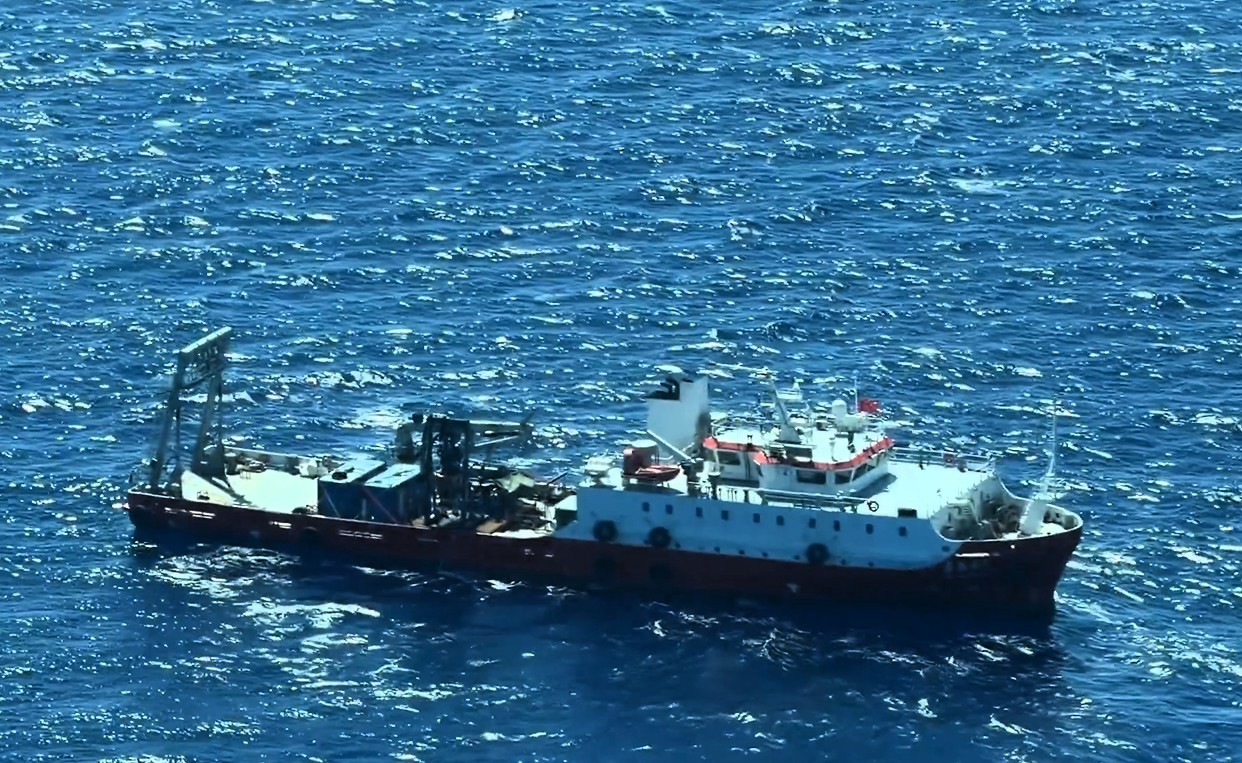
The Philippine Coast Guard (PCG) on Monday challenged a Chinese research vessel that was loitering within the country's exclusive economic zone (EEZ) off Itbayat, Batanes.
In a statement, Rear Admiral Jay Tarriela, PCG spokesperson for the West Philippine Sea, said the Chinese research vessel Jia Hai Ke 7 was spotted about 38 nautical miles northwest of Itbayat.
Tarriela said a PCG aircraft challenged the vessel several times over the radio, asserting the Philippines' sovereign rights and asking the ship to state its intentions and stop any unauthorized activity.
However, the Chinese vessel did not respond to the radio challenges.
"The vessel's behavior is not that of a ship in innocent passage," Tarriela said.
Tarriela said the vessel was initially detected by the PCG monitoring station in Itbayat.
A verification using the Canada-provided Dark Vessel Detection (DVD) system reportedly showed an "impossible" AIS (Automatic Identification System) trail.
According to Tarriela, the Jia Hai Ke 7 reported departing Xiamen, Fujian, at 12:59 a.m. on September 21 and was supposedly transmitting from off Bindari, Papua New Guinea, by 8:10 p.m. the same day, a distance of more than 2,000 nautical miles.
By 6:55 a.m. on Monday, the vessel was transmitting from northwest of Itbayat, he said.
"The PCG assesses this as deliberate AIS spoofing to conceal the vessel's true movements from Philippine authorities," Tarriela said.
Under the International Convention for the Safety of Life at Sea (SOLAS), vessels are required to transmit accurate AIS information.
The Jia Hai Ke 7 is a 70-meter, 2,000-ton vessel built for Zhuhai Jiahai Marine Technology Co. and placed into service in April 2025, according to the PCG.
Tarriela said open-source information describes it as China's first privately owned research vessel equipped with a DP-2 dynamic positioning system and quiet electric propulsion.
These capabilities allow a vessel to maintain its position over a specific point on the seabed, making it suitable for marine geological surveys.
Tarriela said the Chinese vessel has operated alongside seabed-drilling ships.
"The waters off Batanes and the Luzon Strait host critical submarine cable corridors linking the Philippines to Northeast Asia and the wider Indo-Pacific," Tarriela said.
"A seabed-survey vessel hiding its position while holding station in this corridor raises serious concern over the security of the country's undersea communications infrastructure and the potential military use of the data collected," he added.
KioskNews shows a cleaned-up reading view extracted from the publisher’s page — the original always lives on their site, not ours.