"Not A Gram To Enter India": Amit Shah Sets 2029 Deadline For War Against Drugs
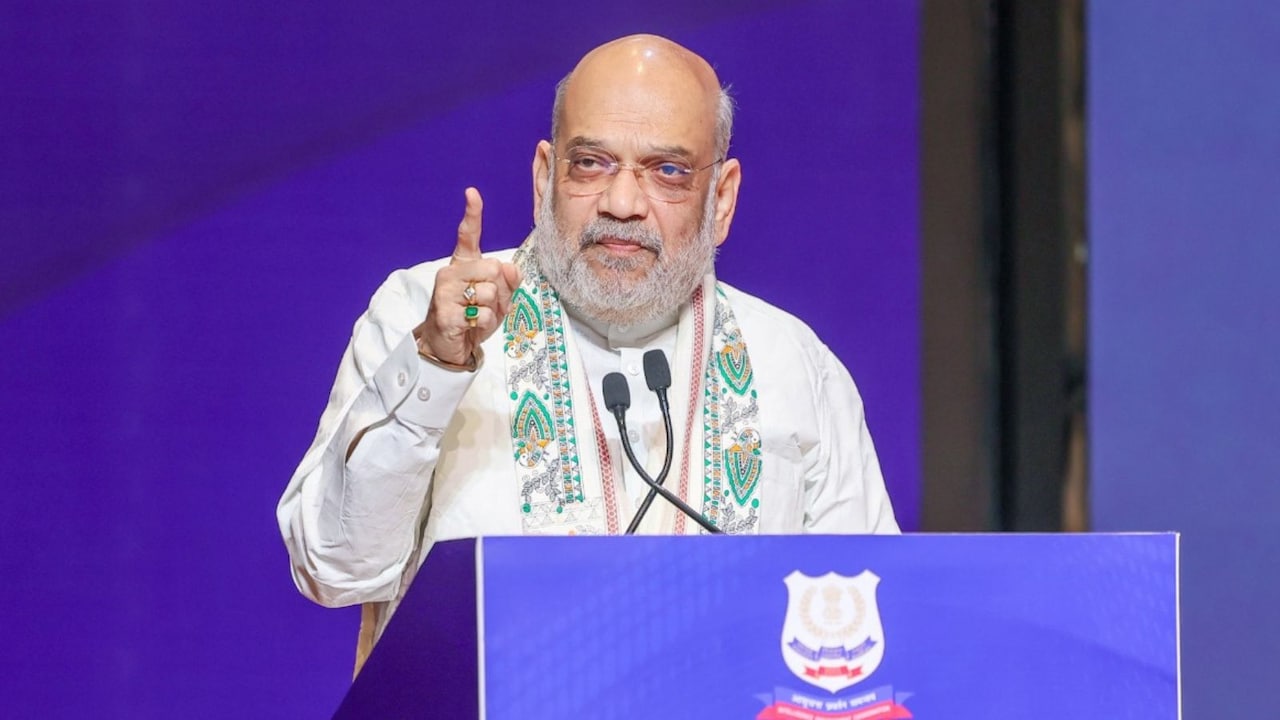
Speaking at the third National Conference of Anti-Narcotics Task Force Heads in New Delhi, Union Home Minister Amit Shah has set a deadline for India's war against drugs. By December 31, 2029, he said, he wants the country's narcotics trade done away for good.
In a room packed with police chiefs from 36 states and Union Territories, Shah said, "Neither will we allow a single gram of drugs to enter India, nor will we allow a single gram of drugs to go out."
Before getting into strategy, he ticked off a few launches: new TV commercials warning against drug use, a redesigned NCB website, and foundation stones laid for zonal NCB complexes coming up in Lucknow and Dehradun.
Stop Counting Seizures. Start Killing Networks
Here's where Shah got specific and a little sharp with his own officers. He's tired, he suggested, of seizure numbers being treated like victories. A haul of drugs makes headlines, sure, but it doesn't kill the network behind it. So the instruction going out to every state is to shift from meetings to missions, from reports to results, from seizures to dismantled networks, from cases to actual convictions.
Districts are now the frontline unit. Each one gets sorted: is it where drugs are made or enter the country? A transit corridor? Or a consumption zone? Once that's clear, the response changes accordingly.
And it's not just about the drugs themselves anymore. Shah wants investigators following the money just as hard as they follow the product: bank accounts, shell transactions, whatever keeps the cartels running.
"Go Meet a Mother Who's Lost Her Son"
Shah told the assembled police chiefs, essentially, that spreadsheets won't move them the way a grieving family will. Go sit with a mother whose son ranked in the top 10 in his Class 10 boards, he said, and now she's watching him disappear into addiction. That, Shah said, is when the fight stops being a job and starts being personal.
He tied all of it back to Prime Minister Modi's 2047 vision for a developed India, pointing out that a nation with the youngest population on earth can't get there if that same population is being hollowed out by narcotics.
The Numbers Behind the Plan
The government's roadmap, the Vision Document 2026-2029, rests on four pillars: enforcement and intelligence, controlling precursor chemicals and synthetic drugs, reducing demand and harm, and building up capacity across the system. Officials say it contains over 100 individual targets.
One of the bigger pushes is the Nashamukt Mitra programme. With nearly 47,000 volunteers registered so far, it is working towards a goal of 1 lakh. Their job over the coming months will be to visit about 10 lakh schools and colleges and talk directly to students and brief the campus staff.
Shah also flagged where the threat is heading next: synthetic drugs, dark web marketplaces, crypto payments, and dead-drop deliveries. His ask to states: build teams that don't think like traditional police units, because the traffickers certainly don't.
On foreign nationals caught up in drug supply chains, there was no ambiguity. Deport them. Blacklist them. And for those running supply operations into India from abroad, the goal is extradition: get them in front of an Indian court.
KioskNews shows a cleaned-up reading view extracted from the publisher’s page — the original always lives on their site, not ours.