Kelly McParland: The PQ should be embarrassed by election outcome
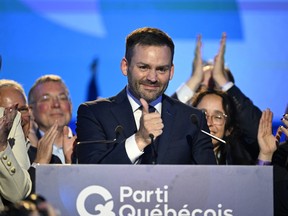
I appreciate that Canadians are expected to experience an onset of angst over the potential return of the dreaded Quebec referendum experience, but I’m having trouble getting worked up about it.
Sign In or Create an Account
Top of the list for not feeling threatened is the arithmetic behind the Parti Quebecois victory on Monday. The winning PQ number was 28 per cent of the vote — fewer than three in 10 — which is hardly overwhelming. In fact it’s a bit embarrassing for the PQ. Years of preparation, weeks of campaigning, an outpouring of speeches, advertising, campaign signs, promises etc., and the best they can do is 28 per cent? A third of the electorate didn’t even bother to vote.
More than 70 per cent of Quebecers had no desire for Paul St-Pierre Plamondon and his crew to gain power. That’s very close to the same percentage who say they oppose the party’s best-known and most contentious platform plank, a pledge to once again — for a third time — introduce a ballot on independence at some point in the course of its mandate.

Columnist Jesse Kline keeps you up to date with what’s happening in Israel and the effects of antisemitism on life here in Canada. Friday mornings.
By signing up you consent to receive the above newsletter from Postmedia Network Inc.
A welcome email is on its way. If you don't see it, please check your junk folder.
The next issue of Channel Israel will soon be in your inbox.
We encountered an issue signing you up. Please try again
PSPP, as he’s known, insists he’s serious about the promise, but he’s not in full control of the circumstances. His is a minority government and there’s no way to know how long its mandate will last. It could be gone within months if the three other parties that won seats on Monday choose to defeat it. A PQ blunder or two and they could well decide to do so. The last Péquiste government, also a minority, lasted less than two years and was so unloved it was reduced by 24 seats when it next faced the people.
Quebecers tend to vote as a crowd. Pierre Trudeau once won 74 of its 75 seats. The New Democratic Party went from one seat in 2008 to 59 seats in 2011 and back to one seat in 2019. The Coalition Avenir Québec was swept to power from nowhere in 2018 and returned to nowhere on Monday with a total of zero seats. Monday’s vote was different, and a sign that PSPP is definitely on probation.
The most popular political leader in Quebec today is Mark Carney, whose approval rating far outpaces any of Quebec’s party leaders and has only increased since he became prime minister. It’s not like the vast majority of Quebecers outside the PQ’s rural francophone anti-immigrant base of support has developed a sudden overwhelming affection for federalism; instead it’s a reflection of the understanding that the province is far better protected from the predations of a hostile, erratic and unpredictable U.S. inside Canada than fending for itself on the outside.
One of former premier Francois Legault’s abiding aspirations was to transform Quebec from its perennial status as a “have not” province dependent on enormous annual subsidies from Ottawa into a “have” province with an economy capable of supporting its needs. “What I want to tell Quebecers is that a CAQ government will aim for zero equalization,” he pledged in 2017. “A CAQ government will eliminate the wealth gap with the rest of Canada. A CAQ government will have ambition, will aim high for Quebec.”
He failed at that. Equalization payments to the province have risen from $10 billion a decade ago to almost $14 billion this year. As with many other provinces it’s under extreme budget pressure after a lengthy series of annual deficits. As a manufacturing and forestry centre it is among the most highly exposed to the Trump administration’s tariff war, sharing with Ontario the highest effective tariffs on exports.
Even if they like the idea of a glorious, free new nation thumbing its nose at all those annoying anglos, independence-minded Quebecers — not being self-destructive — can’t help but grasp that a lonely, French-speaking island in a continent of English speakers with no abiding need to help it survive would have some serious challenges.
Canada’s bilingualism efforts may not be perfect, but at least it tries. The Trump administration’s views, on the other hand, were made clear when Carney indicated a major reason for walking away from trade talks was Washington’s objection to Canada’s French-language policies and other protective measures. “This is about protecting a fundamental element of Quebec’s identity,” he said.
The U.S. insists it didn’t specifically target language laws, but U.S. trustworthiness is hardly its strongest suit these days and Washington makes no bones about wanting drastic change to Quebec’s supply management system, which much of Canada may hate but is nonetheless so politically sacrosanct that Parliament last year overwhelmingly passed a bill banning it from negotiation.
Meanwhile, St.-Pierre Plamondon’s position on separation has been anything but hard and fast. A decade ago he warned against yet another referendum. It was becoming an “obsession,” he said. If there had to be one, it shouldn’t be “forced” on Quebecers, should wait until a second term and only if polls showed it had the support of 45 per cent of the population. While campaigning for the leadership in 2020 he revealed he’d shifted his thinking and would hold a vote within his first mandate. In August he shifted again, putting the decision on hold until Donald Trump had left the White House.
It’s possible, given the realities of minority government, that PSPP leaves the scene before Trump’s scheduled 2029 departure. No doubt he’ll find ways to irritate Ottawa with regular demands between now and then, as Quebec governments are wont to do. But he’s already had six years at the top of the PQ to rouse sovereigntist anger, and the result was 28 per cent of the vote. If the sky is falling, it only seems to be landing in fairly limited areas of Quebec.
National Post
Join the Conversation
This website uses cookies to personalize your content (including ads), and allows us to analyze our traffic. Read more about cookies here. By continuing to use our site, you agree to our Terms of Use and Privacy Policy.
KioskNews shows a cleaned-up reading view extracted from the publisher’s page — the original always lives on their site, not ours.