Indonesia prepares 2 million hectares for bioethanol
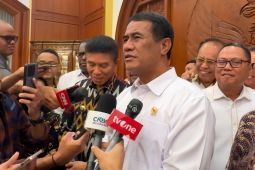
Jakarta (ANTARA) - Indonesia’s Ministry of Agriculture is preparing up to 2 million hectares of land for bioethanol development as part of efforts to strengthen the country's energy independence.
Minister of Agriculture Andi Amran Sulaiman made the statement after a coordination meeting on accelerating bioethanol development with 44 regents from production centers across Indonesia.
"The government is preparing to develop up to 2 million hectares of land as a foundation for building the national bioethanol industry and as a step toward strengthening energy independence," Amran said here on Monday (Sept 21).
He explained that establishing a bioethanol industry requires an integrated supply chain, with large-scale agricultural production areas established to ensure raw material supplies before industrial facilities are built.
The initiative will focus on three primary feedstocks, such as sugarcane, cassava, and corn, tailored to regional land compatibility and productivity potential.
Sugarcane will be a primary focus, with the government targeting 1 million hectares for large-scale development. Meanwhile, corn development will initially be carried out through pilot projects covering 500 to 1,000 hectares per regency.
For industrial infrastructure, the government is considering a financing scheme involving the public-private joint venture model.
"The funding might come 30 percent from SOEs and 70 percent from the private sector. The private sector will certainly be interested because the state is preparing the land," Amran said.
To ensure regional economic growth, the ministry will promote partnership schemes requiring at least 30 percent community participation.
Amran emphasized that land development would prioritize areas with legally secure, technically suitable land, including existing agricultural land and agroforestry zones. The release of forest areas would be considered only as a last resort to protect the environment.
“The bottom line is that we protect the environment while also achieving energy self-sufficiency or energy sovereignty,” the minister said.
Related news: Indonesia eyes sugar self-sufficiency, end to white sugar imports
Translator: Muhammad Harianto, Yashinta Difa
Editor: Bayu Prasetyo
Copyright © ANTARA 2026
KioskNews shows a cleaned-up reading view extracted from the publisher’s page — the original always lives on their site, not ours.