CNA Explains: Why are AI stocks tumbling when demand is still booming?

AI demand is booming, chipmakers are posting record profits and tech giants are continuing to invest hundreds of billions. So why are semiconductor stocks tumbling? CNA speaks to experts about what's driving the sell-off.
New: You can now listen to articles.

This audio is generated by an AI tool.

19 Oct 2026 08:08PM
SINGAPORE: Technology giants are continuing to ramp up spending on artificial intelligence. Demand for advanced chips remains strong. And the world's largest contract chipmaker has just reported another record profit.
Yet the semiconductor stocks at the heart of the AI boom are tumbling.
The Philadelphia Semiconductor Index fell for eight straight sessions through Friday (Oct 16), shedding about 16 per cent over that period in its longest losing streak since the 2008 global financial crisis.
Also known as SOX, the index tracks 30 of the world's biggest semiconductor companies listed in the United States, including Nvidia and Advanced Micro Devices, and is widely used as a gauge of the chip industry.
The rout has also spilled over into Asian markets, hitting major players such as South Korea’s Samsung Electronics and SK hynix, which plunged about 18 per cent and 24 per cent respectively last week. In Japan, flash memory maker Kioxia Holdings plunged nearly 24 per cent last week while Taiwan's TSMC fell about 5 per cent, despite reporting another record quarterly profit.
The sell-off comes even as demand for AI chips remains strong and major technology companies continue to invest heavily in the sector.
Microsoft, Amazon, Alphabet and Meta are expected to spend around US$600 billion this year on data centres, chips and other infrastructure underpinning AI.
Experts told CNA that while demand for AI remains strong, investors are increasingly questioning whether the massive sums being spent will generate sufficient returns, and how long those returns will take to materialise.
“With AI, the value is real. The timing is where expectations run ahead,” said Anthony Tung, a professor at the National University of Singapore (NUS) School of Computing.
CNA looks at what is driving the sell-off, why strong demand is no longer enough to keep AI stocks climbing, and whether the rout signals a broader reassessment of the boom.

WHAT TRIGGERED THE SELL-OFF?
One major trigger was hotter-than-expected US inflation, which revived expectations that the Federal Reserve may need to keep interest rates elevated or tighten the policy further, said Charu Chanana, chief investment strategist at Saxo Singapore.
The Fed last month raised interest rates by 25 basis points, its first increase since 2023, and signalled further hikes in the months ahead.
That matters particularly for the AI industry because building the infrastructure behind the technology requires extraordinary amounts of capital.
“Higher rates make future profits less valuable in today's terms, which tends to hurt expensive growth stocks. They also raise financing costs for companies borrowing heavily to build data centres and AI infrastructure,” Chanana told CNA.
But interest rates alone do not explain the scale of the reassessment.
Years of enthusiasm over AI have driven valuations sharply higher, and investors are becoming more selective about which companies can turn that demand into sustainable profits.
“Even strong earnings may no longer be enough when investors have already priced in years of exceptional growth,” Chanana said.
“The AI trade is moving from excitement about growth to questions about the cost of delivering that growth.”
WHY ARE INVESTORS WORRIED DESPITE STRONG AI DEMAND?
Despite the market rout, there is little evidence so far of a slowdown in demand for advanced AI chips.
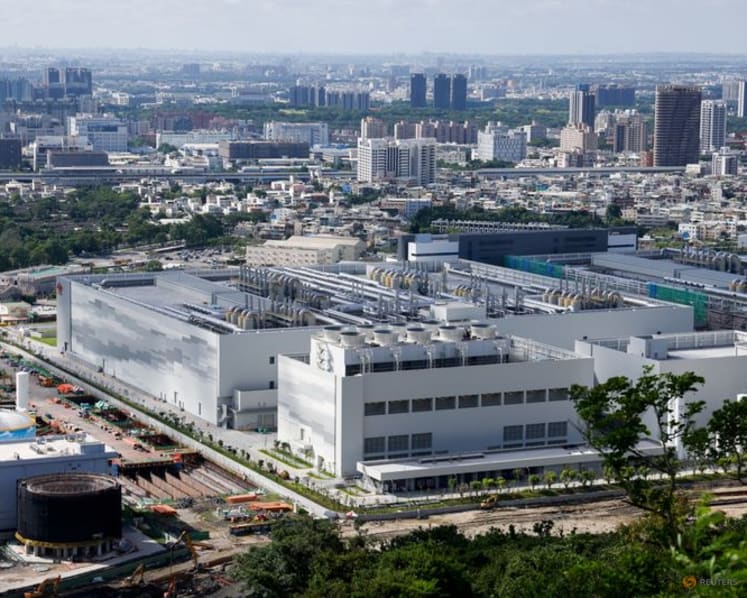
TSMC, the world's largest contract chipmaker and a key supplier to Nvidia, last week reported a net profit of NT$763.1 billion (US$23.5 billion) for the third quarter, up nearly 69 per cent from a year earlier and marking its sixth consecutive quarter of record profit.
Revenue jumped 50.9 per cent to NT$1.5 trillion, on the back of “extremely robust” demand, said TSMC.
Yet TSMC's shares have also been caught in the technology sell-off.
That apparent contradiction - booming demand but falling share prices - goes to the heart of the market's concerns.
“The bigger issue is that investors are becoming much more demanding about how much they are willing to pay for that growth,” said Ms Chanana of Saxo Singapore.
“There is an important difference between spending money on AI and making money from AI.”
Technology companies are investing enormous sums in chips, data centres, electricity and computing capacity but investors are increasingly questioning whether AI-related revenues and profits will grow quickly enough to justify that spending, she said.
There is also the risk that today’s expensive AI chips and infrastructure could “become outdated as technology advances”, forcing companies to keep investing to remain competitive even before they have fully recovered their earlier costs, Chanana added.
She pointed to recent concerns surrounding US cloud company CoreWeave as an example of how higher borrowing costs could put pressure on debt-dependent businesses, even when customer demand remains strong.
CoreWeave’s shares plunged more than 15 per cent last week as investors raised concerns over its US$50 billion debt and the risks of being trapped in financing arrangements involving chipmakers such as Nvidia and clients including Meta Platforms and OpenAI.

Beyond the financial concerns, there is also the question of how quickly businesses can put AI to practical use.
Tung said much of AI's current adoption remains concentrated in tasks such as drafting, summarising and assisting programmers, while its use in core operations in sectors such as manufacturing and healthcare is more limited.
Adoption in those industries is more challenging because relevant data may be scarce, decisions require greater accountability and mistakes can carry much higher costs, he said.
Small businesses may also struggle to utilise AI because they lack the technical expertise and resources available to larger companies, Tung added.
He said companies are building AI infrastructure to meet demand expected several years into the future, even as businesses may take longer to integrate the technology into their operations.
“That capacity is built for demand expected several years out, while adoption moves at the speed organisations can change their processes and their people,” he said.
“If adoption lags, there will be a correction in valuations and spending.”
Even so, Tung said that the infrastructure being built will remain beneficial as AI capabilities continue to advance but the question lies in who will bear the cost while demand catches up.
IS THE AI BUBBLE UNRAVELLING?
Experts have described the sell-off as a reassessment of AI investments rather than evidence that the boom unravelling.
"It is likely a correction as the market feels overvalued based on the current development and returns in AI," said Alfie Yeo, senior research analyst at RHB Singapore.
Chanana of Saxo Singapore similarly described the sell-off as a “repricing” of the AI boom.
“A normal market correction would mean share prices and valuations coming down while the underlying demand for AI remains healthy,” she said.
Signs of a more fundamental downturn would include major technology companies materially reducing AI spending, semiconductor orders weakening, or a wave of financing problems forcing data-centre projects to be delayed or cancelled, Chanana added.
There is also another possibility: AI adoption could continue growing but competition and pricing pressures could mean companies earn less from their investments than expected.
“In that case, the technology could remain a success while share prices struggle for much longer,” Chanana said.
“The biggest risk is not necessarily that AI fails. It is that AI succeeds, but investors have paid too much for the profits it eventually generates.”
Yeo said that investments in AI are likely to continue as the technology develops and becomes more widely adopted.
“The winners will be those whose technology is stable, trusted and well-adopted by the market eventually.”
Despite the market turbulence, several Asian economies expect AI-related demand to continue supporting economic growth.
The Monetary Authority of Singapore (MAS) said last week that it expects AI-related activity to continue to back its expansion next year, albeit at a slower pace.
Similarly, South Korea expects its economy to maintain solid growth next year, supported by robust semiconductor exports, Yonhap reported.
Taiwan too expects that continued demand for emerging technologies such as AI will support exports and investments next year.
WHAT HAPPENS NEXT?
Investors will be looking for evidence that the enormous sums being spent on AI are beginning to translate into revenue and profits.
Chanana identified four key indicators to watch: inflation and interest rates, financing conditions, Big Tech’s earnings and spending plans as well as semiconductor demand.
“Investors will want to see not just whether companies such as Microsoft, Alphabet, Amazon and Meta continue investing in AI, but whether those investments are delivering higher revenues, stronger productivity and ultimately better profits,” she said.
Persistently high inflation and expectations of further interest-rate hikes could continue weighing on richly valued technology stocks, she added.
Investors will also be watching for signs of stress among heavily indebted AI infrastructure companies.
Chanana said that recent pressure on CoreWeave's bonds is a reminder that financing stress can show up before the full impact becomes visible in company earnings.
“If borrowing costs keep rising or companies struggle to raise fresh funds, that could be an early warning of broader problems,” she said.
Chipmakers will provide another important test.
Upcoming results and forecasts from companies such as Nvidia, Samsung Electronics and SK hynix could show whether demand for AI remains strong, and whether greater competition and expanding production capacity are beginning to squeeze profit margins.
“The next phase is likely to be less about buying anything connected to AI and more about identifying which companies can fund their growth, protect their profits and deliver real returns on their investments,” said Chanana.
KioskNews shows a cleaned-up reading view extracted from the publisher’s page — the original always lives on their site, not ours.