NPP is for all social classes, not just the middle class – Mike Oquaye
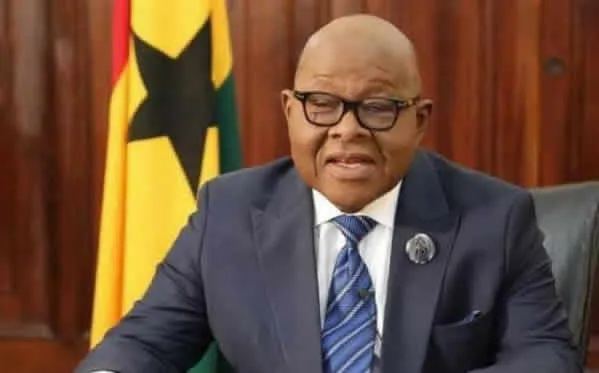
Former Speaker of Parliament, Professor Mike Oquaye, has rejected suggestions that the New Patriotic Party (NPP) needs a leader specifically capable of winning back Ghana’s middle class.
He said the NPP should not be viewed as a party for only the middle class, saying that the party’s policies and social interventions have historically targeted people across different social groups.
Speaking on the Joy FM Super Morning Show on Monday, October 5, Professor Oquaye was asked whether the NPP’s decision to elect John Boadu as chairman would help the party reconnect with the middle class.
The question followed arguments that the NPP had traditionally enjoyed stronger support among the middle class but lost some of that support after the Domestic Debt Exchange Programme, which critics said contributed to the party’s defeat in the 2024 general election.
Some party supporters had therefore suggested that candidates such as Boakye Agyarko or Paul Afoko could have been better placed to lead the party back to the middle class.
Professor Oquaye, however, dismissed the distinction between the middle and lower classes when assessing the NPP’s political appeal.
“Middle class, lower class, that is the party of the NPP,” he said.
He said that the NPP had a strong record of introducing social intervention programmes aimed at improving the lives of ordinary Ghanaians.
“You realise that social intervention politics in Ghana belong to NPP,” Professor Oquaye said.
He cited the NPP’s free health policy as one example, recalling the opposition it faced when the policy was first proposed.
“When the NPP talked about the free health system, the NDC said it was an impossibility,” he said.
According to Professor Oquaye, the NDC even walked out of Parliament in protest when the policy was being pursued.
He said the NPP’s ability to implement policies that were initially dismissed as impossible demonstrated its commitment to addressing the needs of ordinary Ghanaians.
Professor Oquaye also pointed to the introduction of free Senior High School education under the NPP as another example of the party’s social intervention agenda.
“When we come to look at what Kufuor did, we also brought the word free education, which today they are not able to work on,” he said.
He went on to criticise the current state of the Free SHS programme, claiming that the policy was facing serious challenges.
“The free education at the SHS level has collapsed spiritually. And Ghanaians are seeing it; not anybody is telling them,” he said.
Professor Oquaye further claimed that more than 50,000 students were struggling to secure placement in senior high schools.
“And they cannot place more than 50,000 children. Parents are galavanting all over the place in search of non-existent places. They can't afford to pay anything,” he said.
Despite his criticism of the current state of the education system, Professor Oquaye said that the NPP’s political appeal should not be limited to one economic group.
“So, if we talk about middle class, lower class, we are the party for all classes,” he said.
“We are the party which satisfies all social groups,” he added, pointing to the party’s policies aimed at women and young people.
He also defended John Boadu’s ability to appeal to a broad section of Ghanaian society, despite concerns that his grassroots background might make him less attractive to middle-class voters.
Professor Oquaye said Mr Boadu could attract support across the political and social spectrum.
“John Boadu is capable of attracting the attention of all sectors of the political and social spectrum of Ghana. And we are very, very confident,” he said.
He added that the NPP’s challenge was not a shortage of capable leaders, but rather the large number of qualified people within the party.
“And that's why I say our issue really is we have too many qualified people from top to bottom,” Professor Oquaye said.
When asked whether his comments meant the NPP should now stop seeing itself primarily as a middle-class party and instead position itself as a party for all Ghanaians, Professor Oquaye said the party’s strength lay in its ability to address the needs of people at different economic levels.
He said the NPP understood how to meet the needs of people in lower-income groups while also creating opportunities for them to improve their economic circumstances.
“You know what, there are times I will say, we know how to be able to satisfy the needs of the lower classes. Now, we know how to acquire,” he said.
“Therefore, when we tell people we will give you this, we surely will give them.”
Professor Oquaye said that economic empowerment was necessary for people to take on broader responsibilities and contribute meaningfully to national development.
“If the person himself is not capable of rising above anything, how can that person take care of you?” he asked.
He said the NPP’s social interventions had helped address some of the basic challenges facing Ghanaians.
“And we have been able to take care of people through all our social interventions. And in fact, it's not me saying it. It is a fact that anybody can see,” he said.
He mentioned programmes such as school feeding as examples of the party’s interventions.
“Look at the social interventions, school feeding, NPP, all those things,” he said.
Professor Oquaye further argued that people who are freed from severe economic hardship are better placed to think about broader issues affecting society and the country.
“You see, when you are able to live above your own economic basic problems, then you are also equipped to think of other people,” he said.
He said that poverty could make it difficult for people to focus on wider national concerns.
“The hungry man is not able to conceptualise and make serious plans for the nation as a whole,” Professor Oquaye said.
He described the NPP’s approach to social intervention as deliberate, saying the party believed such policies could create the conditions for broader economic participation.
“And so, it is deliberate. And we are able to bring these things to bear upon the Ghanaian people,” he said.
Professor Oquaye also expressed confidence in the NPP’s 2028 prospects under former Vice President Dr Mahamudu Bawumia, particularly with plans to expand opportunities in the information and communications technology sector.
He predicted that such policies could create jobs for millions of young Ghanaians.
“And in fact, we can see when Bawumia comes to power, with the lifting of ICT, millions will be employed,” he said.
He acknowledged that the NPP’s political opponents would challenge the feasibility of such plans but maintained that the party would prove its critics wrong.
“And NDC people, of course, will tell you it's not possible. And the man's slogan, ‘it is possible’, will be manifest to the people of Ghana,” he said.
DISCLAIMER: The Views, Comments, Opinions, Contributions and Statements made by Readers and Contributors on this platform do not necessarily represent the views or policy of Multimedia Group Limited.
Tags:
DISCLAIMER: The Views, Comments, Opinions, Contributions and Statements made by Readers and Contributors on this platform do not necessarily represent the views or policy of Multimedia Group Limited.
KioskNews shows a cleaned-up reading view extracted from the publisher’s page — the original always lives on their site, not ours.