Car mania will put us all on the road to ruin
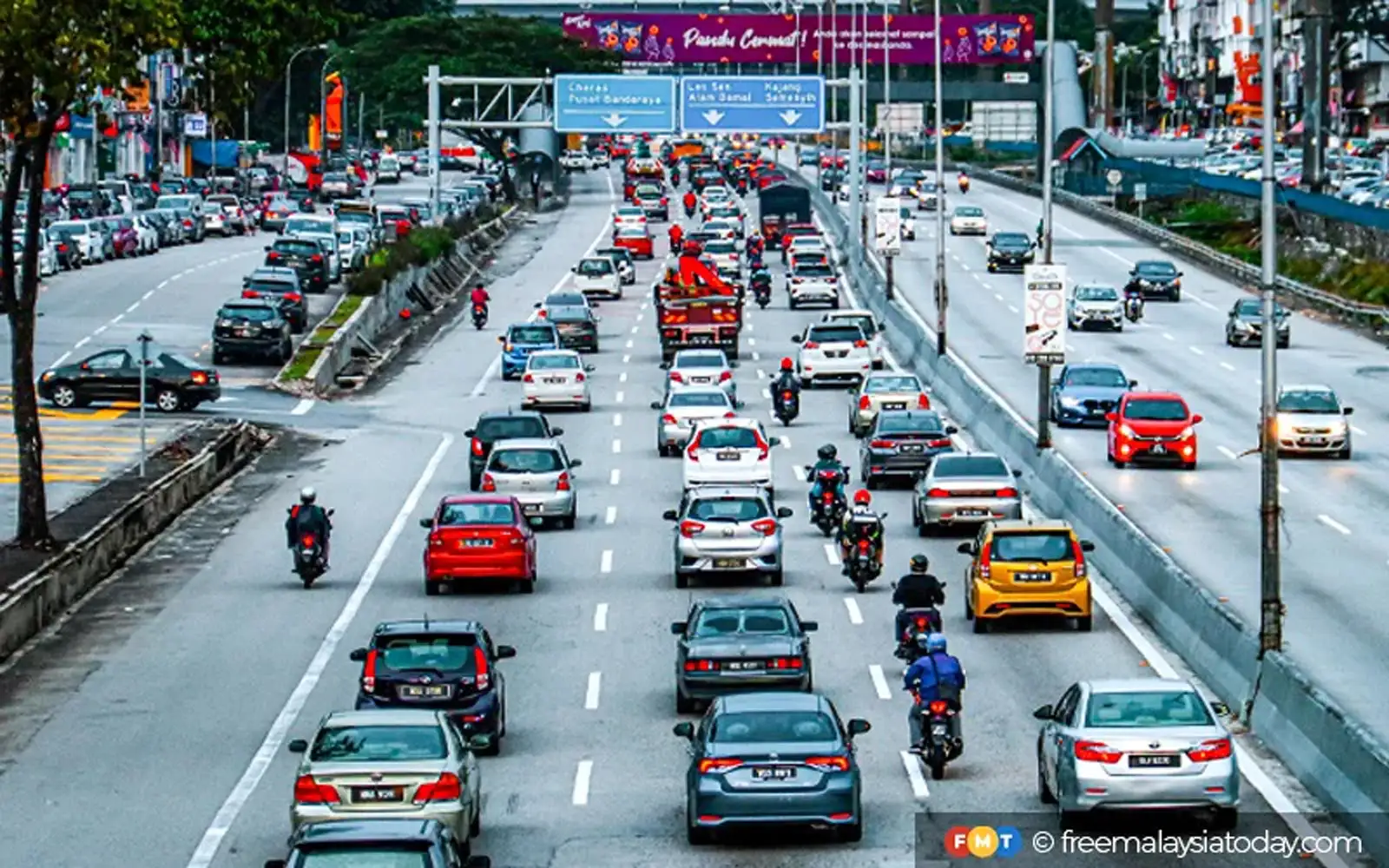

I’m not an expert on highways or infrastructure, but I drive a lot because of necessity, and also because I like being on the road. I’ve done at least 1.5 million kilometres in my life, and I have a bad back and knees and rather diminished retirement savings because of it.
Malaysia has an amazing network of highways and federal and state roads. They’re the literal backbone of our national development, and having put in around 200,000km of driving abroad, I can say that our roads aren’t too bad at all.
There’s a caveat though. For the money we’ve spent on them, they should’ve been much better. I’d give an A minus for the overall national road architecture, though only a C for that in Kuala Lumpur, and another C for the design, construction and maintenance of these roads, especially the newer ones. And it’s an E and very close to an F for the lack of transparency about their ownership, costs and toll charges.
The financial incentives of owning a highway concession, as well as the benefits of political patronage (read: corruption) in parcelling out these concessions to favoured parties leaves quite a sour taste. Our great highways and networks come at too high a cost borne by taxpayers, and especially highway users. It need not have been this way.
My biggest concern is that Malaysia is turning into a car society the same way as the US. Cars seem to be the answer to everything. We’re building out our cities, towns, suburbia, villages, industrial parks, public highways and private turnpikes as if motor vehicles are the only means of transport.
Kuala Lumpur’s downtown area is reasonably compact, but try walking from one point to another. The route would either be inconvenient, dangerous or downright impossible. Everywhere we go, cars get priority and pedestrians and non-motorised cyclists are left to fend for themselves.
We’ve convinced ourselves that our climate is too hot, humid and rainy, and that our roads are too dangerous and inconvenient. There is certainly some truth there, but mostly because the original designs of our living spaces didn’t provide much in the way of alternatives to motorised vehicles.
Addicted to cars
Unfortunately, the manufacture, import and ownership of cars and the taxes and duties due on them makes them too critical to our economy, one of the largest car markets in the region. Cars are a drug we’re unable or unwilling to give up because of the negative impact on our economic health. So, we take higher and higher doses of this “drug” and convince ourselves it is vital to our existence and prosperity.
But the world is changing. Car ownership, especially in mature economies, is not growing by leaps and bounds any more. Certainly, electric vehicles (EVs) are addressing some of the problems associated with them such as pollution, use of environmentally destructive fossil fuels etc. But even if we end up with EVs replacing all fossil fuel vehicles, we still wouldn’t have made much progress.
Part of our love affair is certainly psychological. Many Malaysians, myself included, are first-time car owners. Car ownership is an important milestone in our life, often a sign that we’ve reached a certain level of success in life. We haven’t become inured to cars the way many in the more developed societies have. You can take our cars away, as the saying goes, only from our cold dead hands.
But our children and grandchildren aren’t heading that way. Populations are increasingly being concentrated in massive urban conurbations, with such population growth, often caused by urban migration, leading to huge megalopolises such as Jakarta, Mexico City, Lagos etc as well as to the older ones such as Tokyo and Los Angeles.
The coming generations will not have the same love affair with cars as we do. Cars will be just a means of getting from A to B and no longer an important milestone in their life. Many cities are increasingly building out alternative urban transport systems such as light rail, monorail and trams, as well as simpler solutions such as climate-controlled walkways and corridors to cater to the needs of their growing but less car-fixated population.
What lies ahead
Technology recognises this change. The latest self-driving EVs aren’t meant to help us drive our cars better, but rather to create a market where we can just dial up a driverless car that can take us to wherever we need to go without having to own such cars or deal with their drivers.
It will create a new business of the car-as-a-service, with cars used on subscription or rented from manufacturers the same way as computer software has been for quite a while.
We risk leaving behind a vast network of expensive but underutilised roads as well as unfit, unhealthy people whose lives are overly spent in the air-conditioned comforts of their houses, cars, offices or shopping malls.
The focus on cars also means rail is often neglected. We’re just beginning to start operating the East Coast Railway Link (ECRL), and even then both its reason for existence and its long-term sustainability are in doubt. Rail can’t win against cars because of the huge capital costs and timeframes involved, unless the government is willing to tip the scales in its favour through incentives and disincentives to the rakyat.
We have over 5,000km of expressways, over half of which are tolled, and the rest would likely end up being tolled too. The appetite to build more highways, driven by politics and surging demand caused by escalating car ownership, will just mean that more toll highways with E designations and fancy names will appear.
It’s not all or nothing. We can both benefit from the economics of car ownership and prepare for a future where cars are not that critical to our lives any more. We need the political will to make alternatives to just having more and more cars and more and more roads for them to drive on.
Read also: A journey through a tangled web of highways and byways
The views expressed are those of the writer and do not necessarily reflect those of FMT.
Subscribe to our newsletter and get news delivered to your mailbox.
KioskNews shows a cleaned-up reading view extracted from the publisher’s page — the original always lives on their site, not ours.