Regulator blocks Grab’s merger with Foodpanda
CLOSE TIES: Uber Eats and Grab’s years of collaboration in other markets and Uber’s stake in Grab would make them less likely to compete aggressively, the FTC said
By Ou Yu-hsiang, Sam Garcia and Jonathan Chin / Staff reporter and Staff Writers, with CNA


The Fair Trade Commission (FTC) today blocked Grab Holdings Ltd’s proposed acquisition of Delivery Hero SE’s Foodpanda operations in Taiwan, citing concerns that the deal would negatively impact competition in Taiwan’s food delivery market.
Uber, the parent company of Taiwan’s leading food delivery platform Uber Eats, holds 13.1 percent of Grab’s shares and has close ties with the company in other markets, the regulator said.
Although Grab limits Uber’s voting rights to 3.9 percent, Uber’s stake in the firm, and the companies’ shared board members and past business partnerships could still affect how they interact and make Grab less likely to compete aggressively, it said.
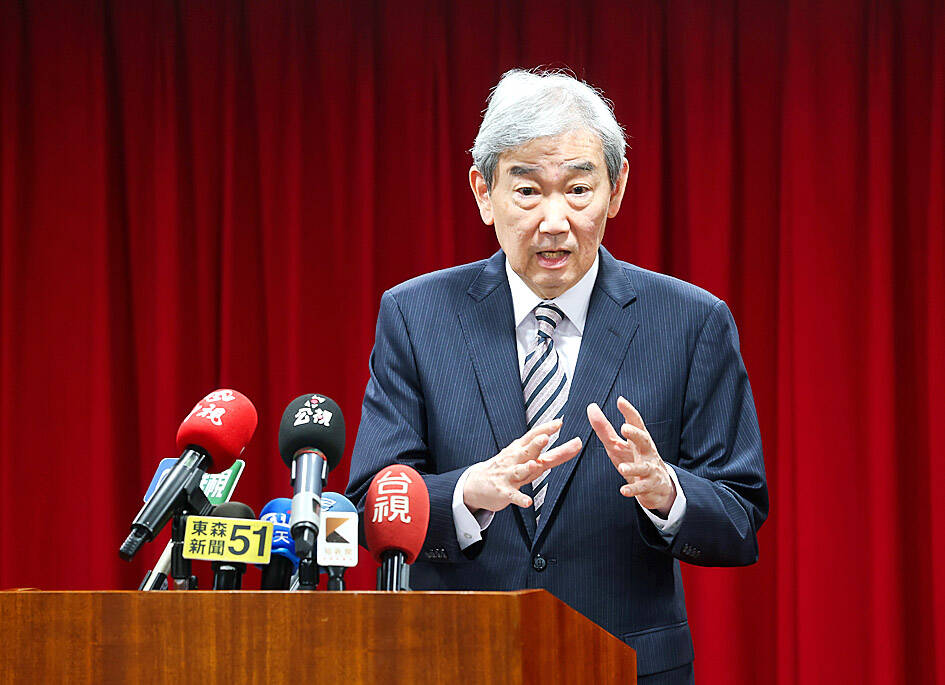
Fair Trade Commission spokesman Hsin Chih-chung speaks at a news conference in Taipei yesterday.
Photo: CNA
Three of the five commissioners voted to block the deal, one voted to allow it and one abstained.
If Uber Eats cut prices or offered discounts to compete with Grab, it would boost its own sales, but hurt Grab’s profits, affecting Uber’s investment returns, the FTC said.
Their years of working together in other markets would increase the risk they would coordinate rather than compete, it said.
Taiwan’s food delivery market has high barriers to entry, as new platforms need substantial investment and must attract enough restaurants, delivery workers and customers to compete, it said.
However, restaurants and customers lack the bargaining power to counter major platforms, leaving little to prevent Grab and Uber from coordinating rather than competing, it added.
Uber would need to significantly reduce its stake in Grab or even sell all its shares to reduce the risk of coordinating after the merger, the FTC said.
Although Grab has proposed reducing Uber’s stake, restricting Uber personnel from serving on its board and limiting the exchange of sensitive business information, the measures would be difficult to enforce and insufficient to address competition concerns, it said.
The disadvantages outweigh the potential benefits in this merger, the FTC said, blocking it under Article 13 of the Fair Trade Act (公平交易法).
Asked whether denying the acquisition could inadvertently strengthen Uber’s market position by triggering Foodpanda’s exit from Taiwan, FTC spokesman Hsin Chih-chung (辛志中) said the commission does not make decisions on hypotheticals.
The FTC’s standard for permitting or halting a merger is whether it would negatively impact free-market mechanisms, not what would happen if its antitrust authority is enforced, he said.
Grab and Delivery Hero have a legal right to reapply for approval after proposing changes to their deal or their finances, Hsin said.
Asked if the decision would affect foreign investors’ confidence in Taiwan’s business environment, he said the FTC makes its ruling to protect fair trade without distinctions between foreign and domestic companies.
“We are disappointed with the outcome, as it means we will not be able to bring innovative services, fair earning opportunities and improved service standards to Taiwanese consumers, delivery partners and merchants as planned,” Grab said in a statement.
“Grab’s core businesses across Southeast Asia remain strong. We will continue to invest capital and resources to pursue our established growth plans and support the continued development of local communities across the markets in which we operate in Southeast Asia,” it said.
KioskNews shows a cleaned-up reading view extracted from the publisher’s page — the original always lives on their site, not ours.