The White House Farm massacre – exclusive: new forensic evidence suggests Sheila Caffell killed herself. Is Jeremy Bamber innocent?

On 7 August 1985, five people were found dead at White House Farm in Essex, England: 28-year-old Sheila Caffell (familiarly known as Bambi); her six-year-old twin sons Daniel and Nicholas; and her adoptive parents, June and Nevill Bamber. All five had been shot with a rifle. Caffell’s 24-year-old brother, Jeremy Bamber, who was also adopted, had alerted Essex police to a disturbance inside the farmhouse – he said his father had called to tell him – and was outside with the police for four hours before the bodies were discovered. Caffell, who had recently been hospitalised with schizoaffective disorder and is said to have feared her children were going to be taken into foster care, was found with the rifle lying on her chest, pointing towards her neck. There were two gunshot wounds to her neck and chin, and a bloodied Bible by her side.
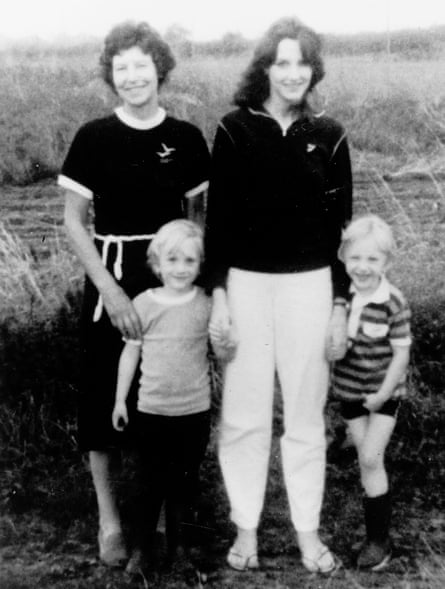
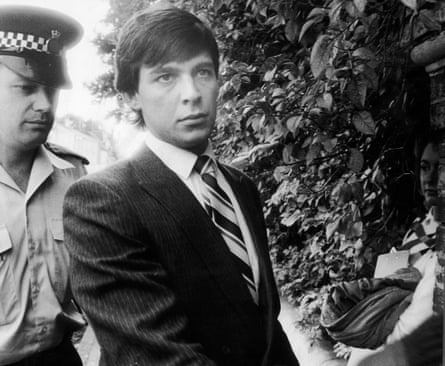
The case was initially thought to be open and shut, a tragic murder-suicide committed by Caffell. But a month later, Jeremy Bamber was arrested, after relatives went to the police to voice their suspicions about him, and his former girlfriend, Julie Mugford, then told police he had confessed the murders to her. The relatives went on to inherit from Nevill and June Bamber’s considerable estate after Bamber’s conviction. It was later discovered that Mugford had agreed to sell the story of their relationship to the News of the World for £25,000 if Bamber was convicted. Essex police and Crown prosecutors had also agreed to drop charges against her for burglary, chequebook fraud and selling cannabis, because “prosecuting her could jeopardise her availability or credibility as a key witness”.
Bamber has now been in prison for 41 years, and questions have always been asked about the safety of his convictions. These have grown recently. The proper body to examine these questions is the Criminal Cases Review Commission (CCRC), but it has already taken the CCRC four years to consider less than half the evidence that Bamber has submitted to it, and it has concluded that the four points (out of 10) in the submission that it has so far considered do not meet the high evidentiary threshold to refer the case back to the Court of Appeal. In the second piece in our series considering discrete pieces of evidence, the Guardian commissioned forensic biologist Sue Carney-Gannon to analyse the bloodstain patterns at the crime scene for the first time.
Forty years ago, the jury at Jeremy Bamber’s trial was given a binary choice. Either the 24-year-old son of well-to-do farming stock had killed five members of his adoptive family, including his sister, Sheila Caffell. Or Caffell, 28 – also adopted, but from a different family – had killed their parents and her six-year-old twin boys before turning the gun on herself.
What became known as the White House Farm massacre was a horrific case: brutal, chaotic, shockingly policed and, to this day, hugely controversial. On 28 October 1986, Bamber was convicted of the five murders in a 10-2 majority verdict at Chelmsford crown court, Essex, England.
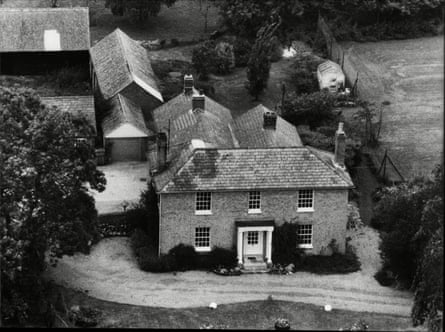
But now a leading forensic biologist has presented evidence that Caffell took her own life. After analysing the crime scene’s bloodstains for the Guardian, Sue Carney-Gannon has concluded that the patterns on the clothing and body of Caffell point to suicide. “In my opinion, if Sheila Caffell took her own life using the rifle, as the defence for Jeremy Bamber assert, then this explains the distribution of blood on her nightdress and right arm,” she writes in her report. “In my opinion, these findings are accounted for by her having taken her own life with the rifle; blood from the wound under her chin running down the upper right front of her clothing and splashing on to her right forearm, then veering to her right side as her body and arms fell.”
Carney-Gannon’s conclusion challenges the prosecution case, which maintained that Bamber meticulously staged Caffell’s suicide after he shot their parents, June and Nevill Bamber, and her twins Nicholas and Daniel.
The crimes occurred in the early hours of 7 August 1985. It was originally reported as a murder-suicide committed by Caffell, who had been diagnosed with schizoaffective disorder and had been hospitalised earlier that year after a psychotic episode. Caffell’s delusions included the belief that she was possessed by the devil and her twin sons were evil.
Three days after the murders in the picturesque village of Tolleshunt D’Arcy, Bamber’s uncle and cousins went to Essex Police to suggest he had been behaving strangely and that they suspected him. His uncle, Robert Boutflour, provided the police with an elaborate theory to explain how he thought Bamber had killed his family. These relatives went on to inherit from June and Nevill Bamber’s considerable fortune.
On 3 September 1985, Bamber split up with his girlfriend, Julie Mugford, after she discovered he had cheated on her with her best friend. Four days later, exactly a month after the murders, Mugford gave a statement to the police, implicating him.
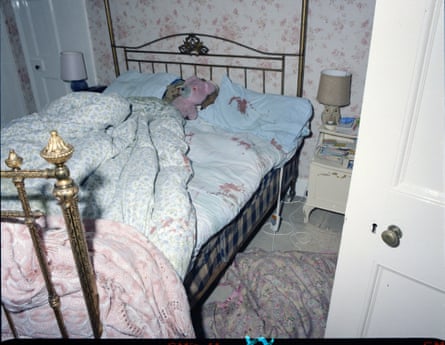
It soon emerged at Bamber’s trial how seriously the crime scene had been contaminated. At least 43 officers had trampled through the farmhouse, clothing and bedding had been destroyed, clumsy reconstructions resulted in bodies and murder weapons being displaced. Alarmingly, the crime scene was not secured for 32 days. The most reliable record of the crime is the series of photos police photographer Detective Constable Bird started taking two-and-a-half hours after officers first entered the farmhouse, although the scene was already heavily compromised.
A bundle of crime-scene photos was disclosed to Bamber’s defence before the 1986 trial. Fifteen years later, in 2001, a second bundle was disclosed to his new team, to prepare for his appeal. Finally, in 2011, following decades of legal battles and multiple court orders regarding non-disclosed evidence, Essex Police handed over 406 crime scene negatives to the Criminal Cases Review Commission (CCRC), the body tasked with investigating potential miscarriages of justice. When the CCRC refused to pay to have the negatives developed into hi-res photographs, Bamber’s supporters paid £2,295 to have them developed.
Late last year Bamber agreed to hand the crime scene photographs to the Guardian so we could get them forensically analysed. We asked Carney-Gannon, who has given expert evidence in more than 2,000 cases, to examine the bloodstain patterns, focusing on the master bedroom. In the 41 years since the murders, these photos have never been analysed in this way before. Bloodstain analysts use biology, chemistry, physics and maths to examine the size, shape and location of blood left at a crime scene, to reconstruct violent events.
Once seen, the crime scene photographs cannot be forgotten. Nevill Bamber was found in the kitchen, his head slumped in a coal scuttle. The twins were dead in their beds.

The Guardian asked Carney-Gannon to focus on the master bedroom. We believed that the crime scene there suggested a struggle had taken place between Caffell and June Bamber.
Caffell was found on the far side of the master bedroom with a bloodstained Bible by her side and the rifle on top of her. June Bamber lay in her bloodied nightdress against the door. There were multiple blood drops on the carpet between Caffell and June Bamber.
While Carney-Gannon stated she could not tell from the bloodstain pattern whether there had been a struggle in the room, her other findings were more interesting and seem more significant.
At Bamber’s trial, the prosecution argued that he had led Caffell into the master bedroom, asked her to lie down, then shot her twice in the neck. The prosecution argued that she must have been murdered, because it was impossible for her to shoot herself in the neck twice. This has long been refuted by scientific evidence showing the first shot, into her lower neck, was not fatal.
At trial, the pathologist Peter Vanezis was called by the prosecution, but the evidence he presented challenges the prosecution case. Vanezis believed Caffell had been sitting up when she received both injuries, and fell backwards immediately after the second shot. He indicated that Caffell could have walked around briefly after receiving the first of her neck wounds. Vanezis told the court that, from the pathological evidence alone, he could not say whether Caffell had been murdered or taken her own life. Despite being a witness for the prosecution, he testified at the trial: “My examination did not reveal anything to contradict the suicide theory.”
Carney-Gannon’s analysis of the bloodstain patterns reaches the same conclusion – that Caffell was sitting when she was shot. “In my opinion, the blood stains to Sheila Caffell’s clothing and right arm suggest she was sitting upright as the shot entered under the chin, and blood began to run down her upper front and splashed on to her right forearm. As she began falling backwards, blood on the front of her clothing began to run to the side, and as her arms fell, blood on her forearm adjusted direction due to gravity.”
The forensic biologist says the blood pattern analysis cannot help determine whether Caffell shot the rest of the family or whether Jeremy Bamber did. However, throughout the trial Mr Justice Drake laid out the zero-sum nature of the case to the jury. In summing up, he said: “On the facts of this case, the killer was either Sheila or Jeremy Bamber and therefore it follows that if you are sure that Sheila did not carry out the killings, then it must be Jeremy Bamber who did.”
Carney-Gannon refutes the theory proposed at trial that Bamber shot Caffell while she was lying down. “If she had been lying on the floor when he shot her, then in my opinion, this would not readily explain the pattern of blood on Sheila Caffell’s clothing, particularly the veering of the blood to her right side, since she would not have fallen after the shot.” She says she assumes that if he had shot her while she was lying down, he would have had to first incapacitate her.
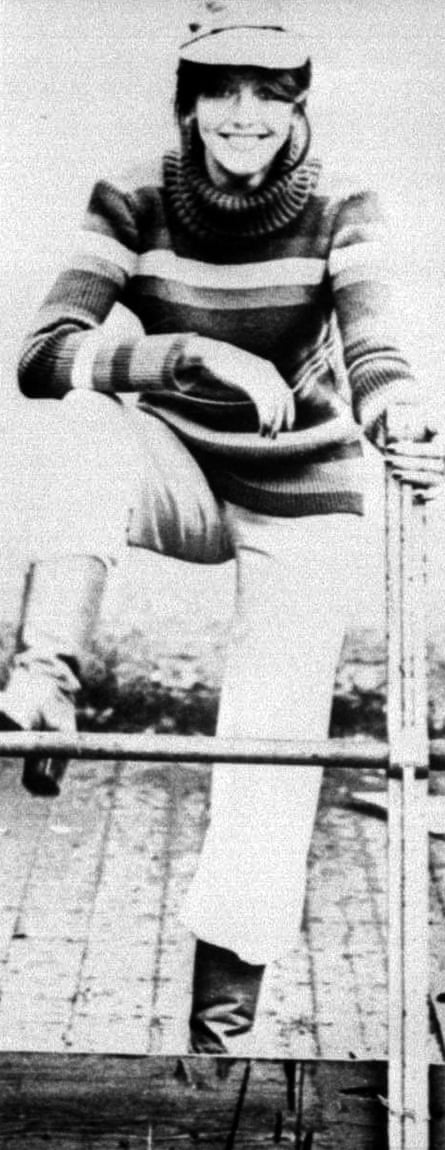
At trial, it was never suggested that Bamber had incapacitated Caffell. The prosecution argued that Caffell was passive and compliant due to the high dose of haloperidol, an antipsychotic drug, that she had been taking. In fact, her dosage had just been dramatically reduced because it was causing severe side-effects, including muscle stiffness and a “zombie-like” state. The defence argued that the sudden reduction had caused a psychotic episode that resulted in the massacre.
Carney-Gannon does not rule out the possibility that Bamber shot his sister, but suggests the only feasible way he could have done so is to have shot her under the chin while she was standing up. “The possibility that Ms Caffell was upright and Jeremy Bamber held the rifle barrel under her chin and fired, cannot be ignored.” Even here, though, Carney-Gannon says she struggles to explain the blood patterns she has analysed. “In my opinion, that scenario might result in similar blood patterns to her upper clothing, but might not readily explain the blood on her forearm, if her arms were by her side at the point she received the shot.”
At trial, Vanezis, the pathologist for the prosecution, explicitly ruled out the possibility that Caffell had been shot while standing. He pointed out that her nightdress would have been more heavily stained if she had been standing when shot the first time, or if she stood up after having been shot. In his expert testimony, Vanezis said: “The nature of the blood stains to the nightdress suggested that Sheila Caffell was sitting up when she received both injuries. After the second injury she would have immediately fallen back.”
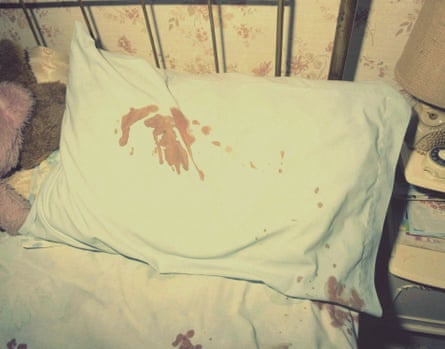
Carney-Gannon’s analysis of the blood patterns around June Bamber suggests she suffered a horribly slow, messy death. June received wounds to her chest, arms, upper back and head. Carney-Gannon believes the bloodstains on the bed suggest June sat on it after being shot. “In my opinion, this distribution of blood on this location of the bedding is explained if June Bamber sat in this position while injured and bleeding from wounds in her arms, back, and possibly other areas, and with blood on her hands,” she writes.
Her report, which has been peer-reviewed, comments on the “numerous blood drips on the carpet around the body of June Bamber, across the floor at the foot of the bed, and on the floor at the far side of the bed where the body of Sheila Caffell was found ... The number of drips and the extent of the distribution suggest a person (or persons) who was actively bleeding has moved around these areas … In my opinion these findings are explained if June Bamber was the injured person moving around the bedroom whilst bleeding.” The blood staining on June’s feet “supports the suggestion she walked around the bedroom whilst bleeding and dripping blood on to the carpet”.
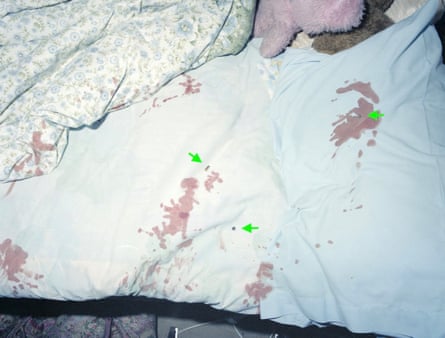
Carney-Gannon has also identified two bullet holes and a cartridge casing on the bed – indicated by green arrows in the photo above – where the shooter appears to have missed their target. She says she cannot discount the possibility that the bullet holes may be the result of bullets that hit and then exited June Bamber, but she believes they are likely to be “the result of shots that did not strike any of the deceased parties”.
At trial, ballistics expert Malcolm Fletcher stated that every shot had hit the target area, saying there were “25 hits out of 25”, indicating that 25 bullets and 25 empty cartridge cases had been found. The prosecution argued that Bamber – a skilled huntsman – had to be the killer, because Caffell was insufficiently experienced with a rifle to have a 100% hit rate. The defence argued that Caffell did have limited knowledge of handling .22 rifles because she had grown up on the farm and attended rural shoots.
The bullets identified by Carney-Gannon imply that the shooter was less skilled than has been suggested. After all, not only does Carney-Gannon suspect that some bullets missed June Bamber, she believes June probably moved around for some time after being shot.
Carney-Gannon’s findings support a forensic investigation the Guardian commissioned from the prestigious forensic physician Professor Jason Payne-James, earlier this year, into whether or not a silencer was used in the shooting of Caffell.
The silencer in question was found three days after the massacre, in a downstairs storage cupboard at White House Farm, by relatives who went on to inherit from the Bamber estate. This silencer was crucial in the case against Bamber. The prosecution argued that Caffell’s arms were not long enough to kill herself had the silencer been attached to the rifle, and, if she had shot herself, she would obviously have been unable to replace the silencer in the downstairs cupboard. At trial, it was stated that blood belonging to Caffell was found inside this silencer.
Mr Justice Drake told the jury that if they were convinced beyond reasonable doubt that a silencer was used, then Bamber was guilty of the murders. Minutes before they convicted Bamber, the jury returned to ask whether the blood in the silencer definitely belonged to Caffell. The judge told them it did. In fact, it was merely her blood grouping, which she shared with Robert Boutflour, who regularly used the guns. Later testing suggested the blood found in the silencer might not even be human.
Payne-James concluded that a silencer had not been used, and that the two shots to Caffell’s neck and chin were either contact or close-contact wounds. This dismantled much of the prosecution’s case against Bamber, and is consistent with Carney-Gannon’s view.
The new findings will be handed to the Criminal Cases Review Commission, the body responsible for investigating alleged miscarriages of justice and referring them to the Court of Appeal if it concludes there is a “real possibility” that a conviction may be unsafe. The commission spent four years examining four out of 10 points in the latest submission by Bamber, before rejecting them.
After being criticised for its low referral record in recent years (1.5% of total applications in 2023/24 were referred to the Court of Appeal), the CCRC’s chair and CEO were forced to resign last year. Under the leadership of interim chair Dame Vera Baird KC, there has been a sharp increase in referrals – 45 cases were referred in the 2025/26 financial year, compared with 31 in 2024/25. Baird accused the previous regime of “almost looking for reasons not to refer”.
It is hard to see how the commission will not be swayed by Carney-Gannon’s findings, especially under its new leadership. After all, the new evidence regarding stray bullets that were shot at the bed; June Bamber sitting down and walking around after being hit by an unskilled shooter; and, most importantly, the blood stains suggesting that Sheila Caffell shot herself, turns the case on its head.
A spokesperson for the Jeremy Bamber Innocence Campaign says: “This report supports what Jeremy has said all along, that he did not murder his family. The report is clear that the blood patterns present at the scene are consistent with the initial conclusion drawn by the police at the scene, that his seriously mentally ill sister Sheila killed her family and then herself. These two terrible tragedies have been compounded by how long it is taking the appeal system to recognise this in the light of the scientific evidence now available.”
KioskNews shows a cleaned-up reading view extracted from the publisher’s page — the original always lives on their site, not ours.