Divers release first footage of SS ‘United States’ after intentional sinking
It took a few hours longer than expected, but the SS United States now rests at the bottom of the Gulf of Mexico. The nearly 1,000-foot-long ocean liner sank off the coast of Pensacola, Florida, to a depth of about 190 feet on November 11, where it is now officially the world’s largest artificial reef. In the years ahead, biologists and conservationists will monitor the vessel’s remains as numerous marine species slowly convert the ship into their own home.
Ahead of the next phase in the United States’ recycled life, divers from the RV Explorer swam to document the vessel’s location and post-scuttling condition. On November 13, the team released a brief video of their successful excursion. Interestingly, the footage shows the ship is resting upright on the ocean floor despite initially sinking on its side.

First divers explore SS United States after historic sinking
“It was just epic,” diver Rustin Cassway told a local Philadelphia news outlet. “It was very cleaned up. I mean, you could see people really took their time to clean it really nicely.”
The project marks the first time ecologists will be able to monitor a shipwreck’s transformation in real-time. Researchers now plan to conduct annual visits to the SS United States to chart not only the artificial reef’s progress, but how the ship’s materials may affect the surrounding ocean conditions.
‘America’s Flagship’
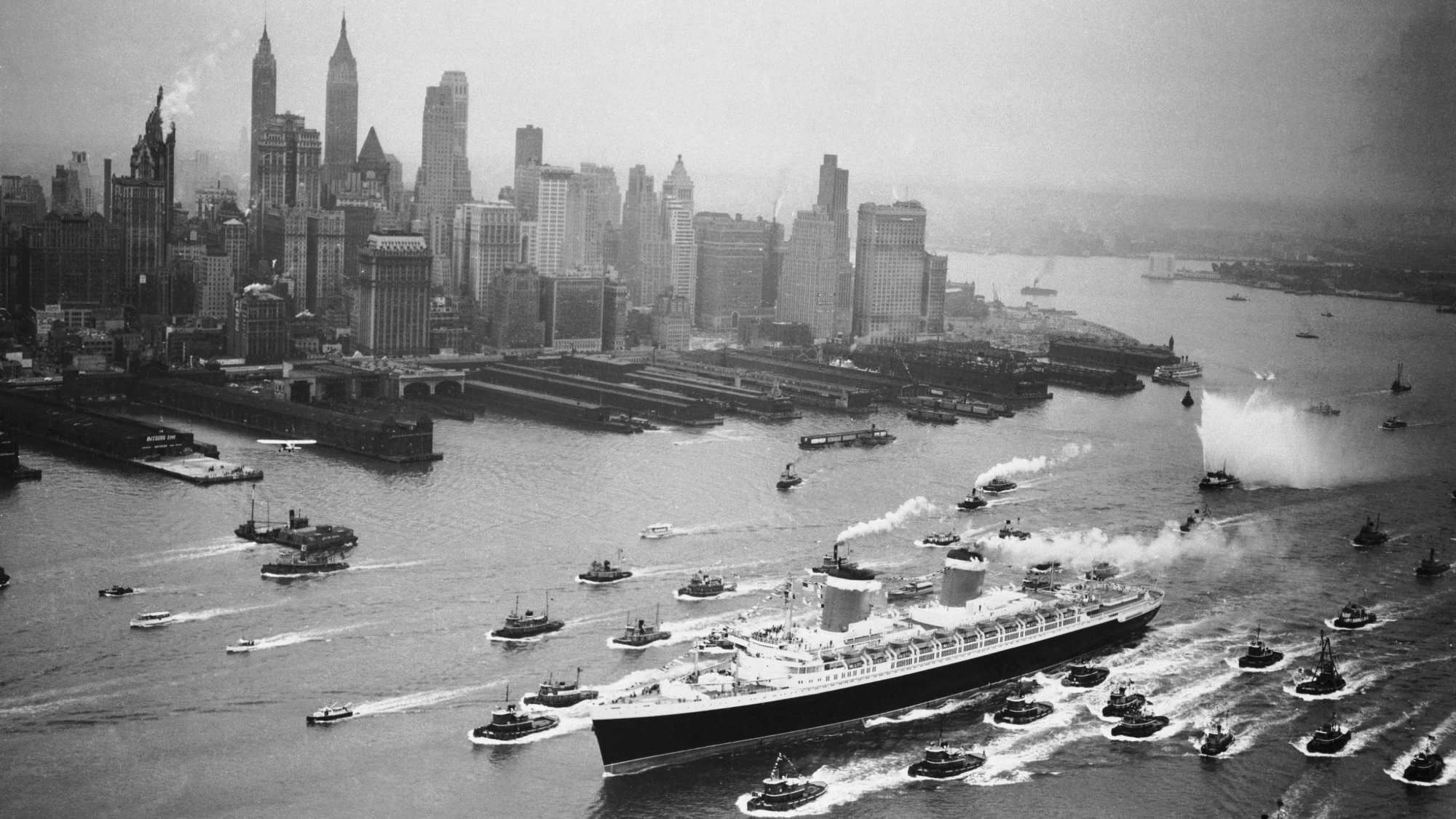
In its heyday, the SS United States was the world’s fastest ocean liner. Larger than the RMS Titanic, she was the most powerful, advanced, and modern passenger liner when she first took to the ocean in 1952. In addition to the 1,700 passengers, 7,935 quarts of ice cream and 500 pounds of caviar were also on board. During that maiden voyage (July 3-7, 1952), she broke the transatlantic speed record held by the RMS Queen Mary by over 10 hours. The United States made the crossing from the United Kingdom to New York in three days, 10 hours, and 40 minutes at an average speed of 40.96 mph.
She was designed by naval architect William Francis Gibbs (August 24, 1886 – September 6, 1967), and was built to be converted into a troopship if the United States Navy needed during a time of war. But she never was called into military service. Instead, the United States transported immigrants and celebrities, including future President and First Lady John and Jacqueline Kennedy, actors Grace Kelly, Gary Cooper, and Marilyn Monroe, artist Salvador Dali, and musicians Duke Ellington and Irving Berlin. Walt Disney even filmed parts of the 1962 comedy Bon Voyage aboard the ship.
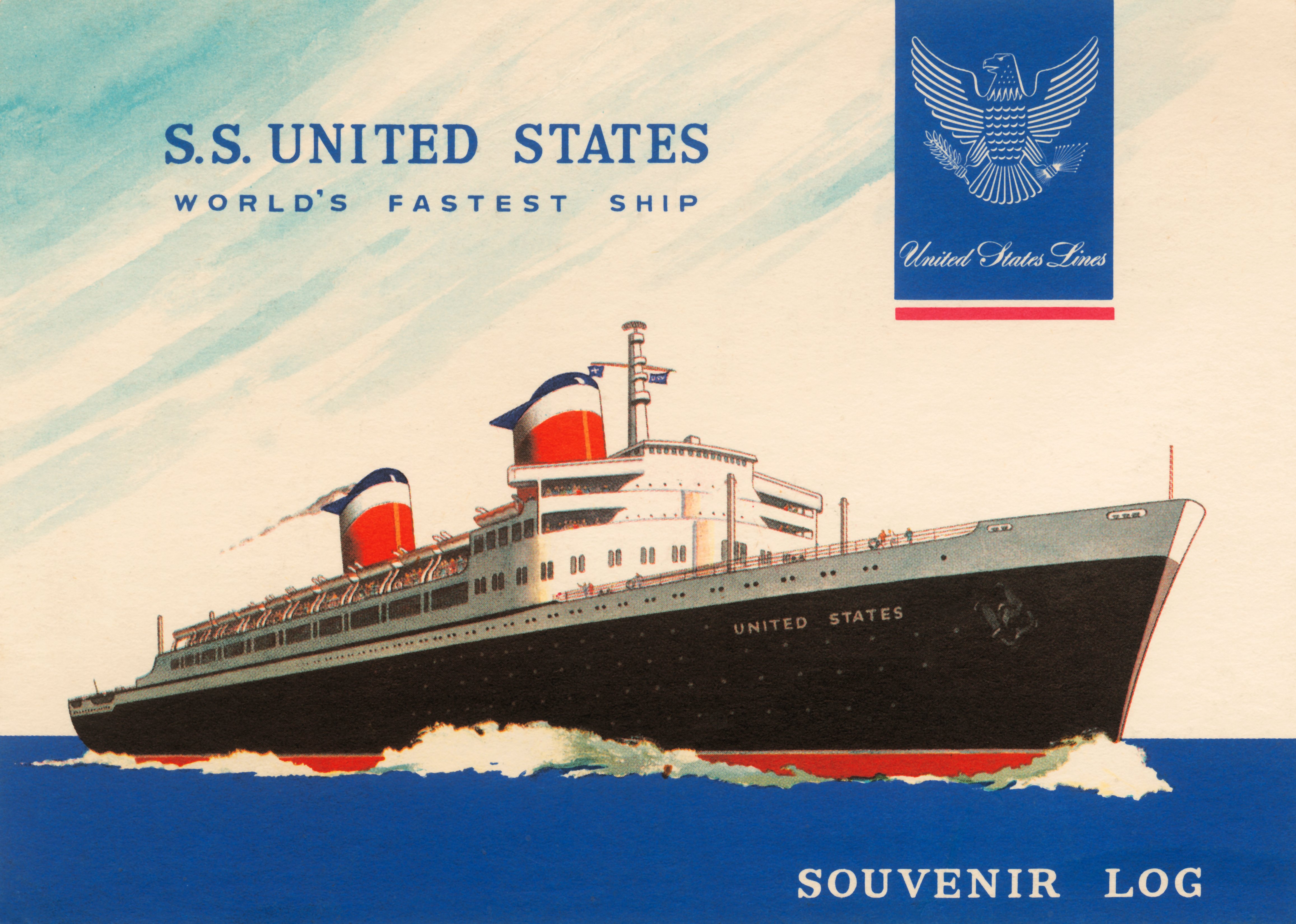
An engineering marvel, some of the key design features were in the rudder, radar mast, and propellers.
The rudder was designed for good maneuverability at high speeds. The Titanic’s relatively small rudder was one factor behind the ship’s collision with an iceberg and tragic sinking in 1912.
The SS United States had the latest radar equipment, which allowed the crew to see the locations of other ships and objects in the ocean despite the weather. It was among the first ocean liners to use radar, which was located at one of the highest points on the ship, so in addition to her radar “eyes,” a lookout could be stationed there to warn the captain of any danger in the ship’s path.
Considered a top-secret design, the ship had four propellers—two with four blades and two with five. According to the SS United States Conservancy, this configuration was tested and selected for its superior hydrodynamic performance. The propeller design was overseen by a pioneering Gibbs & Cox engineer named Elaine Kaplan.
Ocean liners became a less attractive option once air travel became quicker and less expensive. The SS United States ceased operations in 1969, and stayed in drydock in several cities before becoming the world’s largest artificial reef.
KioskNews shows a cleaned-up reading view extracted from the publisher’s page — the original always lives on their site, not ours.