8 Movies That Confirm Western Is the Best Genre


Michael John Petty is a Senior Author for Collider who spends his days writing, in fellowship with his local church, and enjoying each new day with his wonderful wife and precious daughters. At Collider, he writes features, reviews, recaps, interviews, and breaking news on select occasion. In addition to writing about stories, Michael has told a few of his own, from supernatural thrillers to historical fiction. His Western short story, The Devil's Left Hand, received the Spur Award for "Best Western Short Fiction" in 2025 from the Western Writers of America, of which he is a member. Michael currently resides in North Idaho with his growing family.
Sign in to your Collider account
If you're a die-hard fan of the Western, then you likely believe (like this author) that it's the best genre out there. That doesn't mean that every Western is a masterpiece, of course, but given how much the historical genre has contributed to film history — with some of the most elaborate and impressive productions put to the big screen — there's a strong argument in its favor. Don't believe us? We'll prove it to you.
From classic black-and-white features to modern takes on the late 1800s pioneer era, the Western has undoubtedly passed the test of time. Even those unsure about the genre (my wife, for instance) will find something here to excite and enrapture them, whether we're fixated on lawmen, outlaws, or folks in between. Here are some of the essential Westerns that prove the genre is the very best.
'High Noon' (1952)

If you're someone who believes that the perfect length for a movie is around 90 minutes, then we have some good news for you. High Noon is an 85-minute triumph that pits Gary Cooper against a band of outlaws looking to cause trouble in his New Mexican town. Cooper's Will Kane is among the greatest Western lawmen because of his chiseled features, strong moral character, and unwillingness to back down in the face of danger.
High Noon is a perfectly paced horse opera that completely enraptures the viewer. Although the film has famously been politically compared to the "Red Scare," the truth is that High Noon is just a killer Western (one of the best of all time) with a strong moral compass. No matter if John Wayne called it "un-American" or not, this real-time feature is a riveting example of tension and payoff.
'The Man Who Shot Liberty Valance' (1962)
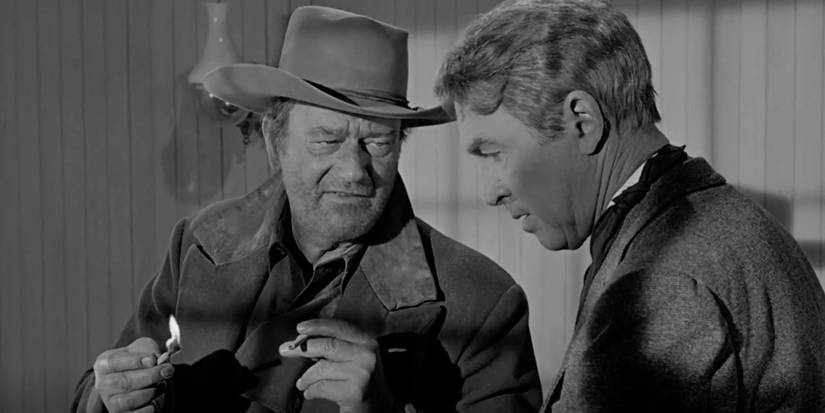
Speaking of the Duke, The Man Who Shot Liberty Valance is perhaps one of his grandest works. It's also his first real on-screen collaboration with the famed James Stewart. When Rance Stoddard (Stewart) wanders out west and into the realm previously ruled by Tom Doniphan (Wayne), he finds himself quickly at odds with the titular scoundrel (Lee Marvin).
A tale of tragedy and love, fiction and fact, The Man Who Shot Liberty Valance is as good a horse opera as there ever was. Director John Ford delivers here a masterclass in Western filmmaking, one that reminds the viewer that the typical depictions of the Old West period at the time were nothing more than myth and legend. As noted at the end of the film, "When the legend becomes fact, print the legend."
'Django' (1966)
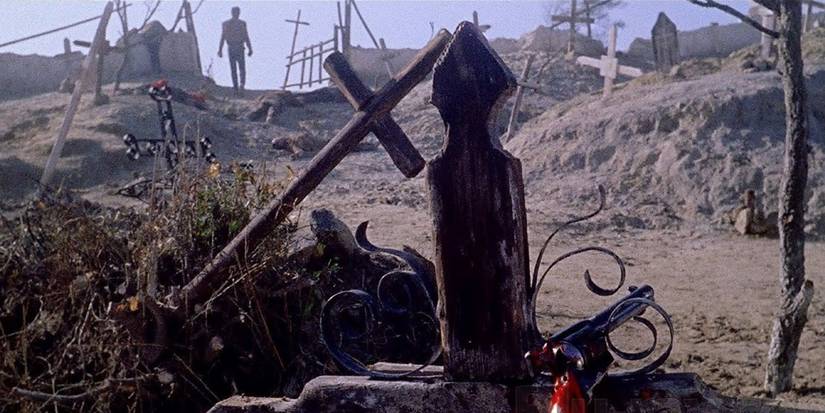
Although maybe not your first thought these days when the name "Django" comes to mind, the original Sergio Corbucci-directed Django — the first of his unofficial "Mud & Blood" trilogy — is a profound Spaghetti Western that sparked a vast wave of imitators. As Django (Franco Nero) finds himself caught between Mexican revolutionaries and ex-Confederates, his vices get the better of him.
Django boasts one of the most perfect endings in Western film as the titular hero experiences an almost spiritual transformation that leads to a miraculous climax. Nero is perfect on the screen, and Corbucci invents a bloody picture of the Old West that goes even beyond the usual Sergio Leone fare. If you're only familiar with Django Unchained, the original Django is one worth giving a go.
'3:10 to Yuma' (2007)

3:10 to Yuma is one of those rare cases where the remake is arguably better than the original. Based on the Elmore Leonard short story of the same name, the James Mangold feature masterfully updates the already exceptional material, retelling the story of rancher Dan Evans (Christian Bale) as he is hired to escort outlaw Ben Wade (Russell Crowe) to his barred fate. Of course, what is really exciting here is everything that happens to the group along the way.
As easily one of the most important Westerns of the last quarter-century, 3:10 to Yuma expertly balances action, suspense, and real character work with what seems like hardly any effort. From the first 10 minutes, it's clear that this is a ride you won't want to miss. Bale and Crowe may be an unlikely pair in a genre they're not best known for, but their commitment to the craft is undeniable.
'The Good, the Bad and the Ugly' (1967)

When it comes to Clint Eastwood movies, his Westerns are perhaps the most popular. When it comes to his Westerns, one of the most commonly cited is undoubtedly The Good, the Bad and the Ugly. The final installment in Sergio Leone's famed Dollars Trilogy (though the first chronologically), the historical epic is the culmination of their on-screen collaborations. Not only is it one of the best R-rated Spaghetti Westerns out there, but it is also the most well-known.
Although some (including this author) prefer the other two films, The Man With No Name is arguably at his best here. Everything leads to the climactic, tense showdown between Eastwood, Lee Van Cleef, and Eli Wallach, who stare at each other for way longer than comfortable before the scene erupts. It's a phenomenal piece of filmmaking, further improved by Ennio Morricone's rousing score.
'Stagecoach' (1939)
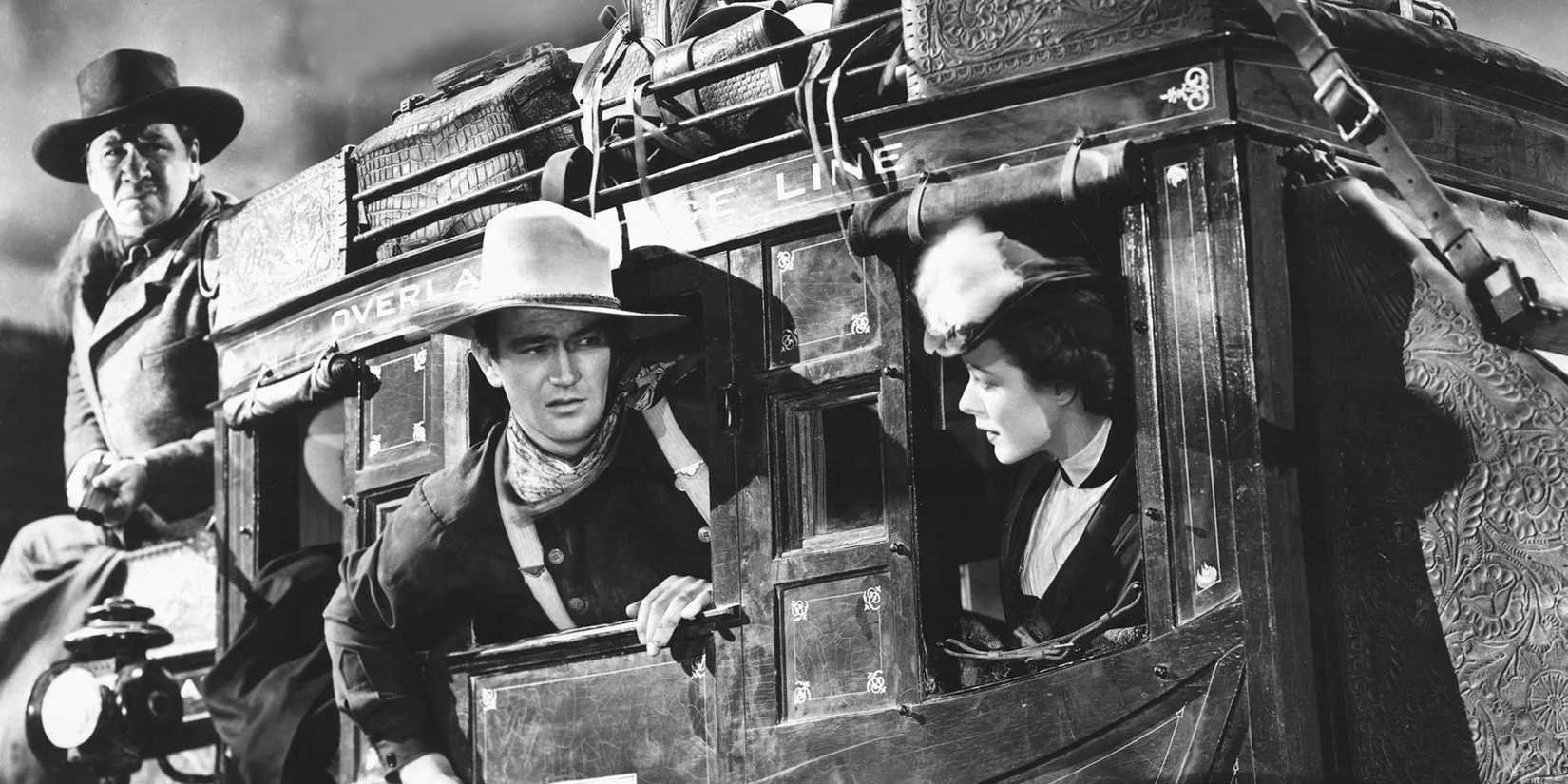
When it comes to Westerns that completely revolutionized the genre, Stagecoach is the first that should come to mind. One of John Wayne's earliest cowboy roles, and his first real collaboration with director John Ford, this 1939 triumph does everything right. When a group of strangers, including the Duke's "Ringo Kid," find themselves aboard the same stage, they're pursued by an angry band of Apaches as they attempt to reach Lordsburg.
A true Western masterpiece deserving of high praise, Stagecoach did seemingly the impossible by making a B-picture genre into an A-list production on all counts. Wayne, Claire Trevor, Thomas Mitchell, and the rest of the ensemble deliver riveting performances in the face of such terrible on-screen suspense. Stagecoach proved the power of the Western genre back in the late '30s, and it continues to prove the same nearly 100 years later.
'Unforgiven' (1992)

The other big Clint Eastwood flick that folks run to whenever the Western is involved is Unforgiven. Although Eastwood made plenty of notable horse operas beyond The Dollars Trilogy, his definitive stamp on the genre is no doubt his most powerful take on the Western. When former outlaw William Munny (Eastwood) is tasked with one last job, he takes the challenge for the sake of his young children — and the whole thing nearly kills him.
Unforgiven boasts an impressive cast that includes Morgan Freeman, an Oscar-winning Gene Hackman, and Richard Harris, with impeccable direction by Eastwood himself, who earned the film a "Best Picture" win at the Oscars. In fact, it's one of only four big-screen Westerns to earn such high praise, and the last set during the traditional 1800s period. This is Eastwood's official sendoff to the genre that made his career.
'Tombstone' (1993)
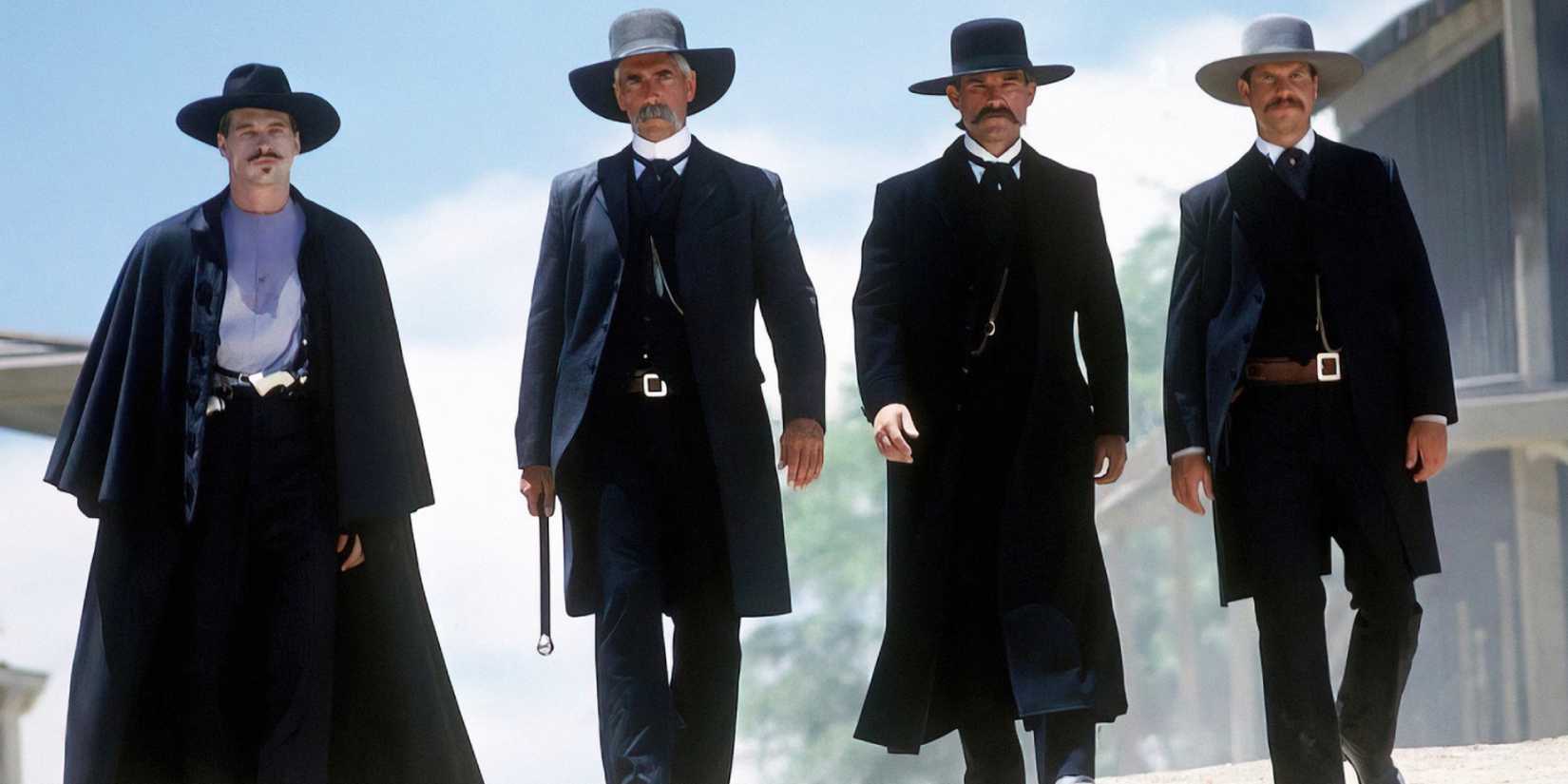
Everyone loves Tombstone — it's just a fact. The action-packed, crowd-pleasing Western with one of the most impressive casts assembled on-screen details the events surrounding the famed "Gunfight at the O.K. Corral" that erupted in the titular Arizona town in 1881. Kurt Russell stars as Wyatt Earp alongside Val Kilmer's Doc Holliday, Sam Elliott's Virgil Earp, and Bill Paxton's Morgan Earp in a thrilling horse opera that made quite an impact when it hit theaters.
In many respects, Tombstone became the blueprint for the Western genre going forward, setting a standard for what an action-forward horse opera ought to entail. One does not have to sacrifice historical accuracy for spectacle, and Tombstone was careful to avoid just that trap. Sure, there are embellishments made, but compared to other depictions of these same events, it simply pales.
'The Searchers' (1956)

There is something to be said for the fact that one of the most frequently cited films deemed "the best ever" is The Searchers. John Ford really outdid himself with this stellar historical drama, which follows the Duke's Ethan Edwards as he searches for his missing niece after his entire family is wiped out by Comanches. Wayne delivers the greatest performance of his entire career here, which is probably why he thought it was the best Western ever made.
When it comes to 1950s Western movies, all fall short of The Searchers. Actually, that may be true of just about every era. The Searchers is undoubtedly a step above in every respect. From the Duke's riveting performance to the stark pacing to even the simplest of shot compositions that have become the iconic image of the West, you cannot go wrong with this Ford/Wayne picture.
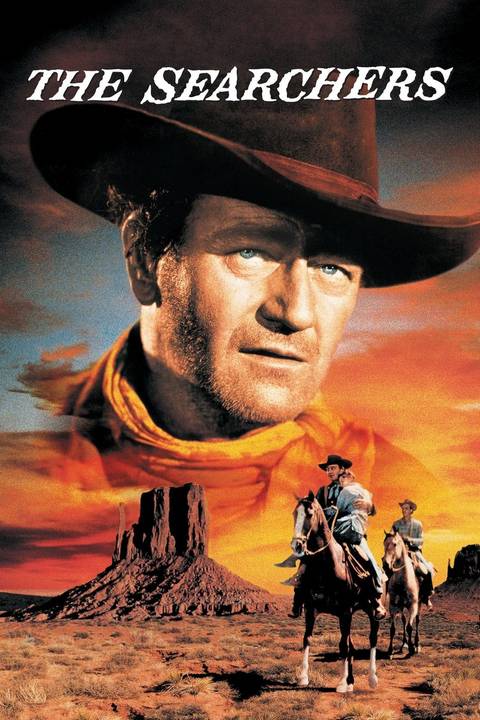
The Searchers
- Release Date
- May 26, 1956
- Cast
- John Wayne, Jeffrey Hunter, Vera Miles, Ward Bond, Natalie Wood, John Qualen, Olive Carey, Henry Brandon, Ken Curtis, Harry Carey, Jr., Antonio Moreno, Hank Worden, Beulah Archuletta, Walter Coy, Dorothy Jordan, Pippa Scott, Patrick Wayne, Lana Wood, Mae Marsh, Ruth Clifford, Chuck Roberson, Chuck Hayward, Peter Mamakos, Frank McGrath, Jack Pennick
- Runtime
- 119 minutes
- Director
- John Ford
- Writers
- Frank S. Nugent
KioskNews shows a cleaned-up reading view extracted from the publisher’s page — the original always lives on their site, not ours.