Southeast Asia's energy security at a crossroads as power demand surges, IEA warns
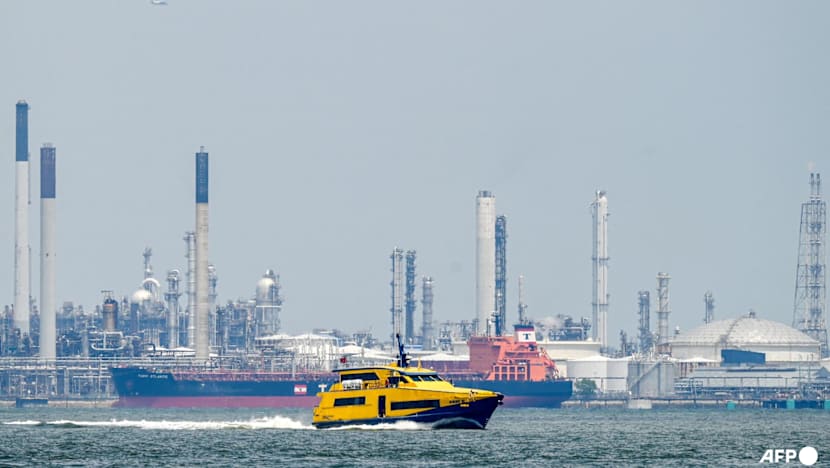
SINGAPORE: Southeast Asian countries are using more energy than ever but becoming increasingly reliant on imported fuel, leaving the region vulnerable to supply disruptions and price shocks, warns a new report by the International Energy Agency (IEA).
The report, published on Monday (Oct 5), came ahead of an Association of Southeast Asian Nations (ASEAN) Energy Ministers meeting in Manila on Oct 7 where the ministers are expected to review regional fuel-security measures.
The region continues to grapple with fuel supply disruption from the Middle East since Feb 28, when the United States and Israel launched strikes on Iran, prompting Iran to effectively block the Strait of Hormuz, a key shipping passage.
The IEA – which urged the region to diversify energy sources and routes of supply, make greater use of domestic resources where viable and expand energy efficiency and electrification – said it would present its key findings at the ASEAN meeting.
Around 60 per cent of Southeast Asia's crude oil imports and one-third of its natural gas imports originated from the Middle East before Feb 28.
The disruption has highlighted the risks of heavy import dependence, concentrated supply routes and limited diversification, the IEA said in its ASEAN Energy Security Review published on Monday (Oct 5).
Analysts said that the current crisis is a reminder of how exposed Southeast Asia remains to external energy shocks.
“The region’s energy demand is growing rapidly, while many countries are becoming more dependent on imported oil and gas. As such, what happens in the Middle East can very quickly translate into higher energy and transport costs, inflationary pressures and concerns over supply security at home,” Joanne Lin, senior fellow and coordinator of the ASEAN Studies Centre at Singapore’s ISEAS – Yusof Ishak Institute, told CNA.
Southeast Asia’s electricity demand is expected to grow by about 5.4 per cent a year between 2026 and 2030, driven by industrial expansion, cooling needs and the rapid development of data centres, IEA noted.
The region’s energy demand has grown by about 30 per cent per person over the past decade.
A DEPENDENCE THAT RUNS DEEP
Southeast Asia's vulnerability goes beyond its reliance on imported oil.
Oil demand continues to grow while regional crude production has fallen by 40 per cent since its peak in the 1990s, increasing dependence on imported crude, which has risen by 30 per cent since 2015, the IEA report said.
The region faces a broad set of interconnected energy security challenges, including rising dependence on imported oil and liquefied natural gas (LNG), it added.
Around 89 per cent of petroleum product demand is met by refineries within Southeast Asia.
But those refineries still depend heavily on imported crude, much of it from the Middle East, the IEA said. Around 45 per cent of refined oil products in the region are derived from Middle Eastern crude.
That means Southeast Asia can be exposed to Middle East disruptions even when it is not directly importing finished fuel from the region.
Some refineries are also configured to process the medium and heavy crude grades commonly supplied by Gulf producers, making it harder to switch quickly to alternative sources.
STOCKPILES CAN BUY TIME
This week, Southeast Asian energy ministers are expected to discuss measures under the ASEAN Framework Agreement on Petroleum Security, or APSA, including how countries could coordinate during severe supply disruptions.
But the region's ability to rely on emergency stocks varies widely.
The IEA's review shows that some countries are still developing strategic petroleum reserves. Indonesia has a reserve framework but has not implemented it, while the Philippines is planning a strategic petroleum reserve.
Singapore does not have a strategic petroleum reserve, according to the IEA, although power generators are required to maintain diesel stocks as a backup to natural gas.
The ASEAN Centre for Energy has warned that a severe disruption to Middle East supplies could put oil volumes equivalent to nearly 28 per cent of ASEAN's final oil consumption at risk.
That has added urgency to proposals for regional stockpiling.
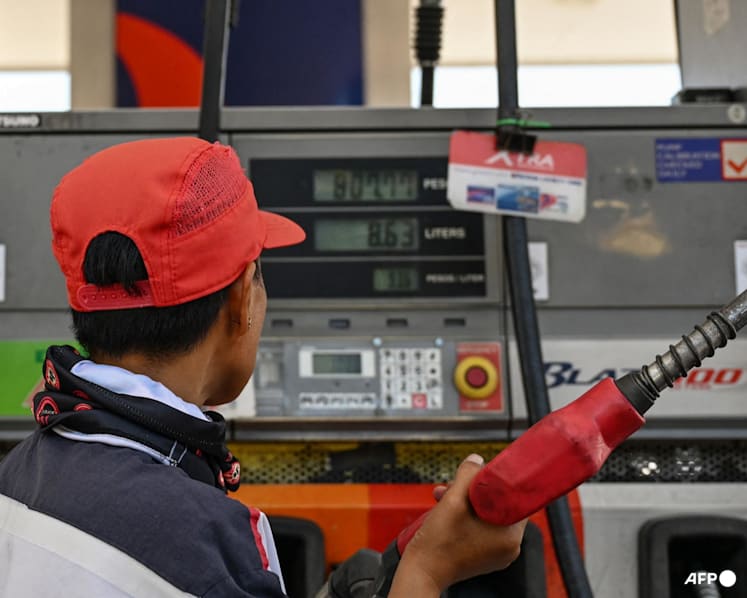
Philippine Energy Secretary Sharon Garin has said Manila is exploring regional fuel-storage arrangements and could host future storage facilities, Reuters reported.
Analysts said stockpiling serves as a buffer when there is a sudden disruption, rather than a long-term solution.
“They are … costly to build and maintain, and Southeast Asian countries have very different levels of storage capacity and fiscal resources. It may not be realistic for every country to maintain very large reserves on its own due to these reasons,” said Lin.
She added that stockpiling needed to be part of a much wider approach that includes diversification, regional connectivity and better crisis preparedness.
Reserves have “obvious limitations”, agreed Tan-Soo Jie Sheng, assistant professor and director of the Institute for Environment and Sustainability at Singapore’s Lee Kuan Yew School of Public Policy.
“A 30-, 60- or 90-day reserve does little for a prolonged disruption,” he said. “Stocks also require storage capacity, financing, inventory management and very clear rules on ownership and usage.”
He stressed that governments also need contingency plans for managing demand.
“For instance, which uses of fuel are essential, how can public transport absorb additional demand, how should vulnerable households be supported if prices rise, should support come through blanket petrol subsidies or more targeted assistance?”
“Stockpiling is therefore valuable because it buys time. But buying time should not be confused with addressing the structural causes of energy vulnerability,” he warned.
The IEA said ASEAN countries can strengthen domestic oil resilience by building more robust stockholding policies, demand-side measures and clear crisis procedures.
For instance, countries with domestic resources can consider how to increase production through predictable fiscal regimes that are supportive of investment, the review said.
An additional issue is that many countries in the region subsidise or regulate petrol and other fuel prices, said Tan-Soo.
“While this is important for protecting households, especially during a sudden price spike, the subsidy does not make the external shock disappear as it transfers the cost from household budgets to the government budget,” he said.
“And if consumers are insulated from higher prices, there is also less incentive to reduce fuel consumption when supply is tight.”
The crisis has also raised questions about how quickly ASEAN's existing energy-security mechanisms can be put into practice. While member states have agreed on the principle of greater cooperation, implementing those plans can take time.
Turning regional commitments into working arrangements for information sharing, emergency response and cross-border support will be increasingly important as the region’s energy needs grow, IEA said.
But coordinated energy security measures “must reflect different national circumstances”. Several ASEAN countries still rely significantly on coal for power generation and industry and will need a reliable supply and ways to diversify away from it, it cited.
In 2024, coal accounted for 71 per cent of Indonesia’s electricity generation and 62.5 per cent of the Philippines’ electricity generation, according to IEA data.
LOOKING BEYOND THE NEXT CRISIS
Renewable energy and electric vehicles could reduce the region's exposure to imported oil over time, while greater electricity interconnection could allow countries to share power when supplies are tight.
The current crisis could accelerate that shift, analysts said.
“The US-Iran conflict has shone a spotlight on Southeast Asia’s dependence on the Middle East for oil and gas,” said Ian Storey, a senior fellow at the ISEAS-Yusof Ishak Institute.
“The crisis will act as a catalyst for Southeast Asian countries to strengthen their energy security by increasing the use of renewable energy resources … and clean energy sources, especially nuclear power.”
Greater regional electricity connectivity could complement that diversification, said Alvin Chew, Senior Fellow at the S Rajaratnam School of International Studies (RSIS) in Singapore.
“It is important that the region establish a regional grid whereby there could be aggregation of regional production capacity to meet its energy demand,” he said.
“Renewable energy is one area, while nuclear will be another for the supply of baseload energy."
The IEA estimates that around US$27 billion will be needed between 2025 and 2040 for the current pipeline of regional interconnection projects, roughly 14 times the investment in Southeast Asian interconnectors since the 1970s.
“The region’s diverse renewable energy resource potential, including solar, wind, hydropower, geothermal and modern sustainable biomass, can support greater diversification of electricity supply while reducing exposure to imported fossil fuels,” IEA’s review stated.
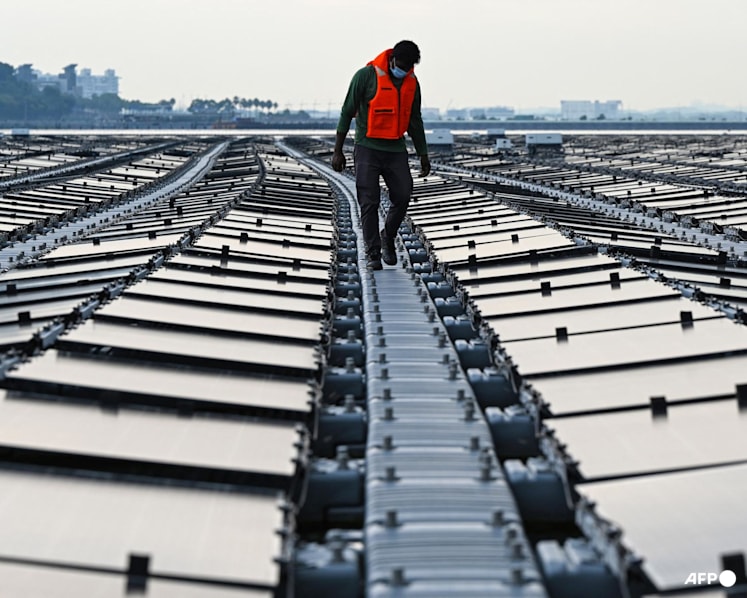
Measures to integrate a greater share of renewables in the energy mix are needed – flexible power plants and enhanced grid capacity, among others, IEA said.
Clean energy can strengthen security, said Peter Govindasamy, executive director of the Energy Studies Institute at the National University of Singapore.
“Renewables, efficiency, electrification, and distributed energy systems are often discussed in climate terms, but they are equally important from a security perspective. Every unit of domestic solar, wind, hydro, or geothermal generation reduces exposure to international fuel markets,” he said.
Diversification means having a more diversified energy mix, investing in renewables and efficiency, strengthening grids and storage, and developing regional arrangements that can provide support during a crisis, said Lin.
“The objective should be to have more options and avoid replacing one dependency with another,” she said.
In the meantime, Southeast Asia can ease pressure on its fuel imports and power systems by having more efficient vehicles, buildings, appliances and industrial equipment, the IEA said.
“Energy efficiency is often the most cost-effective means of strengthening energy security because it reduces energy demand, lowers energy expenditure, and reduces the need for energy infrastructure investment and fuel imports,” it said.
KioskNews shows a cleaned-up reading view extracted from the publisher’s page — the original always lives on their site, not ours.