Burnham’s plan for a radical reset collides with economic reality | Heather Stewart
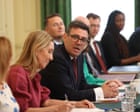
As Labour heads to Liverpool this week, Andy Burnham has promised to deliver “stability” in the public finances; but the economic backdrop is anything but stable.
The longer the US-Israeli war on Iran persists, the more likely it is that UK consumers will have to swallow higher mortgage rates and energy bills – just as the government is wrestling with its own surging borrowing costs.
We are only a few weeks into the three-month period tracking energy price moves that the regulator for Great Britain, Ofgem, will use as a basis to set the energy price cap in January – but it’s been a pretty bleak period so far, with the cost of a barrel of crude above $100 for much of that time.
Based on the pricing in energy futures markets, the Bank of England reckons Ofgem could increase the energy price cap, which sets the maximum energy rates paid by homes on standard tariffs, by an eye-watering 24% in January.
At the same time, the Bank’s policymakers –from the governor, Andrew Bailey, down – have repeatedly signalled that while they are reassured high energy prices have not yet fed through into wider inflation, they can’t hold off from raising rates for much longer.
“We’ve made it quite clear … that it’s going to be harder to maintain that stance, the longer we have high energy prices,” Andrew Bailey said on Friday.
Or as his deputy, Sarah Breeden, who like Bailey did not vote to raise rates in September, put it: “The more sparks we’re throwing in the tinderbox, the more likely we might have to turn the hose on it.”
Donald Trump made clear over the weekend that he has no intention of staunching the flames himself, by bringing the conflict to a close.
“I’m rejecting their deal,” he told reporters, after Iran made a fresh proposal. “They want to make a deal where they open the strait immediately because they’re losing so badly … we’re winning tremendously.”
With UK inflation already above 3% and likely to rise further, markets are expecting the Bank to raise rates four times, to 4.75%, over the next 12 months.
Such a situation almost certainly won’t happen – the economy would probably be clobbered into submission long before they got there, and inflation with it. But Bailey and his colleagues are widely expected to make a start in November, the week after John Healey’s first budget.
Policymakers will also have to reckon with the impact on prices of what is expected to be the most powerful El Niño weather system in 1,000 years, which as well as being devastating to human life, is likely to drive up the cost of important foodstuffs.
Burnham has made offering the public a “breathing space” from higher costs a hallmark of his early weeks in power, with sensible but modest policies, such as the £2 bus fare cap. A new iteration of the Tories’ Help to Buy scheme for first-time homebuyers will follow at the budget, he announced this weekend.
But while these offerings show a government keen to help, they risk being overshadowed by the wider picture. With the threat of a surge in energy bills looming, the government is keen to avoid announcing a large new support package, conscious of the cumulative cost of Labour’s interventions over the last year.
“I think people need to remember that measures have already been taken,” Burnham said this weekend. These include the £2.3bn Rachel Reeves spent on lowering energy bills – including by shifting some green levies on to general taxation – and his own VAT cut on domestic electricity, which the Treasury has yet to explain how it will fund.
Yet if, as Trump has hinted, the conflict continues until after the midterm elections in early November, global oil and gas prices could remain high for many more weeks – locking in a sharp rise in bills for UK consumers in the new year.
after newsletter promotion
Economists are urging Healey to be bold on energy in the budget, rather than wait and hope. Experts at the research and innovation foundation Nesta are calling for a gas price stabiliser, for example, that would cushion the blow of higher prices now, at the Treasury’s expense – but bring in additional revenue as market prices dropped in future.
Any policy that cuts utility bills has the added bonus of bearing down on inflation, helping ease the pressure on the Bank to act.
Adding to Labour’s woes, though, the government’s cost of borrowing has risen sharply in recent weeks, alongside that of other big economies, as the global bond selloff has gathered pace.
It has been yet another harsh reminder of how exposed the government’s fiscal position is to the vagaries of global markets, with a knock-on effect for the budget forecasts.
There are growing warnings, too, about the risks of market instability caused by the interaction of febrile bond markets and the AI mega-bubble.
Labour was already in a tricky fiscal bind, given demands for higher defence spending – not least from Healey himself, who now has the job of finding the resources.
The difficult decisions about how to do so – let alone fund Burnham’s wider priorities – look likely to be delayed until a spending review some time in 2027. It is very hard to see how that won’t necessitate a fresh round of tax rises.
The plan had been for a relatively modest budget, focusing on plans for devolution, and filling the gaps in the Defence Investment Plan announced in the summer.
This caution looked out of step with Burnham’s promise of a radical political reset and may be untenable if energy bills are going to soar. He and Healey face a tough autumn ahead.
KioskNews shows a cleaned-up reading view extracted from the publisher’s page — the original always lives on their site, not ours.