Lithuanian students retrace Holocaust history on memorial day, confront country's role in massacres

Around 600 non-Jewish Lithuanian students participated in the March of the Living commemorations held in Vilnius and Ponary, Lithuania, where 70,000 people were killed during the Holocaust.
Hundreds of Lithuanian teenagers marched last week to sites where Jews from their towns were murdered, confronting their country’s history of collaboration during the Holocaust while honoring those who risked their lives to save Jews.
Over the course of two days, on September 22 and 23, 2026, around 600 non-Jewish Lithuanian high school students took part in the March of the Living commemorations in Vilnius and Ponary, Lithuania, to honor 70,000 people, most of them Lithuanian Jews, who were murdered at Ponary and to learn about the choices made by Lithuanians who risked their lives to save their Jewish neighbors.
Here, they retraced the history of Jewish communities destroyed during the Holocaust and marched to sites where Lithuanian Jews were murdered 85 years ago.
The commemoration events were organized by the International Commission for the Investigation of Nazi Crimes in Lithuania and the European March of the Living as part of Lithuania's National Memorial Day for the Genocide of Lithuanian Jews, observed on September 23, the anniversary of the liquidation of the Vilnius Ghetto in 1943.
The events brought together students and teachers for marches, testimony readings, and memorial ceremonies at Holocaust killing sites.
The family that hid a future judge
As part of the educational program, students learned the story of the Rakevičius family, recognized as Righteous Among the Nations for risking their lives to rescue Jews during the Holocaust.
Jaroslavas and Teklė Rakevičius and their four sons, Juozas, Zenonas, Česlovas, and Algimantas, helped Jews escape from the Kaunas Ghetto and hid them on their farm.
The four young brothers kept watch day and night and sought out neighbors willing to provide additional hiding places, knowing that discovery would put the lives of the entire family at risk.
“The Rakevičius brothers were young people just like the students marching today. Their example reminds us that when we see hatred, we have a choice. At a time when antisemitism is again rising across Europe, young people must not remain indifferent. They must recognize hatred, confront it and choose to act,” said Michel Gourary, Executive Director of the European March of the Living.
Among those the brothers helped save was Aharon Barak, then an eight-year-old Jewish boy who was smuggled out of the Kaunas Ghetto in a sack. Barak survived the Holocaust and later became President of the Supreme Court of Israel and a Justice of the Supreme Court of Israel. Years later, Algimantas Rakevičius described the motivation behind his family’s actions simply: “We could not allow innocent people to be killed.”
A march in the rain
On the second day, 150 high school students from Radviliškis, a town in north-central Lithuania, marched three kilometers from the center of town to a forest clearing where 300 Jewish men were murdered by Nazis and their collaborators in July 1941.
At the Radviliškis killing site, the students held a memorial ceremony, read excerpts from testimonies, and placed stones of remembrance at the monument commemorating the Jewish victims. The students made the journey in the rain, retracing the route from the town to the site where members of their community were murdered in the Holocaust.
Radviliškis was one of hundreds of Lithuanian towns and villages whose centuries-old Jewish communities were destroyed during the Holocaust.
Before the war, Jewish life spanned 297 shtetls throughout Lithuania. Following the Nazi invasion in June 1941, mass shootings rapidly spread across the country, with Jewish communities murdered at killing sites in forests and fields near the towns in which they had lived.
Marches bring younger generations to sites connected to destruction of Jewish communities
According to the organizers, the marches sought to confront students with nuanced perspectives of Holocaust history, including the role played by Lithuanian collaborators in the murder of their Jewish neighbors, alongside the comparatively few Lithuanians who risked their own lives to rescue Jews and were later recognized as Righteous Among the Nations.
“To see 600 young non-Jewish Lithuanians walk with their teachers to the places where Jewish communities were murdered 85 years ago carries enormous meaning,” said Gourary.
March of the Living is an educational program that holds commemorative and educational events throughout Europe during the year, alongside its annual March from Auschwitz to Birkenau. The local marches bring younger generations to sites connected to the destruction of Jewish communities, combining remembrance of the victims with education about the consequences of antisemitism, hatred and indifference.
Mass shootings known as ‘holocaust of bullets’
Between July 1941 and August 1944, approximately 70,000 people, most of them Lithuanian Jews, were murdered by the Nazis and their local collaborators at Ponary, today known as Paneriai, outside Vilnius. The site became one of the most prominent symbols of the mass murder of Eastern European Jews during the Holocaust.
The destruction at Ponary formed part of a much broader campaign of mass murder across Lithuania. Following the Nazi invasion in June 1941, Jewish communities were systematically targeted in mass shootings carried out by German forces and Lithuanian collaborators. Within months, communities that had existed for generations had been almost entirely erased.
Before the Holocaust, approximately 200,000 Jews lived in Lithuania, including around 70,000 in Vilnius. The mass shootings carried out across Lithuania and elsewhere in Eastern Europe became known as the “Holocaust by Bullets,” in which Jews were taken from their homes and communities and murdered in nearby forests, fields, and mass graves.
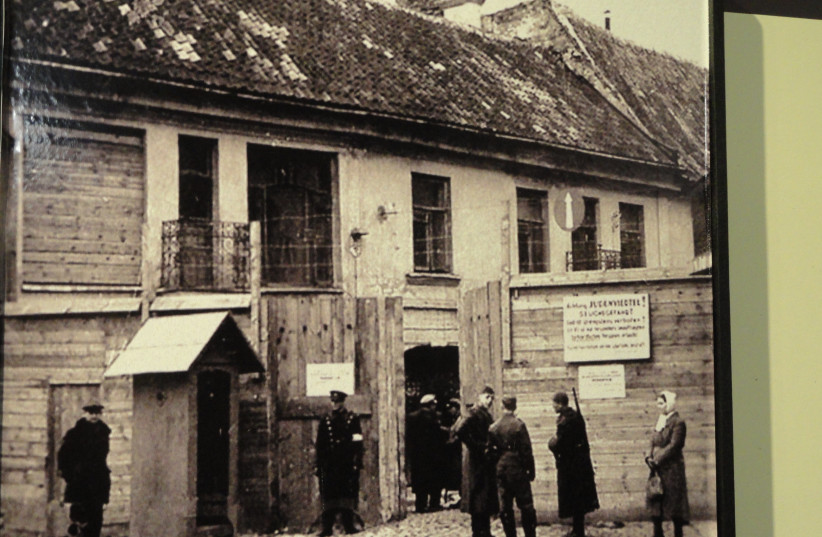
The Vilnius Ghetto, established by the Nazis in 1941, was liquidated on September 23–24, 1943. Thousands of its remaining Jewish prisoners were deported to concentration and labor camps or murdered.
“Lithuania’s history includes the painful reality of collaboration in the murder of its Jewish population, but also points of light in those who refused to remain indifferent and risked everything to save Jews,” concluded Gourary.
KioskNews shows a cleaned-up reading view extracted from the publisher’s page — the original always lives on their site, not ours.