Hong Kong’s No 2 official credits government for success in university rankings
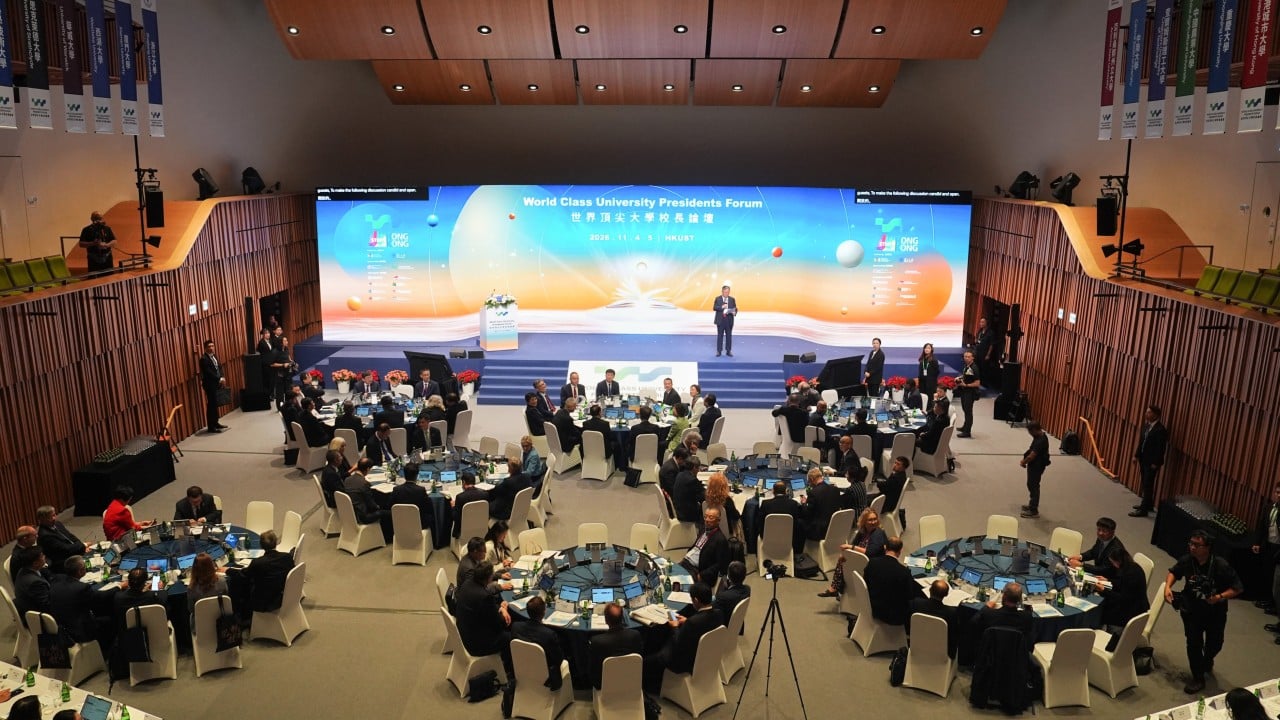
Hong Kong’s strong performance in the latest regional university rankings – with five institutions among Asia’s top 10 – is the result of sustained government investment and clear policy direction, the city’s No 2 official has said, as a global alliance of 23 universities eyes the Northern Metropolis for collaboration opportunities.
Addressing leaders from more than 50 top universities across five continents at the World Class University Presidents Forum 2026 on Wednesday, Chief Secretary Eric Chan Kwok-ki, said the latest QS Asia University Rankings, announced a day earlier, showed that higher education has always been a vital pillar of Hong Kong’s success.
“This is not by chance. It is the result of sustained government investment, clear policy direction and the hard work of our universities. It reflects our commitment to excellence, openness, academic freedom and institutional autonomy,” said Chan, currently the acting chief executive.
Five Hong Kong public universities were ranked among Asia’s top 10 in the QS Asia University Rankings, with three securing spots in the top five.
The University of Hong Kong (HKU) retained its No 1 spot, while City University (CityU) climbed three places to fourth and the Chinese University of Hong Kong (CUHK) rose two places to fifth, giving the city three of the region’s top five institutions for the first time in more than a decade.
Polytechnic University (PolyU) moved up to ninth, alongside the Hong Kong University of Science and Technology (HKUST).
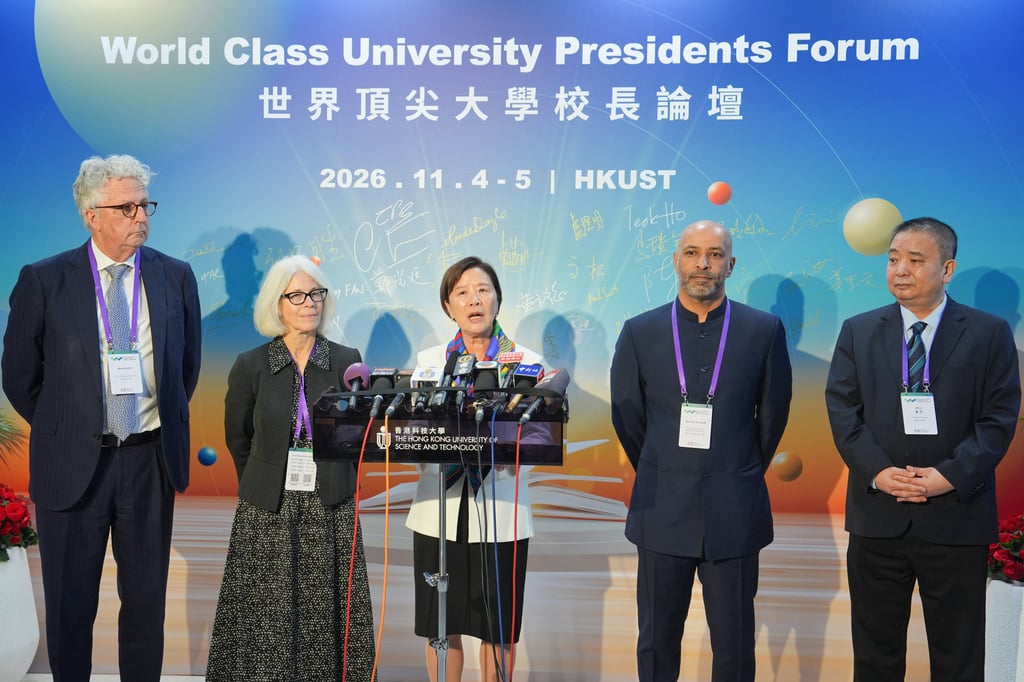
Chan said Hong Kong was not standing still and that the city must align closely with national development to keep its competitive edge and lead. He said Hong Kong was committed to building world-class university towns that blend top-tier education, cutting-edge research, and vibrant living.
Hong Kong will build three university towns in the Northern Metropolis, where the core campus areas near the border will span up to 300 hectares.
HKUST president Nancy Ip Yuk-yu said that while artificial intelligence (AI) was already changing how universities teach, pursue discovery, and prepare young people for their careers, higher education institutions should not focus solely on teaching students how to use the technology.
“Our responsibility goes beyond simply adapting to new tools. As a scientist and as a university leader, I believe our true responsibility is to ensure that greater capability is accompanied by sound judgment and that discoveries lead to societal benefits,” she told delegates at the forum, which was hosted by HKUST.
“It means preparing our students to not just apply powerful AI tools, but to challenge their assumptions, understand their limitations, and decide how these tools should be used.”
At the two-day forum, Dawn Freshwater, executive director of the Worldwide Universities Network, a global higher education alliance of 23 leading research universities across six continents, told the media that the Northern Metropolis represented a significant opportunity for universities to collaborate globally.
“It’s a beacon of excellence globally for ways in which we might partner, collaborate, and truly focus on how we are going to solve the issues now facing civilisation, and they’re substantial,” she said.
Professor Mark Scott, vice-chancellor and president of the University of Sydney, said his institution was keen to deepen its partnerships in the university towns project.
“We’re keen to find a way to be productive partners,” he said.
He said the University of Sydney had been in talks with HKUST over developing the Hong Kong institution’s new medical school, drawing on his university’s more than 100 years of experience in medical education.
“What we would like to see is a deeper exchange of students between Hong Kong and Australia, but also deepening research partnerships as well. So we’re excited at what’s being developed here,” Scott said.
Ebrahim Al Hajri, president of Khalifa University of Science and Technology, a research-intensive university located in Abu Dhabi, said the Northern Metropolis megaproject was exciting and that he looked forward to partnering with everybody, especially HKUST, to become part of this key initiative.
He said the collaboration could be on complex projects such as energy, climate, environment, and water.
“We can magnify that to make a greater impact on society worldwide. That’s our target,” he said.
KioskNews shows a cleaned-up reading view extracted from the publisher’s page — the original always lives on their site, not ours.